Making sense of the Teddy Jarrard reclassification decision, why this development is so important for Notre Dame football
Notre Dame football is making a tactical decision with the reclassification of quarterback Teddy Jarrard.

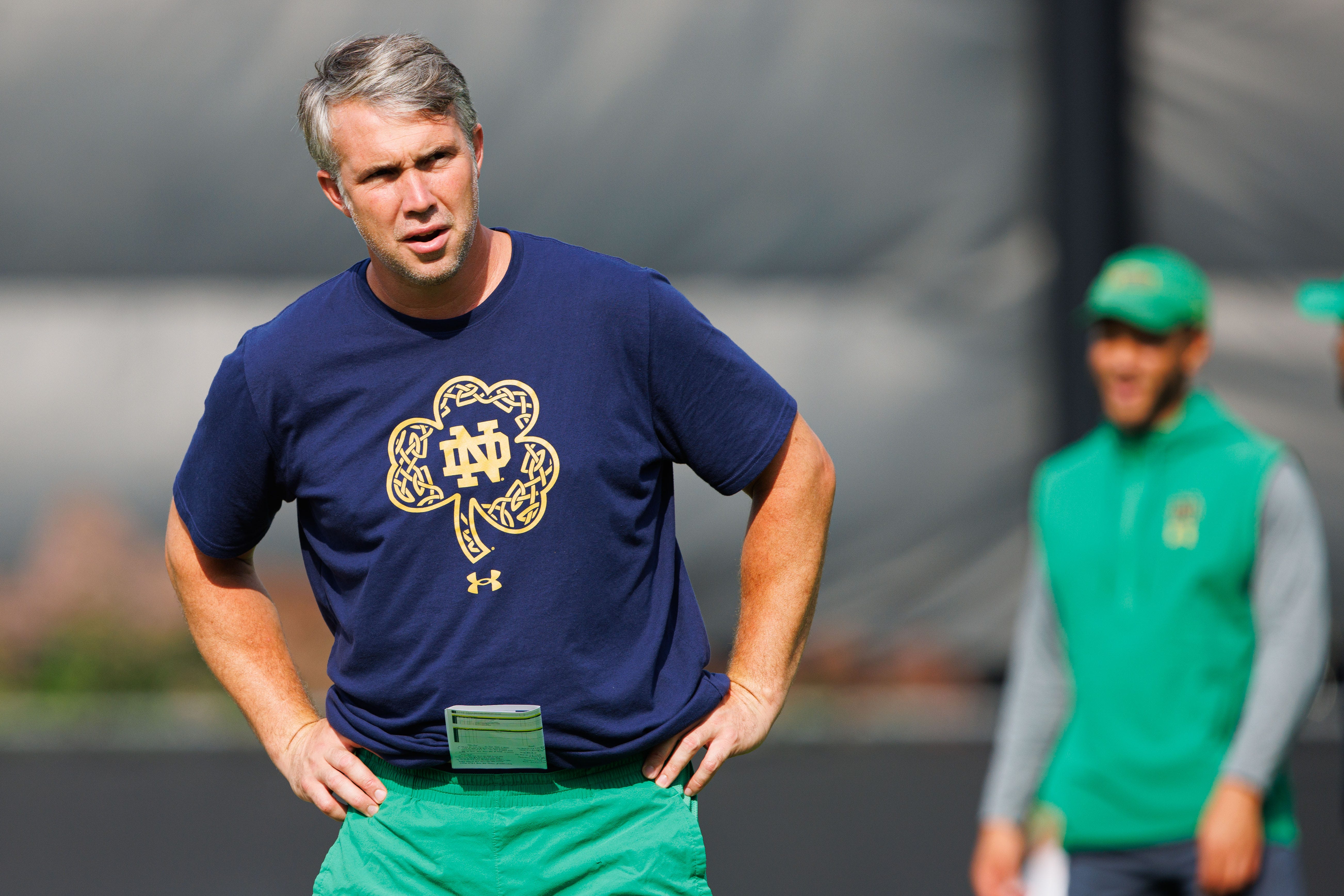
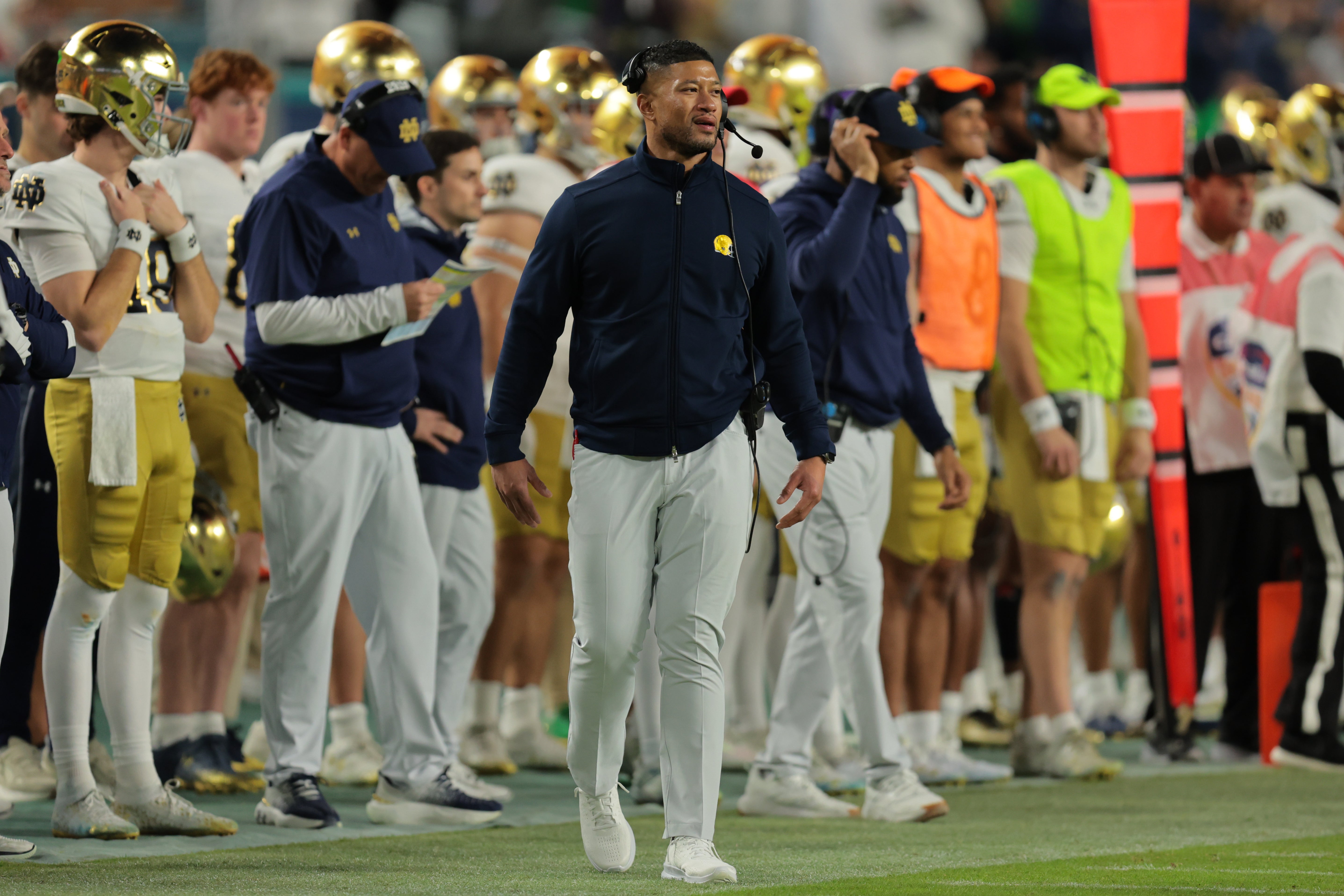
National Signing Day has come and gone, which saw Notre Dame football sign 27 talented 2026 recruits on Wednesday. Considered to be a Top-5 class by each of the major recruiting platforms, head coach Marcus Freeman and the Fighting Irish arguably just put together their best overall haul as a program in the last 30 years. Combining some elite talent with a well-balanced class, it is hard to find a hole in the 2026 elite haul.
As if that class wasn’t special enough, it appears that the group could end up being one larger. Kennesaw (Ga.) North Cobb quarterback Teddy Jarrard has sat as the crown jewel of the 2027 class for the Irish ever since he committed to the team back in July. Considered to be the No. 79 overall player and No. 5 quarterback in the 2027 class according to Rivals, the 6-3, 195-pound pocket passer went into the 2025 season as one of the biggest risers in the class. Folks around Notre Dame are incredibly high on Jarrard and all the raw talent that he brings to the table.
The news has started to break over the last couple of days that Jarrard was eyeing potentially reclassifying into the 2026 class, meaning he will be enrolling with the program following the fall semester. With that in motion, it has left some to wonder why. Notre Dame signed Lake Mary (Fla.) High School signal caller Noah Grubbs is in the class, and you rarely ever see teams take two quarterbacks in one class. It hasn’t happened with the Fighting Irish since the early 2000s.
The reasoning behind this move goes far beyond an ask or a want by the Jarrard family. Notre Dame has been working in unison to make this happen with Jarrard, and it holds a lot of value for the Irish, both in the short and the long term.
Short-term outlook for Jarrard
With star CJ Carr back for another season in 2026, Notre Dame already has their starting quarterback locked in. The depth, however, is much less certain right now. With the future of redshirt sophomore Kenny Minchey in question with the Transfer Portal possibly in his future, as well as emergency quarterback Tyler Buchner exhausting his eligibility, you would ideally like to add two quarterbacks to the depth chart.
Without Minchey in this hypothetical, you would have three scholarship quarterbacks in the fold if Jarrard does reclassify – redshirt freshman Blake Hebert, and the two freshman. Without any experience, that would be a very unsettling backup quarterback situation, but at the very least, you have three talented options on top of walk-on Anthony Rezac. If you are going to be young, you should at least also be very talented.
Having a full season for Jarrard to learn from Carr would also be extremely beneficial. That situation could prove to be very valuable for his long-term outlook as well.
Long-term outlook for Jarrard
With Carr excelling so early on in his starting career as just a redshirt freshman, some are already projecting him to have a tough decision following the 2026 college football season – return for one more year or enter the 2027 NFL Draft as a top quarterback. While there’s a lot of projection to that conversation, you can’t ignore the flashes that Carr is putting on film right now. Having some insurance in place in case he does make the early jump after next season could prove to be wise.
As I mentioned earlier, some around Notre Dame are very, very high on Jarrard and his future. There is some more projection involved, but there is a reality where the Georgia native redshirts in 2026 and is ready to roll as the starter in 2027, a similar path to what we have seen with Carr this fall. Without that year of maturation and learning Mike Denbrock’s system, it’s probably unlikely to expect Jarrard to be ready as a true freshman to compete.
When you compare Jarrard to Hebert and Grubbs, they are very different calibers of quarterbacks. Hebert is a bit of a raw player, but he does possess some legitimate upside. There is a world where he becomes that next starting quarterback after Carr, but how quickly the technical and mental sides of his game come along will be important to monitor. Grubbs, on the other hand, is the lowest ceiling between the three signal callers. That doesn’t mean Grubbs can’t be that guy eventually, but it feels wise to get as many options on the table just in case.
At the end of the day, the program expediting the career of Jarrard is viewed as a good move both for the short and long term. It’s a compliment to the talented signal caller, possessing the skill set to be the starting quarterback at Notre Dame early in his career. Getting him in the room for Denbrock and quarterbacks coach Gino Guidugli is tactical, and Irish fans should be excited to potentially add another talented signal caller to that room.
Carr’s early progress has made it important to prepare early for whenever he does head off to the NFL. There’s no questioning his early hype has changed the equation a bit. It also allows you to potentially pursue a new 2027 quarterback, and adding more talent to that room is never a bad thing.
Notre Dame Fighting Irish News
Notre Dame vs. Miami playoff debate has become a tired one, continues to rage on despite probably already having been decided
The Notre Dame vs. Miami playoff debate is a farce.