
Oregon has a clear path to victory against Iowa but it will be easier said than done
Oregon must stop the run against Iowa if they hope to win the game.


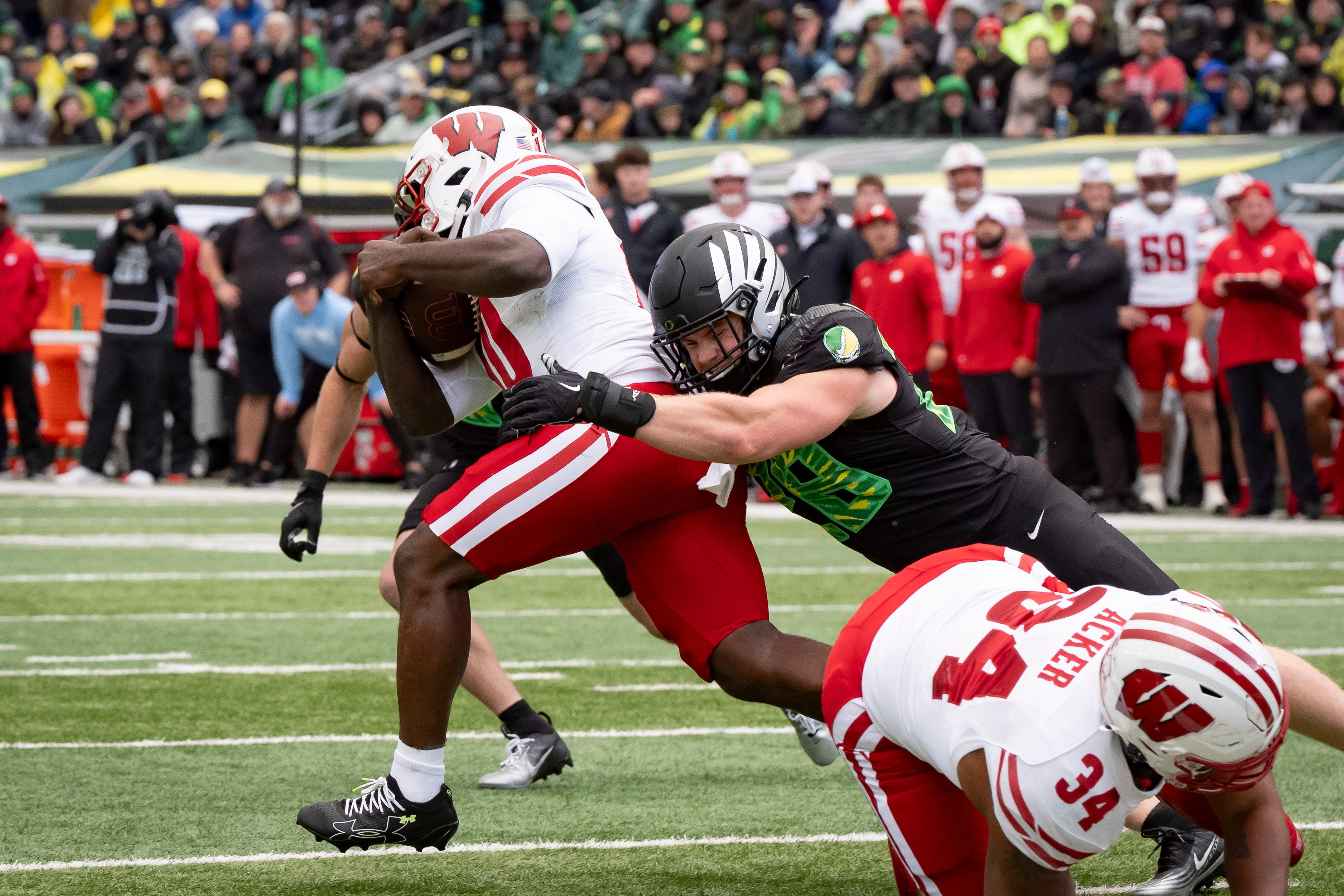
When Oregon travels to Iowa City this weekend, the Ducks know exactly what kind of team they’ll face. The Hawkeyes have built an offense rooted in physicality and patience, utilizing a run-first approach that controls the clock and minimizes mistakes. It’s a formula that has carried them to success, but it also offers Oregon a clear defensive target: shut down the run and force Iowa to throw.
Iowa enters the matchup ranked sixth in the Big Ten in rushing but dead last in passing, a statistical snapshot that defines its offensive identity. The Hawkeyes rely heavily on early-down production to stay ahead of the chains, setting up manageable third downs and play-action opportunities. When forced into obvious passing situations, however, their efficiency drops significantly.
For Oregon, the key will be simple—if not easy—execution. Win first and second down, eliminate the ground threat, and make Iowa’s quarterback try to beat them through the air.
Lanning’s respect for Iowa’s offense
Head coach Dan Lanning offered his usual measured praise when discussing Iowa’s offense in his Monday night press conference. However, some might argue he gave the Hawkeyes’ quarterback a bit more credit than the numbers support.
“Their run game is really good, and they do a great job complementing their run game with play-action,” Lanning said. “They’re as good as any team that we’ve played so far in the screen game as well, and [the quarterback] has some weapons he can throw to. He’s able to push the ball down the field, and he can make you accountable with his legs. If everything’s covered, he can take off with it, and he carries it in critical situations.”
There’s truth to Lanning’s assessment. Iowa’s play-action and screen concepts can be deceptive, but the Ducks will likely live with the occasional deep shot if it means neutralizing the Hawkeyes’ running game. The numbers suggest that if Oregon forces Iowa to abandon its bread and butter, the offense struggles to sustain drives.
Stacking the box and controlling the trenches
Expect Oregon to bring safety Dillon Thieneman closer to the line of scrimmage, daring Iowa to test the deep parts of the field. Thieneman’s tackling ability and instincts make him a natural fit in run support, and his presence near the box will give the Ducks extra muscle against Iowa’s interior rushing attack.
If Oregon can consistently stuff the run on early downs, it will force Iowa into uncomfortable, long-yardage situations that neutralize their play-action game and screens. That’s when Oregon’s defensive speed and creativity can take over.
For the Ducks, the formula is clear: stop the run, stack the box, and make Iowa one-dimensional. Do that, and they’ll have the upper hand in one of college football’s most challenging environments, Kinnick Stadium.


