
The Oregon Ducks have one frustrating tendency that is hurting their offense and cost them in the team’s loss against Indiana
The Oregon Ducks must figure out the team’s running ack rotation moving forward.


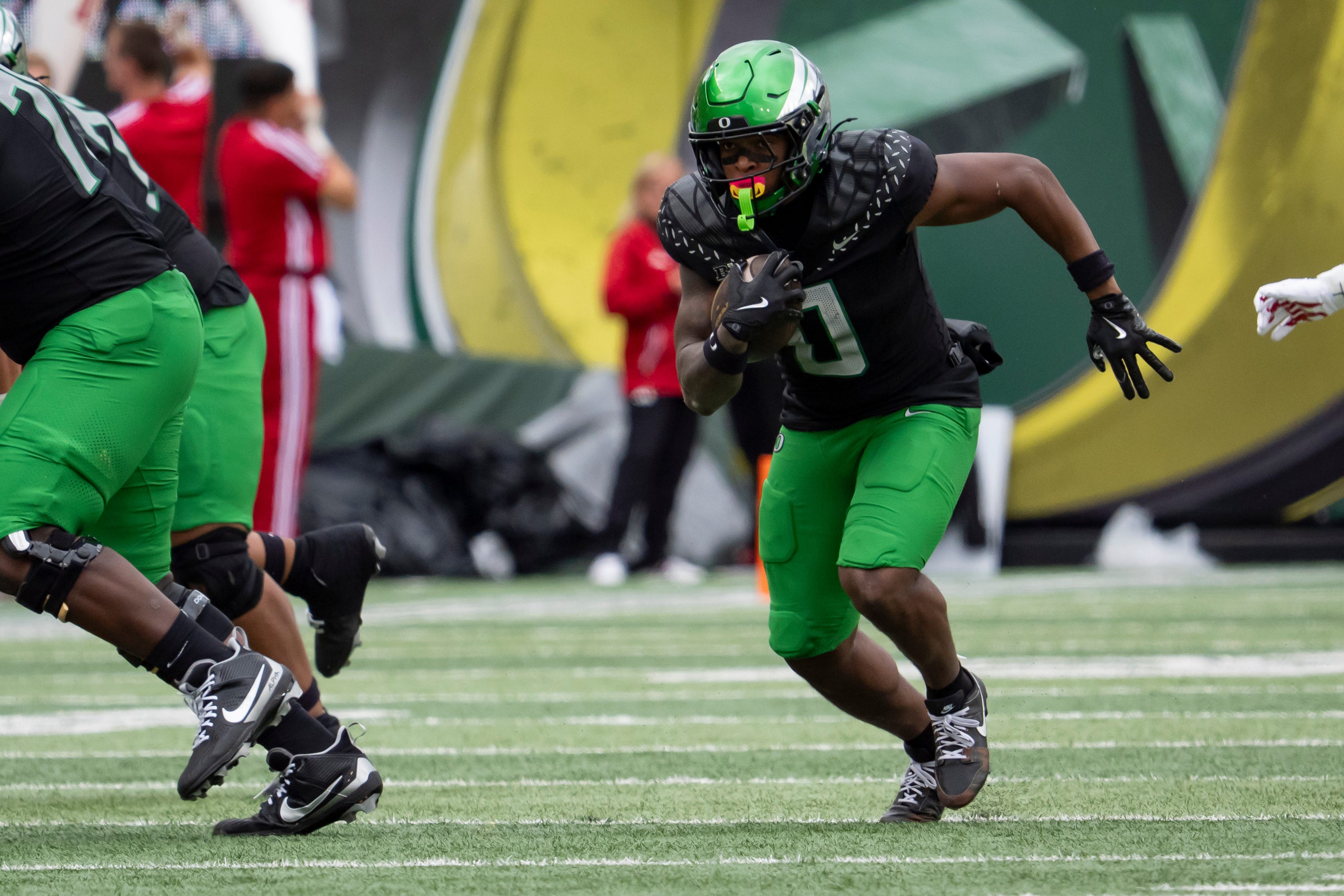
Through the first half of the season, Oregon’s offense has shown flashes of explosiveness and balance, but one area that continues to draw attention – and some frustration – is the backfield rotation. The Ducks have one of the deepest running back rooms in the nation, yet that depth may be hurting more than helping. With offensive coordinator Will Stein consistently splitting carries between four, sometimes even five backs, no single player can establish the rhythm and momentum that great rushing attacks often rely on.
Sometimes less is more
Running backs are unique in that they improve as the game progresses. The more touches they get, the more they can read defensive tendencies, adjust to blocking patterns, and wear down the opposing front. When a back is pulled after a few carries, it breaks that rhythm, and Oregon’s constant substitutions make it difficult for any of them to find their groove.
Freshman Dierre Hill Jr., the team’s top back on film this season, is a prime example. Despite his strong start to the year, he saw just seven snaps and three touches against Indiana. Hill has shown burst, vision, and balance, but his limited usage prevents him from building on that momentum within games.
Meanwhile, another true freshman, Jordon Davison, was Oregon’s most effective runner early in the loss to Indiana. He displayed quickness and decisiveness, giving the Ducks offense a spark on the ground. Yet as the game wore on, Stein shifted away from Davison, opting to mix in Noah Whittington and Jayden Limar instead. While both backs are talented and capable of contributing, the constant rotation disrupted Oregon’s offensive flow.
All four players, Hill, Davison, Whittington, and Limar, bring something valuable to the table. That said, a deep rotation doesn’t necessarily equal efficiency. Without a clear pecking order, it’s difficult for Oregon’s offense to develop an identity in the run game.
If the Ducks want to maximize their ground attack, they may need to designate one or two primary backs and allow them to settle into a rhythm. The best running games are built on consistency and timing, not constant change. Oregon’s depth is a blessing, but it may continue to be a double-edged sword until the coaching staff identifies a true lead back.


