
The Pinstripe Bowl becomes a depth test as Penn State and Clemson lose key pieces
Penn State and Clemson enter the Pinstripe Bowl with key starters unavailable. A full breakdown of opt-outs, roster availability, and why depth and commitment may decide the matchup at Yankee Stadium.


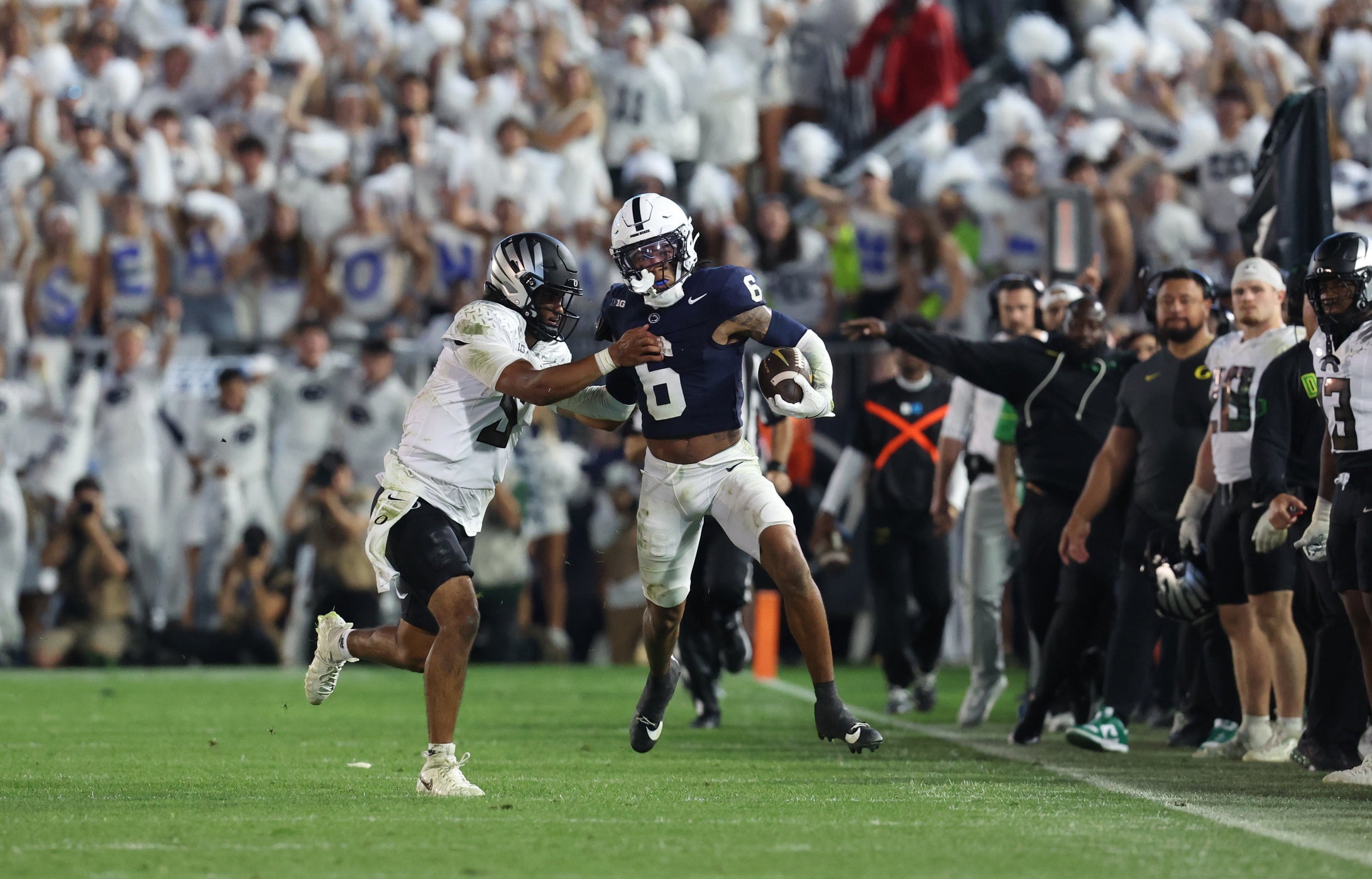
Penn State and Clemson meet Dec. 27 at Yankee Stadium in what Pinstripe Bowl executive director Mark Holtzman called “arguably the best matchup we’ve ever had.” He may be right. Two programs entered the season with national championship aspirations before suffering catastrophic midseason collapses, only to claw their way back into bowl contention. Now they bring complicated season narratives and rosters stacked with NFL futures to the Bronx for a compelling postseason showdown.
In reality, this game is about attrition—opt-outs, transfers, injuries, and coaching turnover. The Pinstripe Bowl isn’t being shaped by rankings or résumés, but by who’s actually available to play.
Penn State’s opt-outs are real — but controlled
Penn State will be without several key contributors, though the list is shorter than many expected.
Four starters have officially opted out: safety Zakee Wheatley, defensive tackle Zane Durant, running back Nick Singleton, and offensive guard Vega Ioane. Each absence matters, but Durant’s departure leaves the most significant void—a preseason All-American candidate and emotional anchor in the middle of the defense.
Junior cornerback Elliot Washington II and freshman edge rusher Chaz Coleman have also announced plans to enter the transfer portal when it opens in January. Interim head coach Terry Smith confirmed Thursday that Washington is no longer with the team and clarified Penn State’s travel policy in blunt terms: “If they’re not around the program, then they cannot travel with us.”
There is no deadline for decisions, no pressure campaign. Penn State is operating in reality. “We live in a world of NIL and the transfer portal,” Smith said. “Players come and go. We just cross bridges as they come.”
That mindset has defined the Nittany Lions’ preparation. Smith said the team is practicing with a full allotment of players and described the last two sessions as some of the best of the season, though snaps will be managed carefully. This isn’t an all-or-nothing approach—it’s a case-by-case one.
Managing veterans without risking the future
Penn State has been here before. In the 2023 Peach Bowl, several starters played limited snaps before stepping aside, and Smith acknowledged that approach remains on the table.
“You want to play your veteran guys,” he said. “But you do not want to put them in jeopardy.”
The goal is balancing competing priorities: win the game, protect the future, and give young players meaningful reps without throwing them into chaos.
Quarterback Ethan Grunkemeyer intends to play, though he hasn’t publicly announced his plans beyond the bowl game. His presence matters—Penn State’s offense operates differently when he’s settled and protected, and his development remains central to the program’s immediate outlook.
Penn State’s coaching situation mirrors its roster reality
Safeties coach Anthony Poindexter will serve as defensive coordinator after Jim Knowles’ departure to Tennessee. It’s familiar territory—Poindexter filled the same role during the 2022 Outback Bowl and 2023 Peach Bowl. Andy Kotelnicki will call the offense, while Justin Lustig remains on special teams.
Stan Drayton and Phil Trautwein will coach the bowl game despite already accepting jobs at South Carolina and Florida, respectively. Trace McSorley steps in at quarterbacks in place of Danny O’Brien, who left for Virginia Tech. Marques Hagans will handle receivers one final time.
It’s unconventional, but not chaotic—transitional football, handled transparently.
Clemson’s situation is far more severe
Penn State’s attrition is manageable, but Clemson’s is overwhelming.
Head coach Dabo Swinney said this week that 27 scholarship players will be unavailable for the Pinstripe Bowl—17 due to injury, the rest a mix of opt-outs and absences across the depth chart. Seven offensive starters are out. On defense, 14 scholarship players won’t suit up, including seven starters.
Among the most notable opt-outs are first-team All-ACC defenders Peter Woods and Avieon Terrell, both projected first-round picks according to ESPN’s Field Yates. Losing that caliber of talent doesn’t just thin depth—it fundamentally alters how a defense can operate.
“That puts a strain on everybody,” Swinney said. “But nobody cares. It’s next man up.”
Still, Clemson will have its quarterback. Cade Klubnik intends to play, first-team All-ACC tackle Blake Miller is in, and running back Adam Randall will be available. That gives the Tigers a pulse, even if the margins are thinner than usual.
What this game really tests
This isn’t an exhibition. If both teams were intact, the Pinstripe Bowl would be a measuring stick for the 2026 season. Instead, it’s a test of depth, coaching, and commitment under duress.
For Penn State, it’s the last stand of an interim era before Matt Campbell’s tenure begins—a chance to prove structure endures even as the roster transforms around it.
For Clemson, it’s a stress test of the foundation. Losing Woods, Terrell, and others strips away star power and exposes what lies beneath.
This game will be decided less by scheme than by who still believes the effort matters.
Texas Longhorns News
Penn State’s reset claims another piece as star defender heads to the portal
Chaz Coleman didn’t wait to see what Penn State would become. The true freshman edge rusher is heading to the transfer portal, a move that reflects how quickly the ground has shifted in Happy Valley.


