
Why Matt Campbell is the anchor Penn State needs right now
Here’s why the former Iowa State coach is the steady, culture-building anchor the Nittany Lions need and what his arrival means for the program’s future.


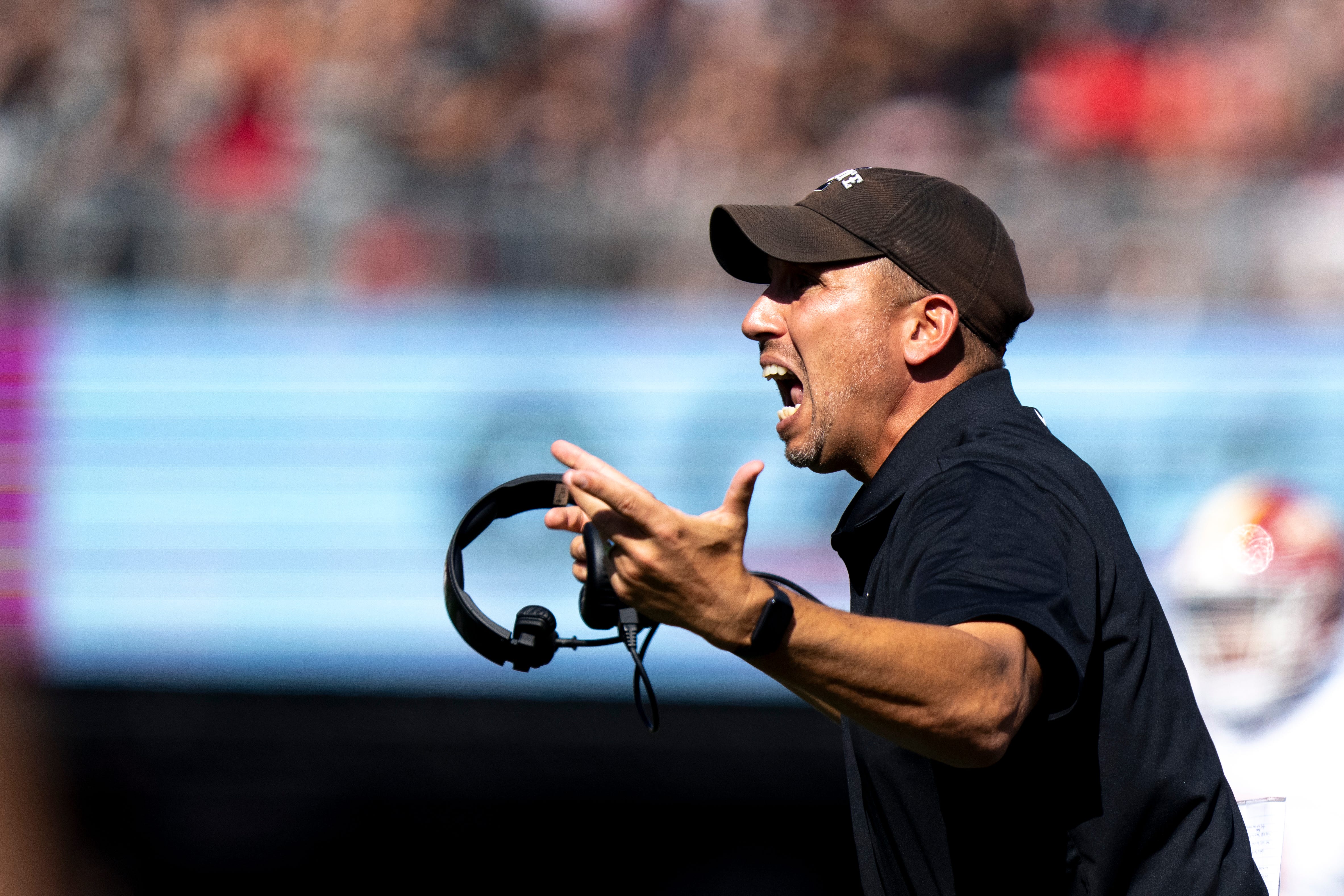
Penn State’s prolonged and chaotic coaching search has reached its conclusion. Following nearly two months of rumors, failed pursuits, and rejected proposals, the Nittany Lions are prepared to entrust their program to Iowa State head coach Matt Campbell, a proven program-builder.
Taking a closer look, this could prove to be Penn State’s most astute hiring decision in recent memory.
Why Campbell fits at Penn State
During his tenure at Iowa State, Campbell avoided grand promises of instant titles. Instead, his message was simple: “Trust the process.” Over the following decade, he made good on that commitment. Without exaggeration, he transformed the Cyclones from an overlooked program into a dependable contender — becoming the most successful coach in the school’s history and presiding over its finest era.
As Penn State navigates a period of change, that matters enormously. The 2025 season concluded at 6-6 under interim leader Terry Smith following James Franklin’s dismissal. The roster needs reinforcement, recruiting momentum has stalled, and the program’s public image suffered after several unsuccessful attempts to secure a new coach.
Campbell brings a focused reset:
- Culture first. Iowa State under Campbell became synonymous with grit, buy-in, accountability — the kind of locker-room DNA you can’t fake. That kind of foundation can steady Penn State’s roster after this year’s chaos.
- Overachiever mentality. Campbell consistently exceeded expectations at Iowa State, turning limited resources into winning seasons. That “do more with less” mindset might flourish with Penn State’s significantly larger budget and richer recruiting ground.
- Staff continuity and institutional knowledge. Penn State is retaining Terry Smith as associate-head coach, which helps smooth the transition.
Matt Campbell’s coaching strengths and strategy
- Offensive Identity: Campbell’s offense strategy has been described as a “pro spread offensive scheme” that is personnel-driven, incorporating a wide variety of concepts. It relies heavily on tight end usage, run-pass options (RPOs), and play-action. While the “wide-zone” running scheme is a common element in college football and part of the overall strategy to stretch defenses horizontally, Campbell offers an advanced version that emphasizes a balanced, pro-style spread attack.
His offensive strategy at Iowa State (now Penn State) is built on physicality, versatility, and consistency, favoring a strong, balanced attack with a mix of formations (spread, tight ends, under center) and emphasizing execution and player talent matching the scheme, rather than sticking to one rigid system, with a core focus on efficient running and trusting the process to adapt to personnel. - Defensive Identity: Largely shaped by coordinator Jon Heacock, Matt Campbell’s defensive strategy relies heavily on a 3-high safety defensive structure. This unique scheme, often a 3-3-5 alignment in name, is designed to counter spread offenses and force them to sustain long, disciplined drives, which became a significant part of Iowa State’s defensive identity. In this scheme, the third safety makes it difficult for offenses to identify coverages pre-snap and is effective against both the run and pass.
What this hire says about Penn State’s coaching search
Penn State had pursued headline-grabbing candidates. Reports indicated they targeted names like Kalen DeBoer and Jeff Brohm, as well as other prominent figures. Yet each declined in succession, opting for stability over uncertainty. Sitake remained at BYU. Brohm stayed at Louisville. Others inked extensions or simply declined interest.
That brings us to Campbell, not the most exciting name, but possibly the shrewdest choice. In some sense, this decision represents Penn State acknowledging a truth: elite credentials don’t automatically translate to elite outcomes. What they require is organization, dependability, and a leader who remains composed under scrutiny. Campbell fulfills those criteria.
Penn State has resources, legacy, and expectation. What it lacked these past few years was direction. With Campbell, there’s a chance to realign not just with the program’s history, but with a sustainable model for success.
He isn’t a guarantee of national championships. But he might be exactly what the Nittany Lions need: a builder who stabilizes the foundation, fixes what’s broken, and builds upward from there.
Sometimes, the best hire isn’t the flashiest. It’s the one who arrives when things are broken and stays long enough to fix them.

Penn State Nittany Lions News
Matt Campbell emerges as Penn State’s choice as chaotic head coaching search reaches final stage
Penn State enters final talks with Matt Campbell, aiming to end a chaotic two-month search and reset the program’s future.


