
How the Packers can take advantage of the Stefon Diggs' trade
At first glance, the Stefon Diggs trade from the Buffalo Bills to the Houston Texans has nothing to do with the Green Bay Packers. These are two AFC teams, the Packers were not involved (nor should they be) in any trade discussions. But, eventually, the deal can impact the Packers in less than a month. […]


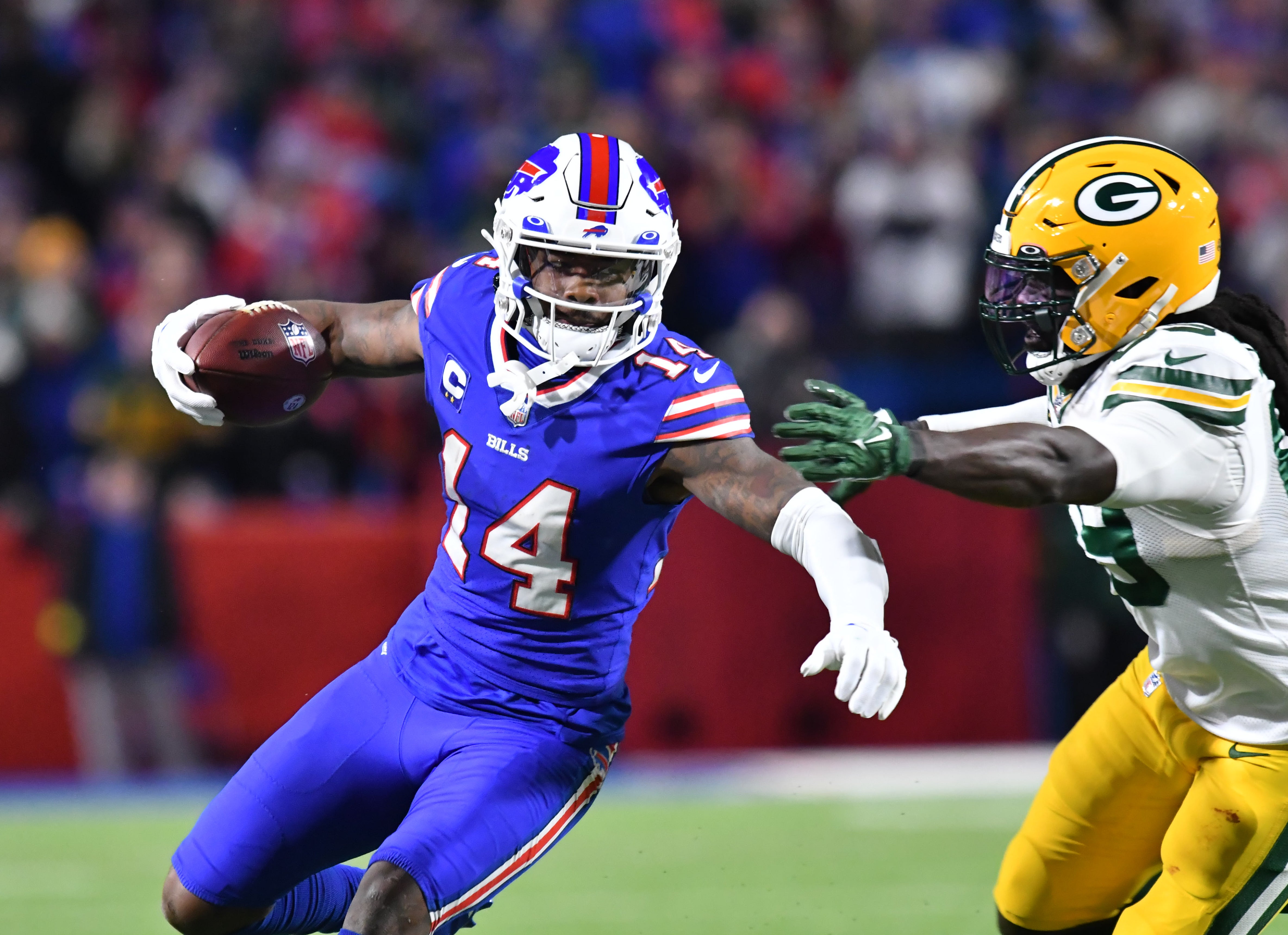
At first glance, the Stefon Diggs trade from the Buffalo Bills to the Houston Texans has nothing to do with the Green Bay Packers. These are two AFC teams, the Packers were not involved (nor should they be) in any trade discussions. But, eventually, the deal can impact the Packers in less than a month.
Bills' obvious need
After trading Stefon Diggs away and losing Gabe Davis to the Jacksonville Jaguars in free agency, the Bills have an obvious need at wide receiver. Right now, Khalil Shakir is probably the primary option in the room, but it's hard to imagine they won't add pieces there.
The problem for the Bills is that the Diggs' trade doesn't open up cap space before 2025 — this year, on the other hand, the team loses around $3 million because of the $31 million dead money hit.
"We don't have a lot of room. We'll still have to save money for the draft picks, replacement costs, practice squad, guys like that," Bills general manager Brandon Beane said. "But we'll be creative. We're still going to look. The cap flexibility is more next year which can help you even the following year depending on what you do, or you don't do in 2025."
If it's hard to find a difference-maker in free agency because of the cap situation, the draft is the only realistic avenue to get that.
Track record
Since Beane took over as the Bills GM in 2017, he hasn't shied away from trading up in the draft — and at this point you probably know where I'm going with this from the Packers' perspective.
The executive traded three times in the first round in the same year, in 2018. First, he traded away tackle Cordy Glenn to move up from 21 to 12. Then, he used pick 12 to move up to 7, a concerted effort to select quarterback Josh Allen. In the same draft, he moved up from 22 to 16 to get linebacker Tremaine Edmunds.
Beane also made shorter move ups in 2022 (25 to 23 for cornerback Kaiir Elam) and in 2023 (27 to 25 for tight end Dalton Kincaid).
Right after the trade, Beane was clear about his intentions to still compete.
"Anytime you make a move like this, as I said, very difficult, you're trying to win," he said. "And sometimes people may not see that. This is by no means the Bills giving up or trying to take a step back or anything like that. Everything we do, we're trying to win."
Trade down scenarios
A to Z Sports' Evan Winter explored potential trade up scenarios for the Bills utilizing Rich Hill's draft trade value chart.
According to Hill's chart, the 25th overall pick values 230 points. The Bills have the 28th pick, which means 209 points. The 21-point difference is equivalent to something around fourth- and sixth-round picks as compensation.
As I have already mentioned in this piece about trade down scenarios for the Packers, acquiring 2025 extra capital might be more important than 2024. For the Bills, it would also make more sense, because Buffalo already traded its third-rounder to the Packers in the Rasul Douglas trade, and next year they will have an extra second from the Diggs move.
Realistic outcome
Depending on how the board falls, and if the Bills are truly interested in moving up to select a wide receiver to replace Stefon Diggs, the deal could be something like this:
- Packets get: #28 + 2025 3rd
- Bills get: #25
That would be a fair value. The Packers, who are projected to have eight picks in 2025, would add to that amount without moving down too much, keeping a first-rounder to select a player with a fifth-year option.
Meanwhile, the Bills would make a slight move up to secure an important piece of what they want to be.
The smartest trading down strategy is available to the Packers in the draft
Nobody has had more picks than Green Bay over the last couple of years


