
Predators' lack of offense continues to define the season
The last two games have been exciting for Preds fans–a big overtime win against the Edmonton Oilers followed by a regulation win against the Blackhawks. If you're cheering for the team to make the playoffs this season, it was a great way to break an ugly losing streak and even better to see the wins […]

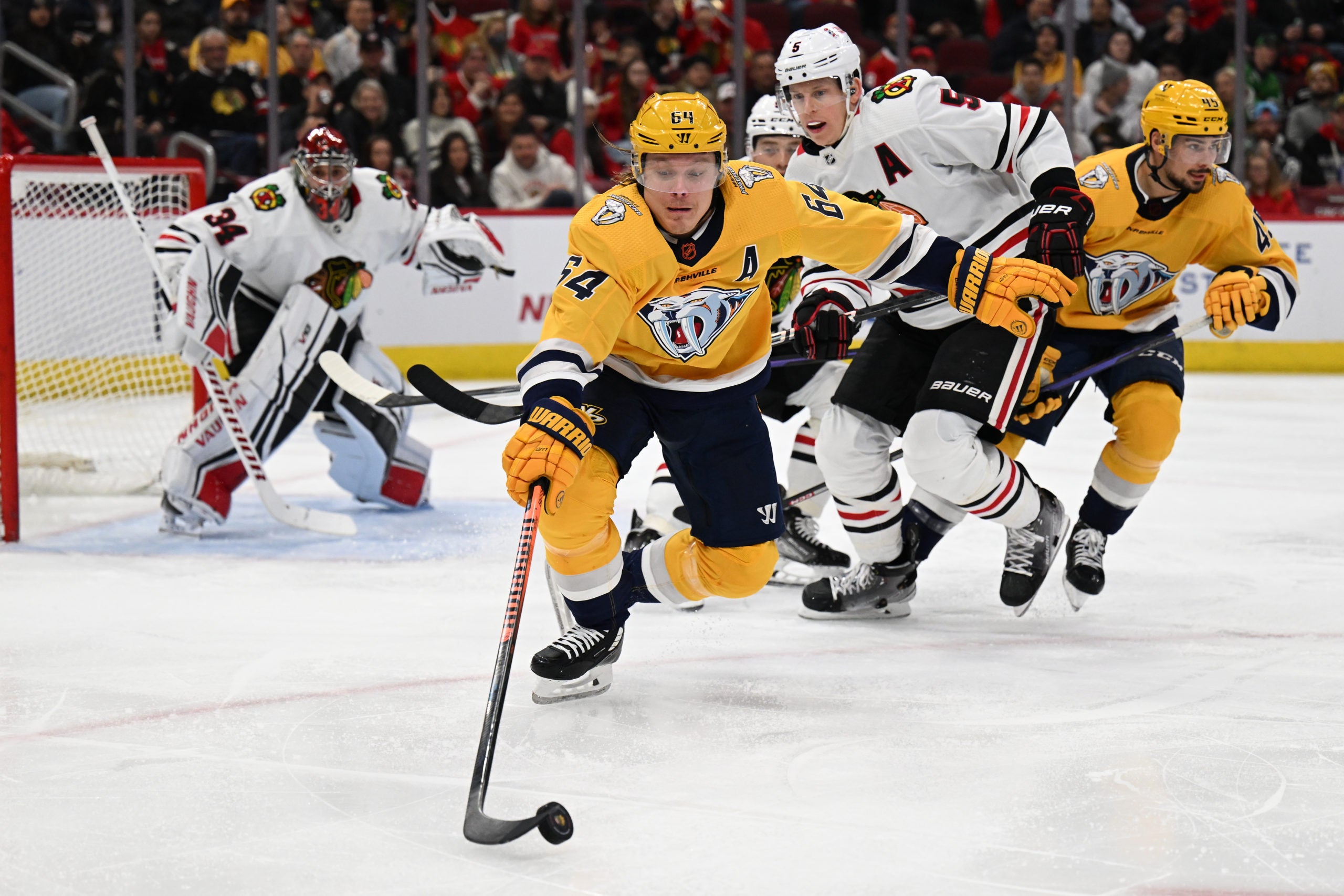
The last two games have been exciting for Preds fans–a big overtime win against the Edmonton Oilers followed by a regulation win against the Blackhawks. If you're cheering for the team to make the playoffs this season, it was a great way to break an ugly losing streak and even better to see the wins keep rolling. If you're cheering for the team to tank for a shot at a top draft spot, maybe you didn't enjoy it too much. Regardless of your hopes for the Predators this season, there's an underlying issue both sides should be aware of.
In several previous articles, I've been tracking the scoring pace of several key players in comparison to their totals form last season. To refresh:
Last season, Matt Duchene finished with 43-43-86, is currently on pace for 24-42-66
Filip Forsberg finished with 42-42-84, is currently on pace for 24-42-66
Roman Josi finished with 23-73-96, is currently on pace for 19-48-67
Mikael Granlund finished with 11-53-64, is currently on pace for 11-42-53
Ryan Johansen finished with 26-37-63, is currently on pace for 21-24-45
These projections are certainly uninspiring, but while they show us what we already know, scoring is down, they don't tell the whole story. Scoring pace might not be the best indicator of the root of the problem. There's another statistic, a more advanced statistic that tells a little more about the offensive woes of the Nashville Predators–individual expected goals (ixG). (ixG) are simply goals generated from an individual player's personal unblocked shot attempts. That feeling when Filip Forsberg takes a shot and you think, "I can't believe that didn't go in!", that's an expected goal that got stopped by the goalie.
I could spend a lot of time writing and explaining about each player or I could just refer to these charts in the tweet by @chickenandstats below. Charts seem a lot easier.
The first chart shows goals scored above or below their respective (ixG) on a season by season basis. The second shows the same information, but for power play situations only. In each, the current season is highlighted.
A quick glance tells the story quite clearly–the Predators top-scorers from last season are certainly not scoring as much, we knew that much already. Here's the problem, they aren't slumping, they've just regressed to their career averages. They are performing EXACTLY the way you'd expect them to perform based on all other season EXCEPT last season.
This is the greatest concern facing the Predators right now. The team's top talent had incredible, career-defining seasons last season. Couple that with Vezina-caliber goaltending from Juuse Saros and the team barely squeaked into the playoffs. However, they were also swiftly and decisively eliminated form the playoffs in the first round when Juuse Saros was injured.
The playoffs were evidence of what happens when one of those factors is taken out of the equation. This season, Saros (and Kevin Lankinen) is over-performing once more; the scoring corps of the team is not. You're seeing the result of that in real time. If the goaltending drops off for any reason, it isn't going to be pretty.
I'll look further into the cause of this in another article next week. Stay tuned. In the meantime, enjoy the wins when they come.
–featured image via Jamie Sabou/USA TODAY Sports-


