
Aaron Rodgers injury could force NFL to make major change
The debate surrounding the decision to use artificial turf or real grass in NFL stadiums has been building slowly over the years and Aaron Rodgers' injury could be the final straw needed to force the NFL's hand when it comes to using real grass in all 32 stadiums. There have been plenty of studies that […]


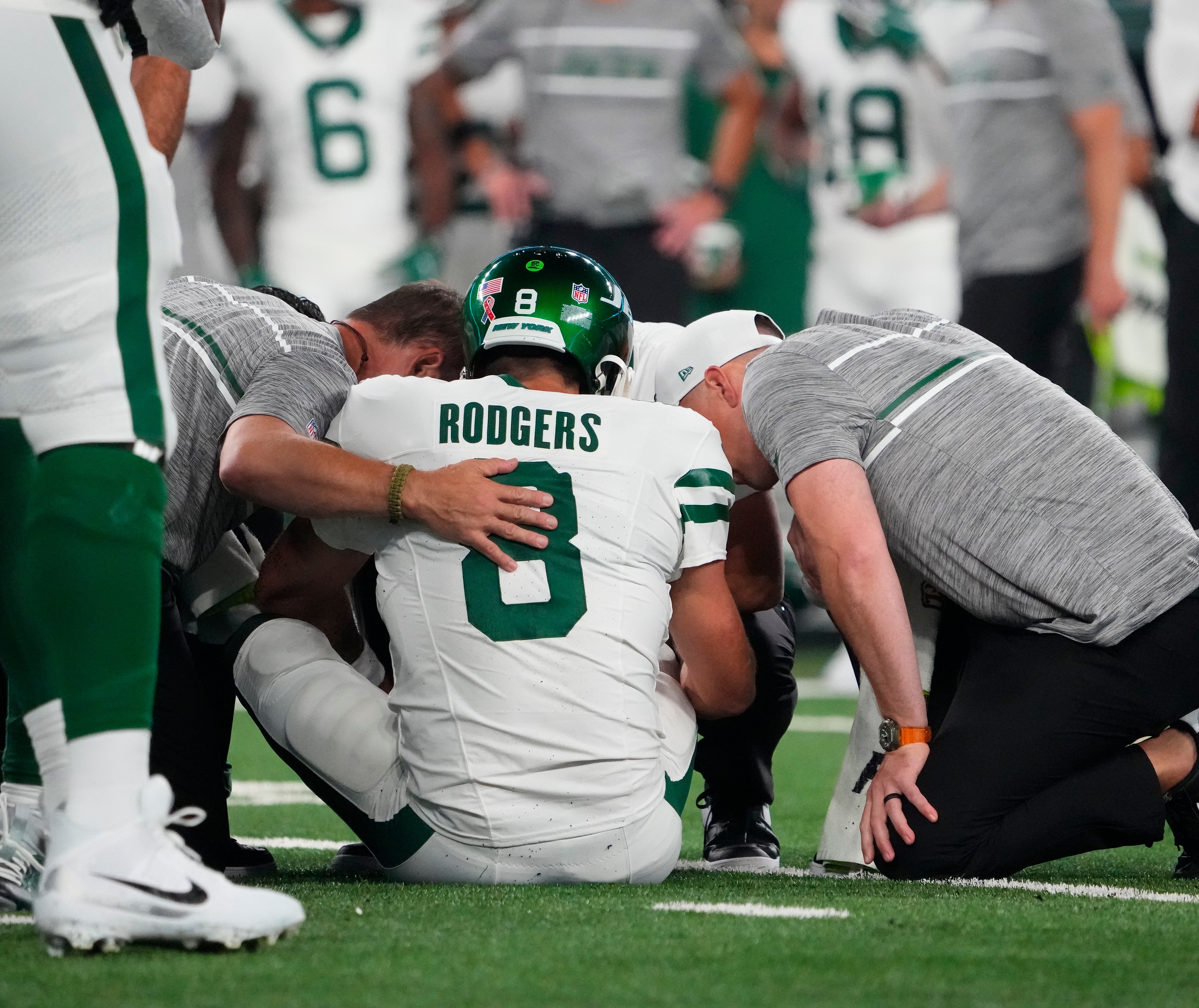
The debate surrounding the decision to use artificial turf or real grass in NFL stadiums has been building slowly over the years and Aaron Rodgers' injury could be the final straw needed to force the NFL's hand when it comes to using real grass in all 32 stadiums.
There have been plenty of studies that prove turf is much harder on the human body than grass and at this point, there's not a lot of ground to stand on for turf supporters.
Professional football players put extremely high levels of force and rotation onto the playing surface. Grass will eventually give, which often releases the cleat prior to reaching an injurious load. On synthetic surfaces, there is less give, meaning our feet, ankles and knees absorb the force, which makes injury more likely to follow.
The data supports the anecdotes you’ll hear from me and other players: artificial turf is significantly harder on the body than grass. Based on NFL injury data collected from 2012 to 2018, not only was the contact injury rate for lower extremities higher during practices and games held on artificial turf, NFL players consistently experienced a much higher rate of non-contact lower extremity injuries on turf compared to natural surfaces. Specifically, players have a 28% higher rate of non-contact lower extremity injuries when playing on artificial turf. Of those non-contact injuries, players have a 32% higher rate of non-contact knee injuries on turf and a staggering 69% higher rate of non-contact foot/ankle injuries on turf compared to grass. – JC Tretter, NFLPA President
Now, NFLPA Executive Director, Lloyd Howell is spearheading the movement to force the NFL into installing real grass in all of its stadiums.
This is a big development and it obviously comes at the heels of the Rodgers injury. It's a brutal truth to admit, but if someone like Drew Lock tore his Achilles in one of the year's most anticipated primetime games while playing in front of one of the biggest -if not the biggest- markets in the country, there wouldn't be this much press nor effort toward making a change.
But, since it's Rodgers, a first-ballot Hall of Famer, things are much different.
Of course, the deciding factor is money, but when looking at the studies surrounding the costs of installing and maintaining each product, it's pretty clear that natural grass is actually more affordable than turf, in both the short- and long-term.
"Maintaining a natural grass field is slightly more expensive than a turf field, but not by a significant margin. Plus, if one takes into consideration the $500,000 that must be paid every 8-10 years to replace the carpet of an artificial turf field, and the fact that it is at least $250,000 more expensive to implement, then using natural grass ends up being cheaper in the short and long run." – Brian Wolfson, Duke University Soccer Politics Blog, 2015
The NFL would be wise to protect its biggest investment, which is obviously its players. Putting them on a surface that exponentially increases the chances of a major injury simply isn't a good strategy for what is considered to be one of the smarter businesses in the entire world.
It remains to be seen what the next move is, but it's clear Rodgers' injury has given the debate for grass all the ammo it needs to push for some big changes in the future.
Featured image via Robert Deutsch-USA TODAY Sports


