
Jordan Love's contract is the blueprint for teams willing to acquire Justin Fields from the Bears
Justin Fields wants a quick resolution of his NFL future. The most likely scenario at this point is that the Chicago Bears trade the quarterback — and rumors around the league indicate the price range might be a day 2 and a day 3 pick. The most complicated part right now is Fields' contract situation. […]


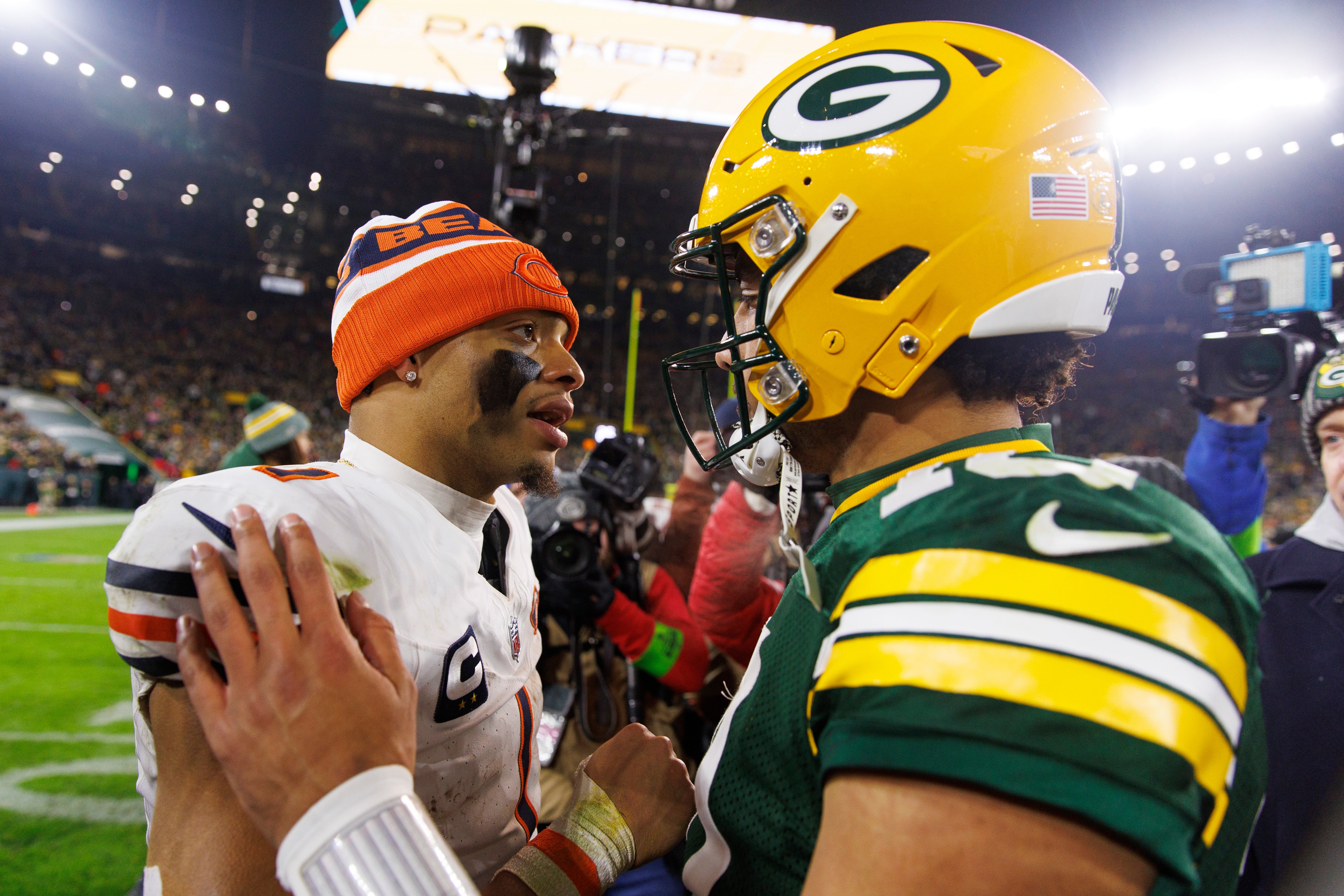
Justin Fields wants a quick resolution of his NFL future. The most likely scenario at this point is that the Chicago Bears trade the quarterback — and rumors around the league indicate the price range might be a day 2 and a day 3 pick. The most complicated part right now is Fields' contract situation.
Since the 2011 CBA, with the rookie-scale contracts, teams have had a fifth-year option on first-round players, and that has to be exercised or not at the end of the third season. However, since the 2020 CBA, the option becomes fully guaranteed when exercised.
Therefore, any team that eventually acquires Justin Fields from the Bears — the Atlanta Falcons, Pittsburgh Steelers, and Las Vegas Raiders are the most likely ones — will have to make that decision before Fields plays a single snap for it.
The acquiring team would absorb $3.233 million in 2024. As a quarterback who has hit playing time thresholds in his first three seasons in the league but didn't make a Pro Bowl, Fields' will have a fifth-year option established at $21.978 million for 2025.
Theoretically, it's hard for a team to execute a trade without the intention to keep Fields for more than one season. But guaranteeing $25 million for two years, plus the draft capital required to execute the trade, is a complicated proposition, considering that Fields is 35th in EPA+CPOE composite and 37th in success rate among 43 qualifying quarterbacks since 2021.
What is the solution?
Ideally, the acquiring team would want to secure two years of Fields for a reasonable price tag, giving it more flexibility to operate moving forward. And that's a blueprint the Green Bay Packers executed in 2023.
It's a slightly different circumstance because Jordan Love had barely played in his first three years in the league, while Justin Fields has had 38 starts.
But it's fair to say that, in both cases, the team making the decision wasn't or won't be completely sure about the player's future.
What the Packers and Love agreed to
Love was a first-round pick in 2020, so his initial deal was a four-year, $12.383 million contract. In 2023, he would have originally made a little more than $2 million, and the Packers have a fifth-year option projected at $20.272 million.
That would mean $22.5 million over two years, but with a bad structure for the team — the entire fifth-year option value would hit the cap at once.
So, the Packers offered Jordan Love a one-year extension instead of the fifth-year option. It was a $13.5 million contract that could jump to $22.5 million with incentives.
Why it made sense for each side
For the Packers, it's easy. The team had a slightly bigger cap hit in 2023, but gained a lot of flexibility in 2024 and to sign a new extension. They avoided Baker Mayfield's situation, where the Cleveland Browns had to absorb a lot of money to trade him away, but also the Daniel Jones' situation, where the New York Giants ended up forced to give him an overvalued extension to avoid a franchise tag scenario after his option had been declined.
For Love, it was a bet on himself. He made around $7 million more in 2023 than he would have otherwise, and while he is slated to make less in 2024 ($11 million) than he would have with the option, practically his good performance on the field forced the Packers to offer a new, long-term extension.
How could it work
The Bears want proper compensation to trade Fields away, and it will probably happen well before the draft. At first, a willing team would approach Bears general manager Ryan Poles to offer a trade package, but with the condition of finding a short-term extension with Fields.
Once that part is finished and the trade compensation is agreed to, the new team's executives can work with Justin Fields and his agents to adjust his contract.
The new team would pay Fields more than the $3.233 million he's slated to make in 2024, but Fields would agree to a one-year extension for 2025, making less than the $21.978 million option.
Just as it happened with Jordan Love, Justin Fields' deal would have to include incentives to match the quarterback's on-field production and the team's collective success — Love got $5 million of the $9 million in available incentives in 2023.
Justin Fields wants a resolution, and the Bears want fair compensation for the trade. Allowing the new team to negotiate a new fair contract is the best possible path for all parties involved.
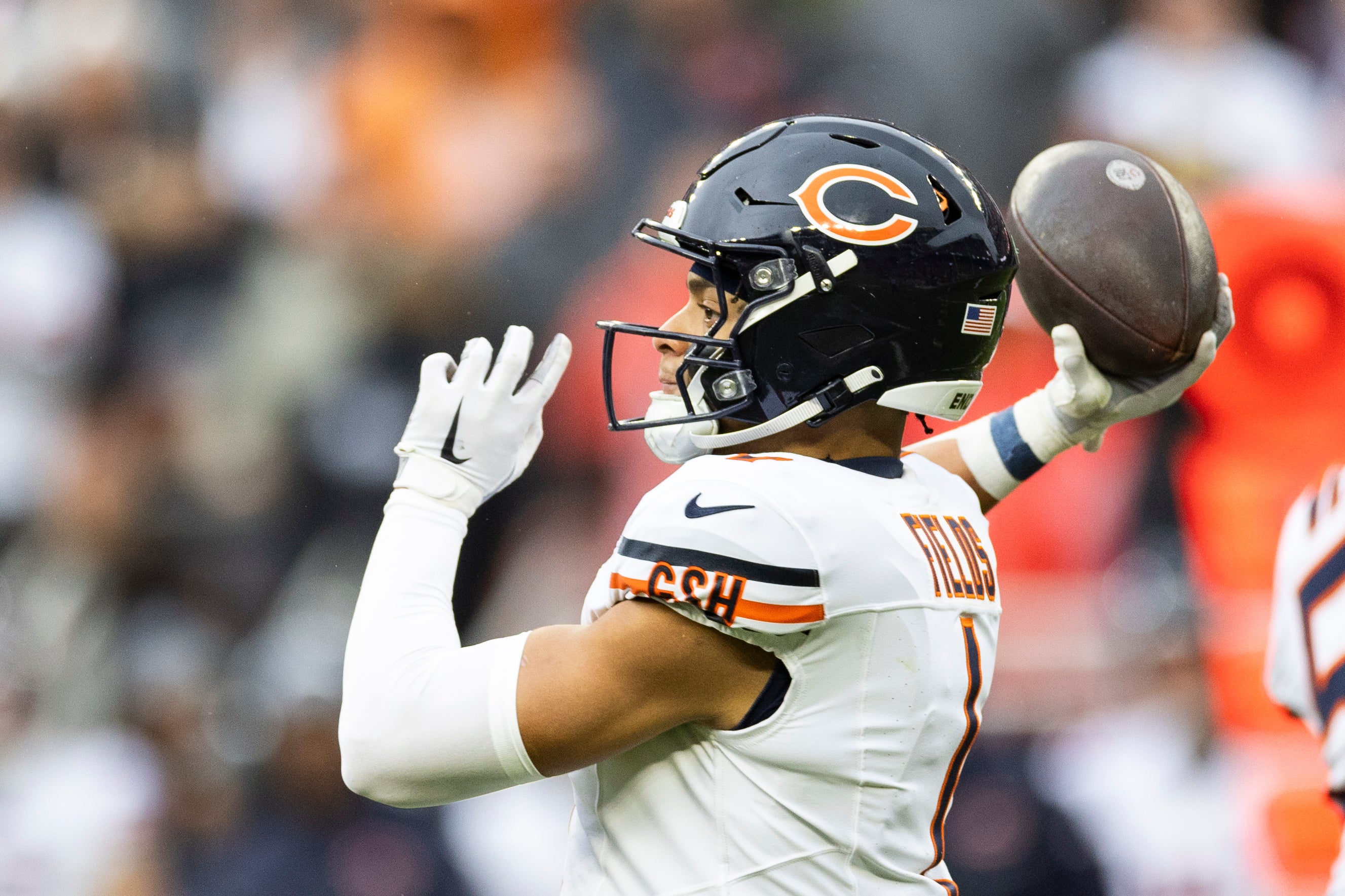
Five potential landing spots for Justin Fields
The Bears might trade their quarterback in the offseason


