
From slow discontent in Dallas to a monster deal, how Packers shocked the NFL world with Micah Parsons blockbuster trade
Green Bay pulled off a blockbuster trade.


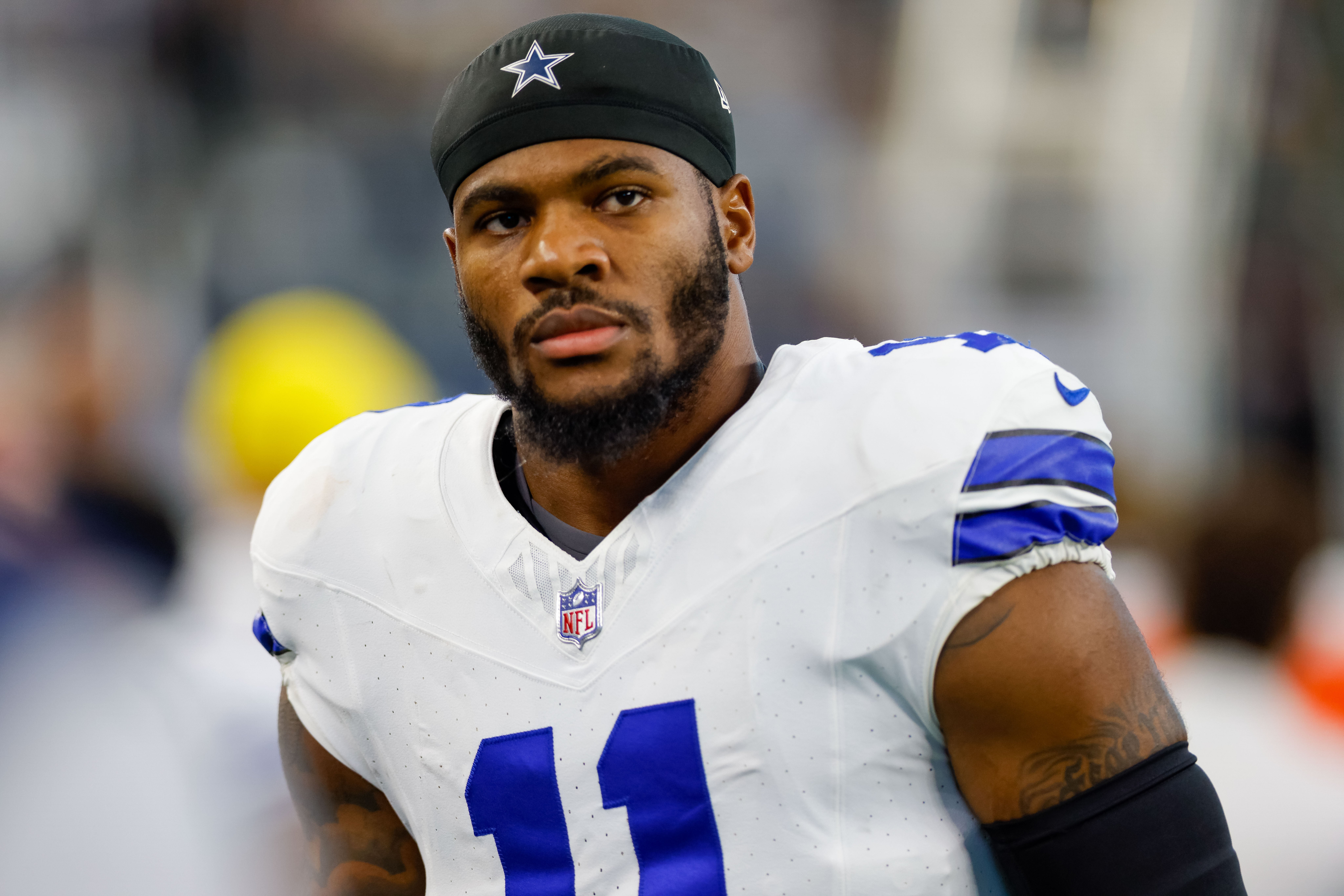
Blockbuster trades don’t come from nowhere. At the same time, things can wrap up fairly quickly. On Thursday morning, Kenny Clark practiced with the Green Bay Packers in preparation to face the Detroit Lions in Week 1. Hours later, he was a member of the Dallas Cowboys, part of a huge package with two first-round picks to acquire star edge rusher Micah Parsons. One day to change the present and future of two franchises.
How it started
The Dallas Cowboys could realistically have reached a contract extension with Micah Parsons a year ago. A drafted player on his rookie contract becomes eligible after three seasons, and most NFL teams have preferred to finalize deals as soon as possible to avoid cap inflation. The Packers themselves did that this offseason by signing right tackle Zach Tom to a four-year, $88 million extension.
Nick Bosa had signed an extension with the San Francisco 49ers in 2023 for $34 million a year. While there weren’t any elite edge deals last offseason, the market didn’t reset until Myles Garrett agreed to get a $40 million yearly average from the Cleveland Browns this year. A year ago, Parsons would have signed something around $35 million to $37 million, based on what the market looked like.
However, this has been Jerry Jones’ modus operandi. He only signs players early if it’s an extremely team-friendly deal. Otherwise, they have to wait. Dak Prescott did, CeeDee Lamb did. Both ended up getting player-friendly contracts after all, but patience was a must to handle Jones.
How it got messy
Micah Parsons played the 2024 season for $2.989 million, after the Cowboys had exercised his $21.324 million fifth-year option for 2025. Had Dallas wanted, it could still apply three consecutive franchise tags on Parsons, and this is where patience starts to end.
The Cowboys say they offered Parsons a deal with $40.5 million a year in total value, but it was a five-year deal. Parsons’ agent is David Mulugheta, who frequently advises his clients to accept shorter teams, enabling them to return to the market earlier. That’s exactly what happened to the Packers and quarterback Jordan Love in their long-term extension.
Either Jerry Jones and Micah Parsons had a handshake agreement or not, Parsons wouldn’t sign the papers for such a long deal.
Trade request
After months without a single gesture from the Cowboys to show willingness to negotiate with Mulugheta, Micah Parsons took steps to make something happen. On Aug. 1, Parsons officially requested a trade out of Dallas. At that point, Jerry Jones still wanted to make something done and see how training camp would advance. But by that time, a handful of teams approached the Cowboys. The Packers and general manager Brian Gutekunst were among them. There were reports about the Baltimore Ravens and Arizona Cardinals involved as well.
Dallas said no.
How it ended
Parsons refused to practice in training camp and to play in preseason, alleging he was dealing with a back injury and looking for more medical opinions. At some recent point, Parsons’ representation made contact with the Cowboys. Due to a fractured relationship, Jerry Jones said that he would have to play under his fifth-year option or move on—something Jones confirmed during his infamous post-trade press conference.
You know what Parsons’ answer was.
This past week, the Cowboys showed they were actually open to a trade. The Packers were excited about what Parsons would look like in Jeff Hafley’s scheme, so both sides agreed to the parameters of the trade package.
Dallas had a more pressing need for an interior defensive lineman, and that’s why Kenny Clark was the option instead of younger players like Rashan Gary and Lukas Van Ness—for the Packers, that’s also better considering their long-term approach. Micah’s age, 26, was certainly a factor—Gutekunst would not pull off a similar deal for an older player like Trey Hendrickson.
With a deal relatively in place, the Cowboys green-lighted the Packers to negotiate a deal with Mulugheta. At that point, Green Bay accepted to reset the edge market by a significant margin. Parsons will get a four-year, $186 million extension in base value, with $2 million more available in incentives. The structure is unique for Packers non-quarterbacks, but that’s just the nature of how it all went down. It’s a $44 million signing bonus, $62 million through the first year of the deal, and $120 million fully guaranteed at signing—the first three years of it. With the numbers Parsons was already set to make, it’s in total a five-year, $210 million deal, or $42 million per season in real money.
With the contract numbers in place, a trade gained traction throughout the day on Thursday until it was a done deal by the afternoon.
Slowly and then pretty fast. That’s how one of the most impactful trades in NFL history came to be.
Green Bay Packers News
Packers’ bold move for Micah Parsons creates clear winners and losers inside Green Bay as the blockbuster trade shakes up the future
Green Bay pulled off major move.


