
Kevin O’Connell’s play-calling is under severe fire, but the issues surrounding it aren’t as dire for the Vikings as it may seem
The discussion about Kevin O’Connell’s play calling isn’t one that has a simple answer.


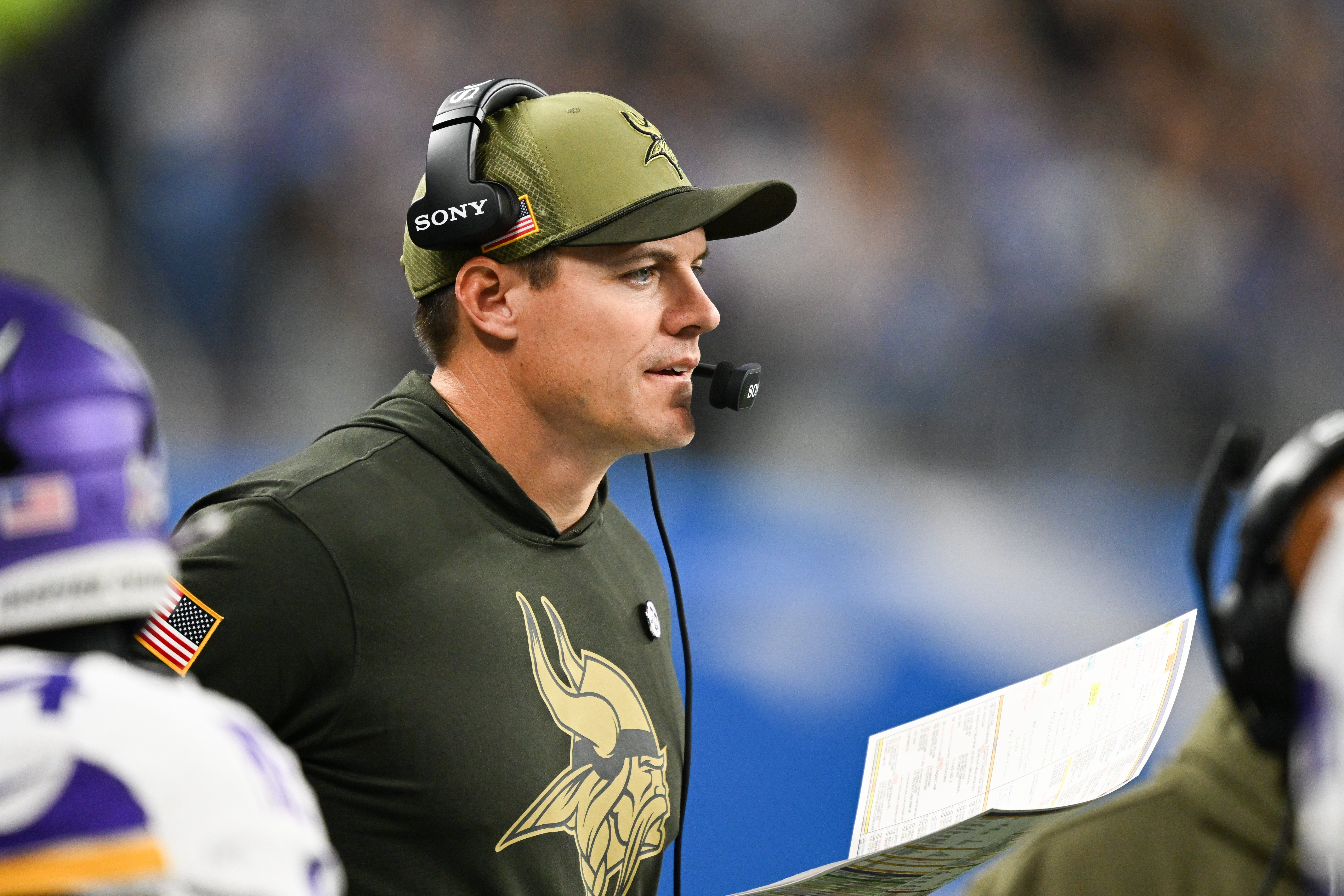
The Minnesota Vikings’ loss to the Baltimore Ravens on Sunday afternoon brought a lot of criticism for head coach Kevin O’Connell. The biggest piece of criticism surrounding O’Connell and his team is centered on the offense and his play-calling. Fans are frustrated with the lack of run plays, and some have even called for him to give play-calling duties to someone else.
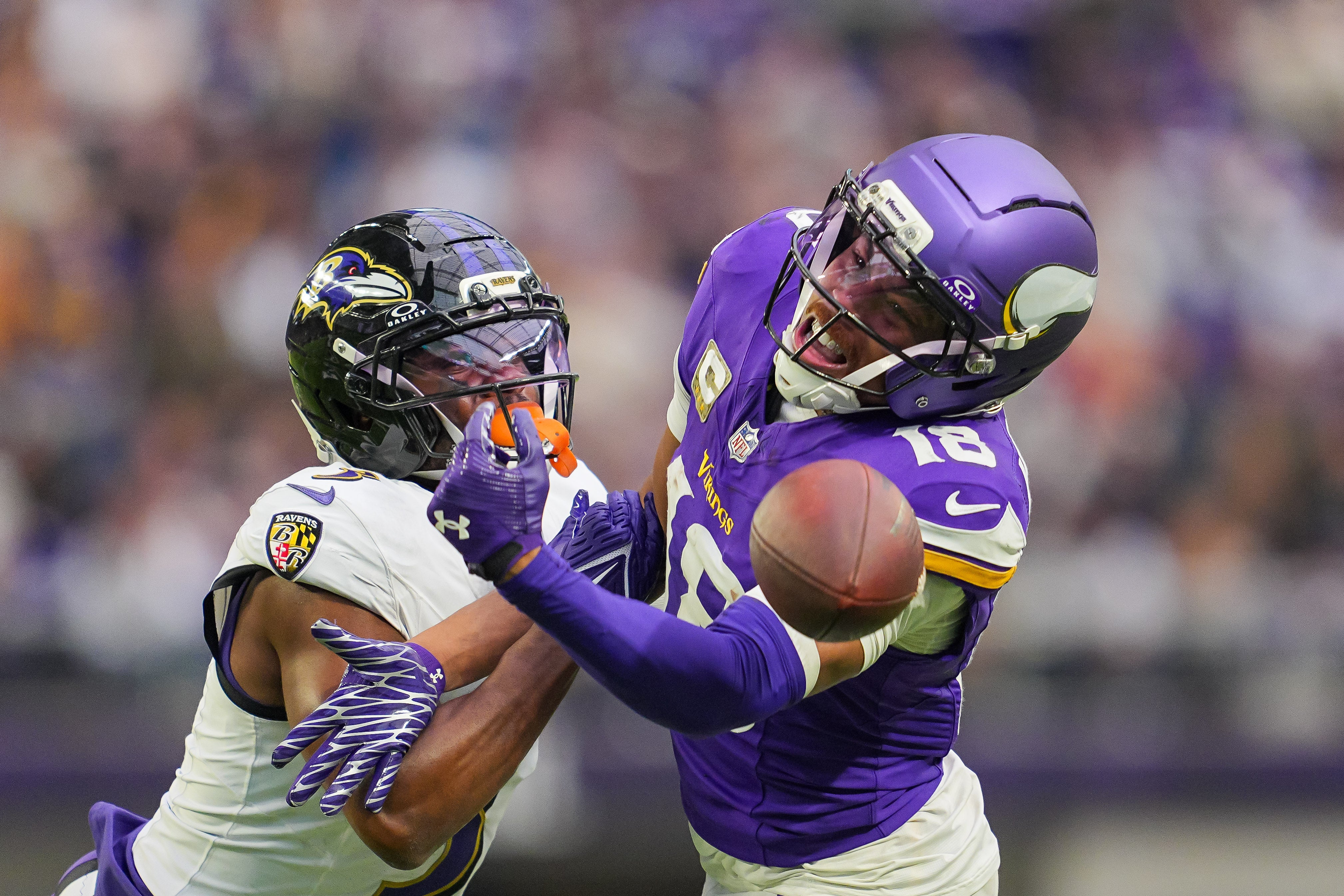
The main issue people have with his play-calling has been his lack of willingness to run the football, especially in third and short situations. The one play that has their anger is the interception that J.J. McCarthy threw when targeting Justin Jefferson on a third-and-1 deep shot.
Kevin O’Connell’s play-calling isn’t a problem, but it needs improvement
That throw to Jefferson is exactly how O’Connell wants to call his offense. When they give you an opportunity for a one-on-one shot to the best wide receiver in football, you take it, and O’Connell was unapologetic about the play call.
“Best receiver in football in a one-on-one with a run call you feel good about on fourth and one.
I would not change that call,” said O’Connell during Monday’s press conference.
Taking shots like that is smart business for multiple reasons, especially when you have fourth down available at your disposal in that part of the field. Plus, when you have Jefferson on your team, it makes the decision that much easier. We talk a lot about EPA/play when it comes to success on offense, and shots like that generate a lot of EPA.
Where things can get a little bit dicey is with the lack of success overall in throwing on third and two or less. They have been successful at rushing the ball in those situations, but throwing the ball has been tougher.
- 10 rushes, seven first downs (70% success rate)
- 14 passes, one first down (7.14% success rate)
Even with the poor third-down numbers, the Vikings have been much better on fourth and short. Both runs and passes have been successful twice out of three attempts. It’s not like O’Connell hasn’t been calling good plays in these situations, but the lack of success is where the issues lie.
When comparing the micro of each play call versus the macro of the cumulative results, it’s a difficult one to parse out. You can tell that the majority of the play calls are good, but the execution has not been there. At what point does good process get usurped because the results aren’t there? It’s a difficult discussion.
You can see throughout the entirety of the game that he’s scheming things up, but they aren’t getting there all the way. This play in the second quarter emphasizes that fact.
The Vikings went back to it on the final drive and hit it for a huge chunk play.
The intermediate and deep passing game has been one of the best during O’Connell’s tenure, no matter who has played quarterback. Last year, Sam Darnold was the NFL’s best quarterback in those situations.
Even with that kind of success attacking down the field, the big issues are with the lack of a running game. O’Connell didn’t run the ball nearly enough. Even so, it wasn’t nearly as bad when you look at the game script.
Included in those 28 dropbacks are three when the Vikings were trying to get points at the end of the second half. Twenty-five dropbacks and 11 rushes is a 69.44% rate toward the passing game.
Even though that number is too high, it’s important to note that McCarthy can change the play call at the line of scrimmage by “canning” it, as they call two plays in the huddle. Canning it at the line of scrimmage allows the Vikings to get into the best play call for the defense they are facing.
When you see quick screens to a wide receiver or a fade route on the outside, that usually comes from changing the play at the line of scrimmage. Remember the fade route to Jefferson against the Philadelphia Eagles? That wasn’t supposed to be a passing play, but they changed it due to slot cornerback Cooper DeJean being opposite of Jefferson.
It’s no secret that the Vikings need to run the ball more, but how much should they prioritize it? Even though they were rushing at a high clip, how much of that success would end up going down due to more attempts? Even though it’s likely, focusing on the running game is a good idea.
So, why haven’t the Vikings made it more of a focus? They aren’t exactly throwing the ball more than they were expected to do.
In neutral situations, the Vikings are 12th in pass rate, but just 26th in EPA/rush. Neutral situations are the best judge of play-calling, especially since the Vikings have gotten down big to their opponents in multiple games.
When you look at their game against the Ravens, the Vikings only had a one percent pass rate over expected, mainly due to the Ravens having a two-score lead for most of the second half.
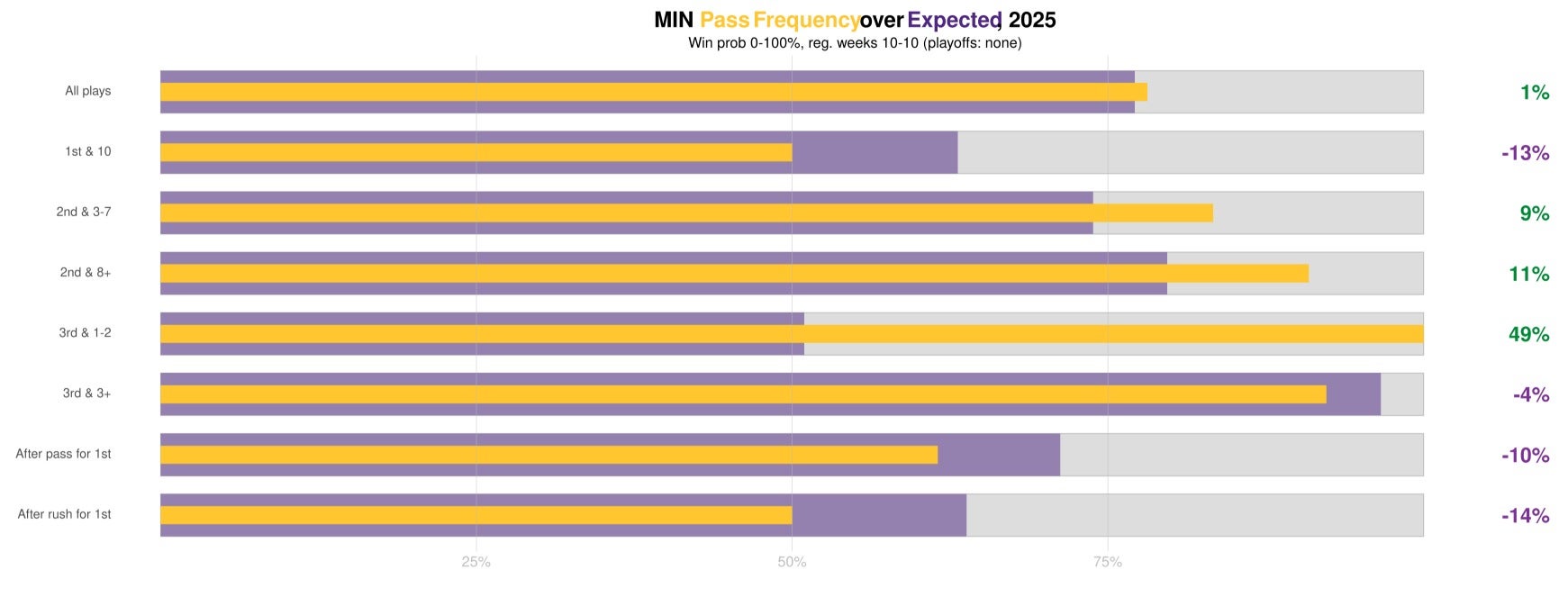
It all boils down to a few things:
- Do the Vikings need to run the ball more? Yes, they do.
- Is it understandable that they don’t run it more, even with a first-year starting quarterback? Yes, it is.
- Are the plays O’Connell is calling giving the Vikings offense a chance to succeed? Yes, they are.
There are several issues with this football team, primarily the procedural penalties that have hindered them on offense. However, O’Connell’s play-calling, as a whole, isn’t the issue. Some things need to be cleaned up, but anyone calling for him to give up play-calling duties just doesn’t understand the entire picture, especially because it would end up complicating McCarthy’s development.
O’Connell has the Vikings set up for success game in and game out, and now it’s about working on the execution of said plays.
Minnesota Vikings News
Despite brutal loss to Baltimore Ravens, Minnesota Vikings had positives on both sides of the football, with biggest issues being fixable
Not all hope is lost for the Minnesota Vikings.
Minnesota Vikings News
Minnesota Vikings issues with penalties aren’t a one game problem, but they were emphasized on Sunday vs. Ravens
It’s honestly ridiculous that this is such a big issue.
Minnesota Vikings News
Kevin O’Connell provides clarity on controversial play call to Justin Jefferson that had fans seething, and he’s absolutely right
It’s not a simple answer, but Kevin O’Connell is right about his play calling.


