
The Dolphins rank among NFL leaders in usage of clever salary cap tool but the recent trend tells a different story
The NFL's recent trends in salary cap strategy have recently come under fire courtesy of some comments made by NFL commissioner Roger Goodell last month. The spotlight was cast on the "integrity" of the league's cap system, per the comments by Goodell, as owners begun to focus their attention on where they want to focus […]


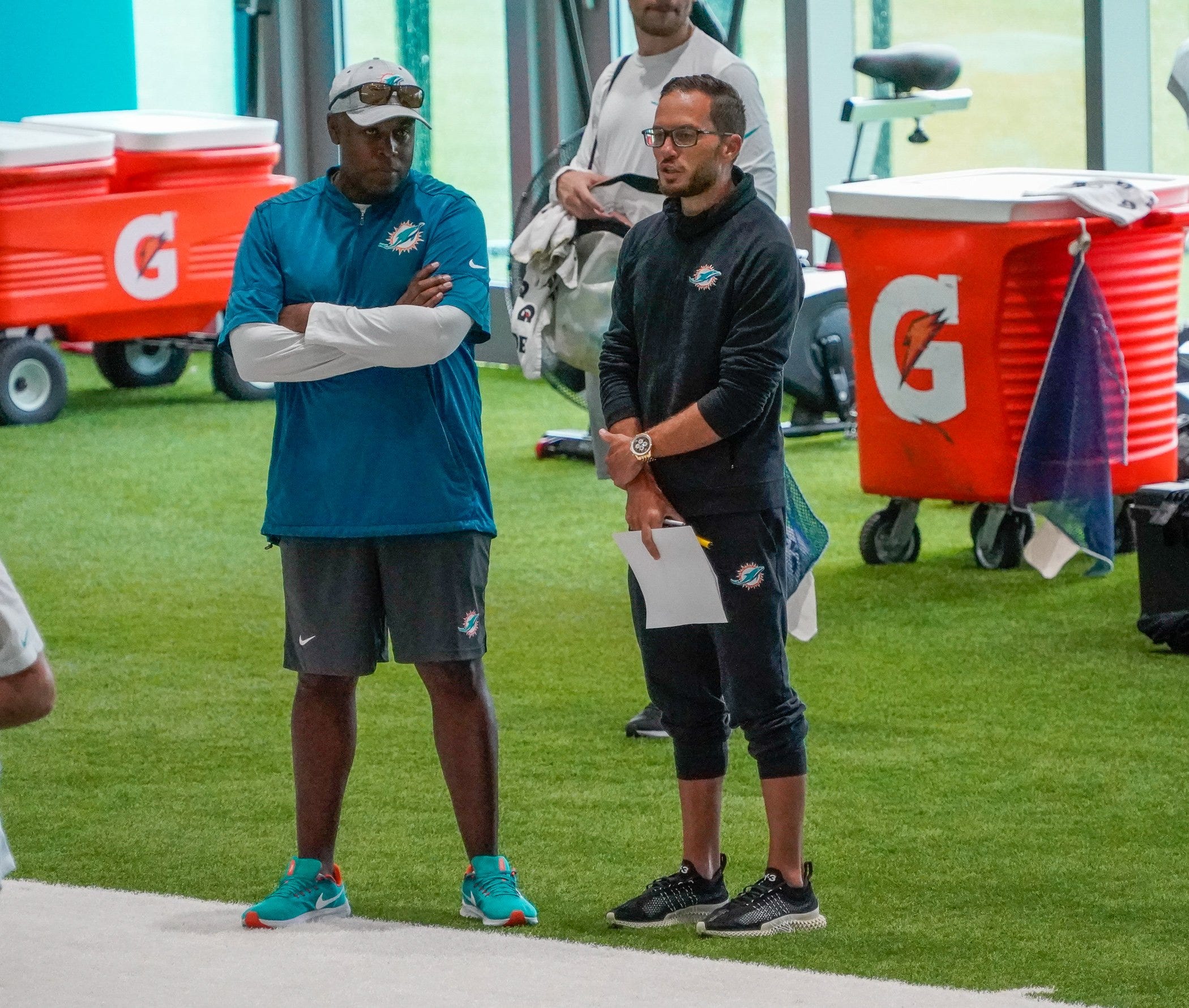
The NFL's recent trends in salary cap strategy have recently come under fire courtesy of some comments made by NFL commissioner Roger Goodell last month. The spotlight was cast on the "integrity" of the league's cap system, per the comments by Goodell, as owners begun to focus their attention on where they want to focus their negotiations for the next collective bargaining agreement with the NFL Players' Association.
Goodell's comments about the cap system appear to be a direct shot at the usage of void years as a means of enabling more cash spending above the cap ceiling each year. The skepticism of its 'integrity' means more for some teams than it does for others. The Miami Dolphins currently sit on the higher end of the spectrum with their usage of this newer fad. According to Spotrac, the Dolphins rank sixth in the NFL with 15 contracts that call upon void years to further stretch their cap debts.
A void year is, in short, a dummy year on the back end of a contract to help serve as a placeholder to prorate more of a player's cash bonus across more years. As a result, more of a team's payment can be deferred to future years as rolling debt. In theory, as long as teams are willing to continue to spend for bonuses, they can roll their debt into a growing salary cap each year with few negative consequences and, by extension, spend far more than the cap annually. That is, of course, assuming that void years remain permitted into the future.
Miami's ranking on this list means that the team will be more vested in the league's ultimate thirst to, potentially, purge void years from the rulebook down the road. A day of reckoning is still a ways off — but it is worth keeping an eye on this trend and how far the Dolphins are willing to continue to implement this contract wrinkle.
Who are the current contracts on Miami's books that use void years?
15 total contracts as of June 6, 2025
- QB Tua Tagovailoa
- QB Zach Wilson
- FB Alec Ingold
- WR Tyreek Hill
- WR Jaylen Waddle
- WR Nick Westbrook-Ikhine
- TE Jonnu Smith
- IOL Aaron Brewer
- OT Austin Jackson
- IOL James Daniels
- IDL Zach Sieler
- EDGE Bradley Chubb
- LB Jordyn Brooks
- CB Jalen Ramsey
- K Jason Sanders
The numbers may seem like an unsettling amount of future debt. And, on the spectrum of NFL teams, the Dolphins are again pushing towards the upper quartile of franchises in this regard. But the raw number of contracts should not be as concerning as the Dolphins actual debt on these deals.
When a team trades or cuts a player with void years of future debt, it is handled just like any other dead money. If a transaction happens before June 1 on the calendar, all of the debt will accelerate into the current year as "dead cap". If it happens after June 1 or a cut is designated with a "Post-June 1" cut, which teams are allotted two of every year, the current year's commitments will be carried as dead cap and all future years will roll into the following year's cap commitments as dead cap.
Many of Miami's void debts are pocket change. And they're spread out over the next four years, as well. Here are the total amounts of void debts currently on the books for each of Miami's 15 contracts that have at least one void year written into the details.
Total Void Money In Each Dolphins Contract
| Year | Player | Position | Void $ Amount |
|---|---|---|---|
2026 | Zach Wilson | QB | $3.8 million |
2026 | Jonnu Smith | TE | $1.65 million |
2027 | Alec Ingold | FB | $830,000 |
2027 | Tyreek Hill | WR | $12.35 million |
2027 | Nick Westbrook-Ikhine | WR | $1.2 million |
2027 | Aaron Brewer | IOL | $2.236 million |
2027 | Austin Jackson | OT | $9.49 million |
2027 | Zach Sieler | IDL | $2.804 million |
2027 | Jordyn Brooks | LB | $3.35 million |
2027 | Jason Sanders | K | $331,500 |
2028 | James Daniels | IOL | $2.4 million |
2028 | Bradley Chubb | EDGE | $4.611 million |
2029 | Tua Tagovailoa | QB | $11 million |
2029 | Jaylen Waddle | WR | $9.142 million |
2029 | Jalen Ramsey | CB | $12.351 million |
The biggest scheduled void deferment belongs to a player who isn't going to be on the team this year in cornerback Jalen Ramsey. The void dollars on that contract would have come from Ramsey's 2025, 2026 and 2027 option bonuses — but the Dolphins will likely decline Ramsey's 2025 option bonus to revert the money into base salary, then pay a portion of it before trading him elsewhere.
Details like these highlight the fluidity of void years and future bonus structure. If you can get someone to take the contract before the bonus is paid, you suddenly don't incur additional debt. Trading Ramsey will still hurt the Dolphins' books. He's set to load $10.745 million in dead cap this year and another $18.288 million in 2026 — and that's before the Dolphins potentially pay any more of his salary this year to coax a team to make a trade.
The Dolphins' second highest void money commitment belongs to Tyreek Hill — the troubled wide receiver who may not have been on the team this year himself if not for a wrist procedure and (believe it or not) another off-field incident. Hill's status with the team is shaky at best but his guarantees run out after 2025 and, even with all the deferred cap commitments into future years, Miami could trade (or cut) Hill next offseason before June 1st and save $23.65 million in cap space. In this scenario, all of Hill's void money will accelerate into the 2026 books and Miami will have no cap debt beyond 2026.
Still others could see their void money spread out into future years via extensions. Jonnu Smith's current contract has three void years at $550,000 apiece. It's set to all hit Miami in 2026 for $1.65 million ($550,000 three times over) but if the Dolphins come to that extension Smith is hoping for, the $550,000 annual deferment will get rolled into whatever new money (and cap commitment) Miami is giving him each year.
It all makes the Dolphins' decision making process this offseason evident. The teams that have gone "all-in" on this approach have done so for one of two reasons — they have the front office stability to ride the roster until the wheels fall off and then rebuild or, alternatively, the owner is willing to throw cash at the problem and pull wool over their eyes to the flaws on the roster.
One is the Philadelphia Eagles, the other is the Cleveland Browns.
Miami is choosing to be neither — which requires willpower and self-awareness. The Dolphins front office does not have the stability and security of Howie Roseman in Philadelphia. And if they tried to ride this nucleus until the wheels fell off, they'd be in a state similar to the Cleveland Browns and the New Orleans Saints in three or four years.
Both of those teams will get worse before they get better. So for Miami, pivoting now and staying fluid with the trends of the talent and the older, more expensive talents on the roster allows the team to pivot more quickly. If their pivot this offseason works, it will be full-steam ahead around the next nucleus of young talent in-house with a lot of spending power at hand.
And if it doesn't work? Well it will be someone else's problem — but at least the team and books will be well-aligned to start building either way. So don't let Miami's rank in contracts with void years deter you. The Dolphins can shed the big ones with extensions, cuts, or trades. It's just a matter of which talent deserves what when the time comes.
Terron Armstead breaks silence on the brutal details of playing with the knee injury that ultimately spurred retirement from Dolphins
The Miami Dolphins and former offensive tackle Terron Armstead are both heading into uncharted waters this summer. Miami braced for the inevitability of life without Armstead last spring when the team drafted Patrick Paul in the second-round of the 2024 NFL Draft. Paul is now tabbed to fill the role full-time and how he performs […]


