
Coach of the Year: The biggest lie told in the NFL, and why something must be done about it
Brian Daboll joins a growing list of former head coaches fired shortly after winning Coach of the Year.


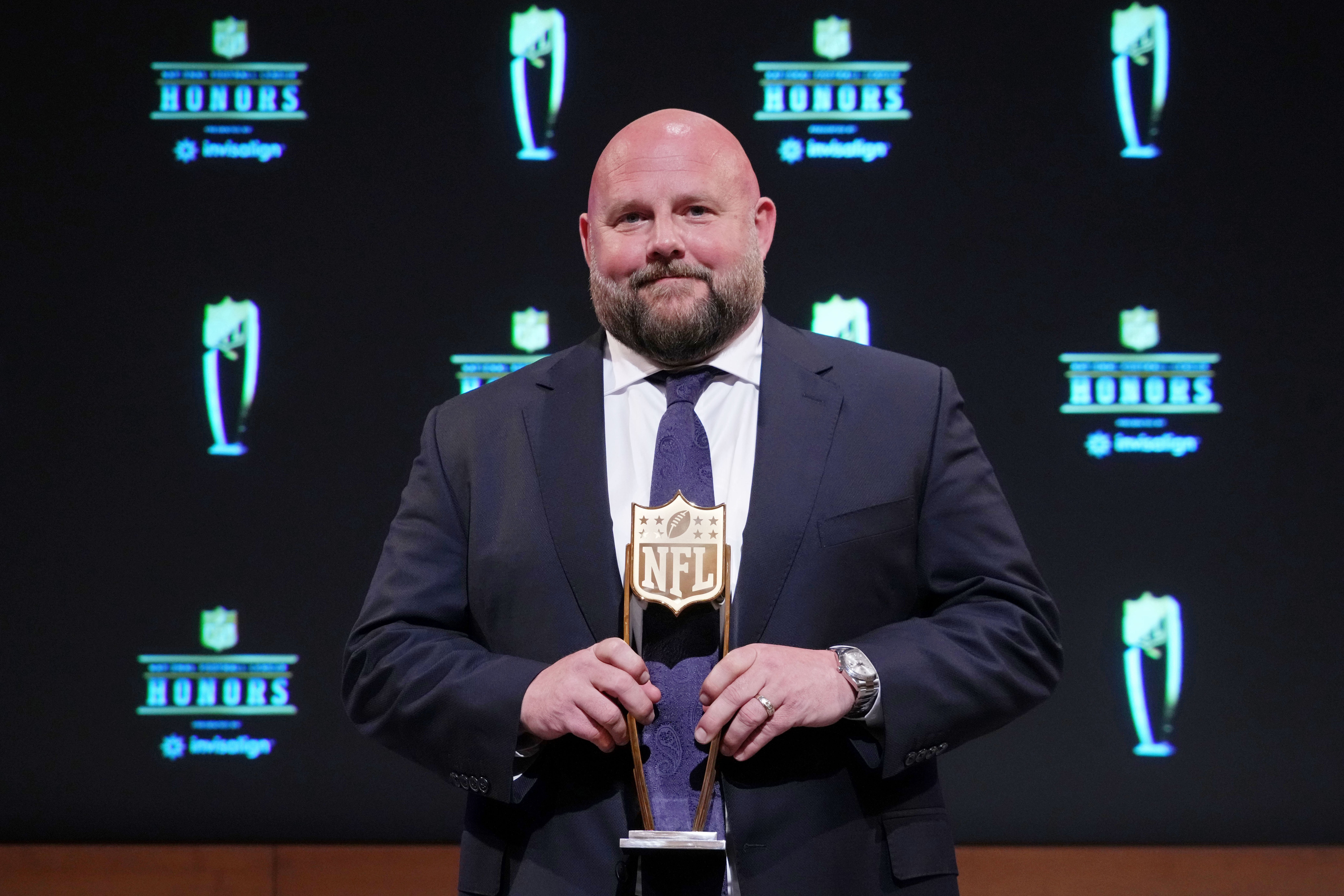
Things changed quickly for Brian Daboll, didn’t they? The former head coach, who was fired Monday by the New York Giants, went from looking like the savior of a franchise in his first year on the job in 2022 to being let go ten weeks into the 2025 NFL season.
Daboll’s first year with the Giants was so successful that he won that year’s Coach of the Year. Though it was controversial due to a 9-7-1 record—the only Coach of the Year winner with a record under 10 wins since 2012 when Bruce Arians won it as an interim coach in place of Chuck Pagano—you could see the arguments.
The Giants exceeded expectations and finished with a Top 10 offense per EPA/play. One year after declining Daniel Jones’ fifth-year option, the quarterback’s first year with Daboll resulted in a big payday. New York had a future. Only it didn’t. And now, in the heels of Daboll’s firing, I find myself thinking: The NFL’s Coach of the Year award is inherently flawed and something should be done about it.
NFL Coach of the Year: A coveted award or the kiss of death?
Obviously, winning Coach of the Year in the NFL is a significant achievement. But I will say, it’s also slowly becoming the kiss of death at one of the toughest professions in sports. With Daboll’s firing, three of the past six winners have been fired within three years of receiving the award:
- Brian Daboll: Won in 2022, fired in 2025
- Mike Vrabel: Won in 2021, fired in 2023
- Matt Nagy: Won in 2018, fired in 2021
And based on how things are going for the Cleveland Browns, two-time winner Kevin Stefanski could quickly join the list after most recently winning it in 2023.
This just can’t be good for the reputation of the award. You wouldn’t expect this many former Coach of the Year winners to be unemployed shortly afterwards because of their shortcomings performing the same exact job. In contrast, you don’t often see MVPs and Offensive/Defensive Players of the Year fall of a cliff like that. There might be some exceptions, sure, but for the most part, players winning such awards continue having successful careers.
So what’s the issue with Coach of the Year? Let’s start with the fact that the logic driving the votes is flawed.
What drives NFL Coach of the Year voting?
If there’s one thing that is clear from how AP voters make decisions when it comes to Coach of the Year, it’s that it doesn’t go to the best coach. Sometimes not even one of the best. At least, that’s the case several times. Otherwise, Andy Reid would have more than one. Heck, Bill Belichick—whose New England Patriots dominated for almost two decades—would have more than three. Maybe Kyle Shanahan and Sean McVay would combine for more than one.
Instead, the award is likely to go to the coach who exceeded expectations. The one who overachieves. That works perfectly well for storytelling purposes but is it an accurate reflection of who was the most outstanding coach? The problem is one thing is to overachieve for a single year and another is to have sustained success. So an overachieving coach can win it but that doesn’t mean he’ll keep winning, leaving his job security in doubt.
Evidence of overachieving being a strong factor is the fact that each of the three coaches fired within three years of winning the award went over the projected win totals of the preseason by pretty wide margin. In average, Daboll, Vrabel, and Nagy won 2.8 games more than they were expected per the betting markets.
Another example of how overachieving is more important than wins when it comes to the award is that four of the last five winners made the postseason as wild-card teams. Winning the division isn’t even a requisite to take the trophy home. Additionally, four of the last eight winners were first-year head coaches when they were dubbed Coach of the Year. The instant success on a team that needed a turnaround and gets it has been a clear factor for the prize.
The methodology works for storytelling but is it an accurate reflection of standout coaches?
Listen, I’m not trying to be the old man yelling at clouds meme here. Underdog teams doing more than we expect out of them and becoming legit contenders should be celebrated. It’s part of what we love about football. About sports, for that matter. But at this point, Coach of the Year is the biggest lie told in the NFL when it comes to awards.
I’m just not a fan of one of the NFL’s most prestigious awards meaning less and less because those who win it aren’t even necessarily the best in the industry. To the point where winning it isn’t even an indication of strong job security.
I, however, understand the same group of coaches winning it every year could quickly become boring. How do you balance storytelling with accuracy? That’s the biggest question the AP should be asking itself. And though I’m not sure what the answer is, right now, the criteria is flawed.
The AP already informed voters how they’re supposed to vote for Comeback Player of the Year after Buffalo Bills S Damar Hamlin lost to then Cleveland Browns QB Joe Flacco. Maybe it should emphasize similar clarification here, and point out winning Coach of the Year should be about more than just winning a few more games than expected.
Instead, it should be about the best coach in the league. Period. How you define that is difficult and there isn’t supposed to be one answer. It’s a subjective question. But more often than not, this award seems to be awarded by answering just one question: Who did better than we expected?
The truth is, that’s not a good enough question.
New York Giants News
Two connected Giants head coaching candidates should be on everyone’s radar after Brian Daboll’s firing
These two New York Giants head coaching candidates would make perfect sense after firing Brian Daboll.


