Analyzing the best and worst trades of Brian Gutekunst and what they reveal about his strengths and flaws as Packers GM
When Brian Gutekunst took over as the Green Bay Packers general manager in 2018, a big part of the appeal was that he would explore every avenue to make the roster better—a frequent complaint about how Ted Thompson used to operate was his unwillingness to add players in any way other than the draft.For the […]


When Brian Gutekunst took over as the Green Bay Packers general manager in 2018, a big part of the appeal was that he would explore every avenue to make the roster better—a frequent complaint about how Ted Thompson used to operate was his unwillingness to add players in any way other than the draft.
For the most part, Gutekunst has done it. Sure, the Packers will be a draft and development franchise first, but the general manager has signed external free agents and executed some trades—even though acquiring veterans via trade is not something common for his style.
Let's evaluate the best and worst trades made by the Packers over the past seven years.
Best trades
Moves down and up in 2018
The first big sequence of moves by Gutekunst as a general manager was also his best so far. Originally, the Packers had the 14th overall pick in the 2018 draft.
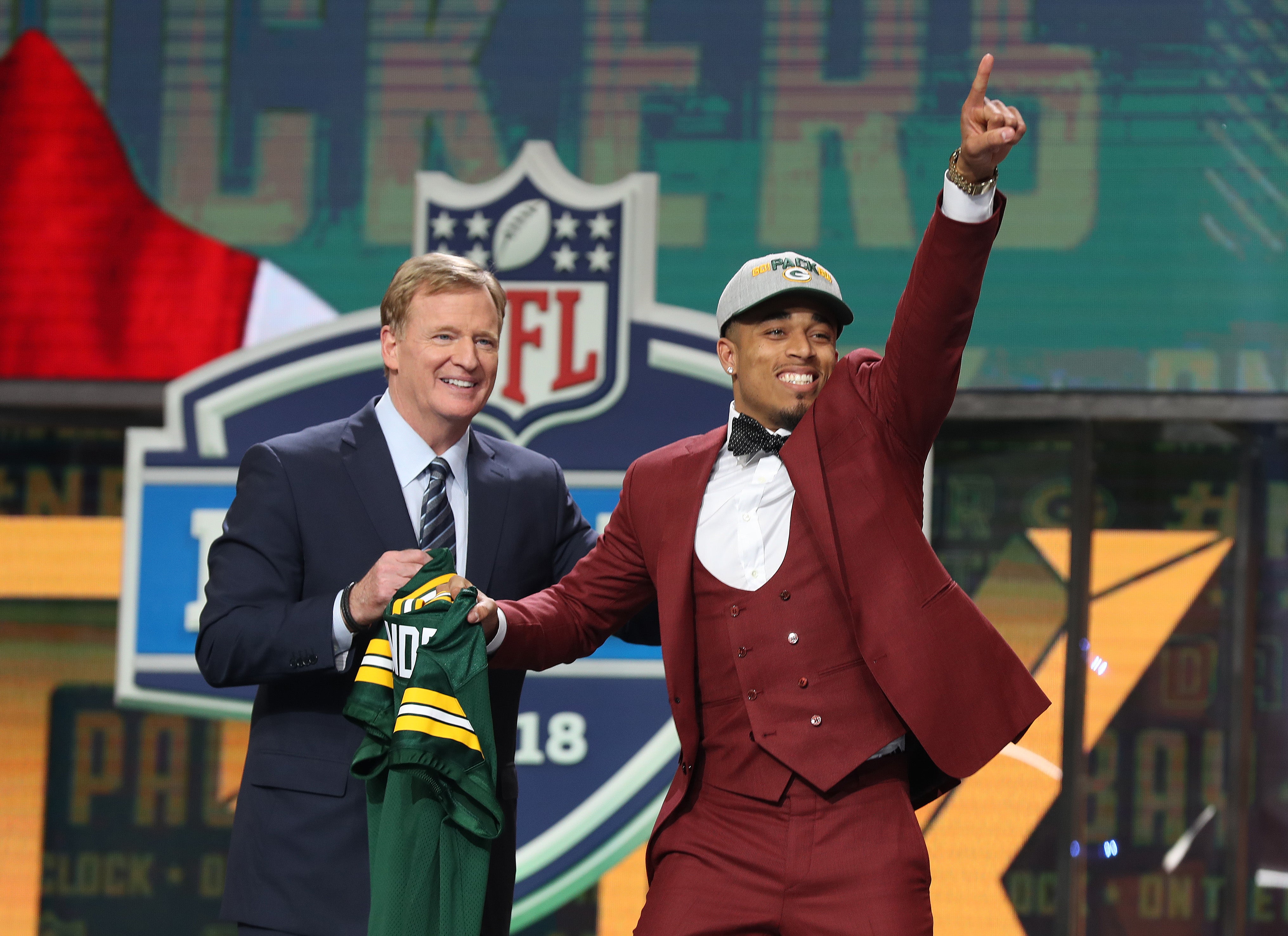
Gutekunst accepted a wild offer from the New Orleans Saints to move down to 27, adding a fifth-rounder in 2018 and a first-round pick in 2019. Then, the Packers went back up from 27 to 18 paying to the Seattle Seahawks a third-round pick and a late-round swap. To make things better, the Packers used the 18th pick to select cornerback Jaire Alexander, who ended up being an All-Pro player.
Ok, the outcome of the trade could have been better. The Saints had a good season, giving the Packers only the 30th overall pick, and Green Bay used it to trade up and select Darnell Savage. But the move itself was truly impressive, and a great first impression for the executive.
Ha Ha Clinton-Dix to Washington
Curiously enough, this is also connected to the previous trade, and you'll get it soon. Ahead of the 2018 trade deadline, the Packers were clearly not a contender. So Gutekunst decided to be a seller, moving on from safety Ha Ha Clinton-Dix for a fourth-round pick. In hindsight, trading half a season from Clinton-Dix for a fourth was an insanely good deal.
He played the rest of the season for Washington, then signed with the Chicago Bears in free agency. The former first-rounder also played for the Dallas Cowboys, San Francisco 49ers, Las Vegas Raiders, and Denver Broncos before retiring.
The Packers used that fourth-round pick, alongside their own fourth-rounder, to package with the Saints' first-rounder and move up to select Darnell Savage. And this is a common mistake by NFL executives. When they have extra draft capital, they tend to be more reckless with its usage.
Trade up for Jordan Love

Few people saw that coming, but the results are undeniable. In 2020, the Packers had the 30th overall pick once again. After some top targets like Justin Jefferson and Brandon Aiyuk were gone, Brian Gutekunst decided it was time to move. He sent a fourth-round pick to the Miami Dolphins to select Utah State quarterback Jordan Love.
After three years as a backup, Love took over and immediately became a high-level starter for Green Bay. Meanwhile, the Dolphins used those two picks to select defensive back Noah Igbinoghene, and then to trade up in the fourth round for guard Solomon Kindley, two failed selections.
Honorable mention
In 2023, the Packers traded down twice from 45 to 48 to 50, taking wide receiver Jayden Reed in the process. With the two extra selections, Green Bay took wide receiver Dontayvion Wicks and defensive tackle Karl Brooks.
Worst trades
Trade up for Amari Rodgers
Yes, Amari Rodgers was a bust. He had no production as a wide receiver and was a fumble machine as a returner. He was cut during his second NFL season and is now playing for the Birmingham Stallions of the UFL. But it's not only about the play on the field.
The process to execute the trade was also bad. Instead of allowing the board to fall to him, the Packers got anxious because they considered Rodgers with their second-round pick, but took center Josh Myers instead (that mistake is a conversation for another day).
"It came down to Josh and Amari. We went with Josh, being a center and a big guy. I immediately turned around to see if we could get back up to get Amari," Gutekunst revealed after the selection. "We were trying pretty significantly to get up and get him, took us a little while, longer than we wanted to. We paid a little bit of a price but I thought it was important because of the value of the player I wanted."
The Packers gave up a fourth-round pick to move up seven spots in the third, which screams bad process. Even conservative draft value charts, like Jimmy Johnson's, say it was an overpay—170,5 points, to receive 165. The more updated/data-friendly charts would say the difference is bigger.
Worse than that, Nico Collins and Amon-Ra St. Brown were still on the board. It was a big lesson. Sometimes, you can't be overconfident about your scouting process.
Rasul Douglas to the Bills
Full disclosure, the process here wasn't bad. But the outcome was to some degree. The Packers were 2-5 at the deadline, coming from four consecutive losses. It clearly looked like a lost season, so Gutekunst decided to trade cornerback Rasul Douglas away to the Buffalo Bills.
The value wasn't that great, being just a swap of third- and fifth-round picks. Green Bay used that to select linebacker Ty'Ron Hopper, who barely played as a rookie.
The Packers were better than anyone could have predicted in the second half of the season, making the playoffs, and Rasul could have been a useful piece both in that playoff run and during the 2024 season. At least, Douglas is an older player and you could already see signs of regression in 2024 for the Bills. He's now available on the free agent market.
Overpay to draft Christian Watson

The 2022 draft ended up being great for the Packers late, but the beginning of it was a mess. Gutekunst took an off-ball linebacker in Quay Walker and an older defensive tackle in Devonte Wyatt, who so far hasn't been more than a role player. And the Packers had just traded away Davante Adams, so wide receiver was a huge need.
They had to do something about it, and Gutekunst decided to give up picks 53 and 59 to move up to 34 and select Christian Watson. Initially, the Packers wanted to go back into the first round, but the Minnesota Vikings (who had picks 32 and 34) didn't want to give the divisional rival a fifth-year option. According to the Jimmy Johnson chart, the Packers gave up 680 points to receive 560 in draft capital. Throughout three NFL seasons, Watson has had 1,653 yards—and much of that is bad injury luck, the same reason that will make him miss a significant part of the 2025 season as well.
The problem here is not Watson individually. The value of taking him in the early second round is justifiable. But the price was too high. It would have made more sense to select Devonte Wyatt with the 22nd pick, Watson with the 28th, and retain those two second-rounders—the value of taking off-ball linebackers in the first round is generally questionable at best.
Other possible pathways would include a slight move up to take George Pickens (someone the Packers would probably never take), or selecting Alec Pierce with their original draft spot. Pierce has had 1,931 receiving yards in his first three NFL seasons, a better production than Watson.