
Former NFL Senior VP of Officiating defends controversial flags on hits to Patrick Mahomes in Chiefs-Texans playoff game
A day later, NFL fans continue to criticize the Kansas City Chiefs' AFC divisional-round game against the Houston Texans. The key gripe should not surprise anyone: Referee Clay Martin's officiating. There were two perceived controversial flags in response to hits on Chiefs QB Patrick Mahomes during the game, one on Texans OLB Will Anderson Jr. for roughing […]

A day later, NFL fans continue to criticize the Kansas City Chiefs' AFC divisional-round game against the Houston Texans. The key gripe should not surprise anyone: Referee Clay Martin's officiating.
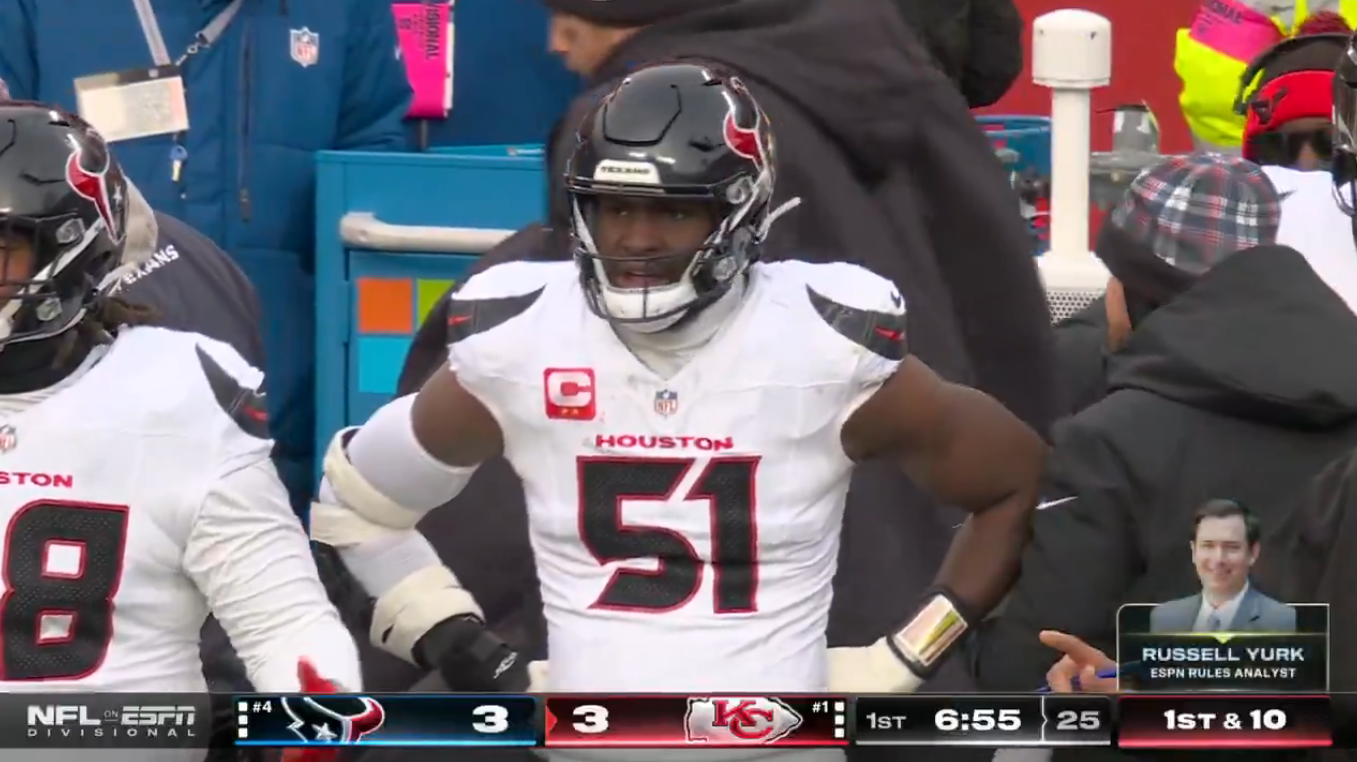
There were two perceived controversial flags in response to hits on Chiefs QB Patrick Mahomes during the game, one on Texans OLB Will Anderson Jr. for roughing the passer and another on Texans LB Henry To'oTo'o for unnecessary roughness.
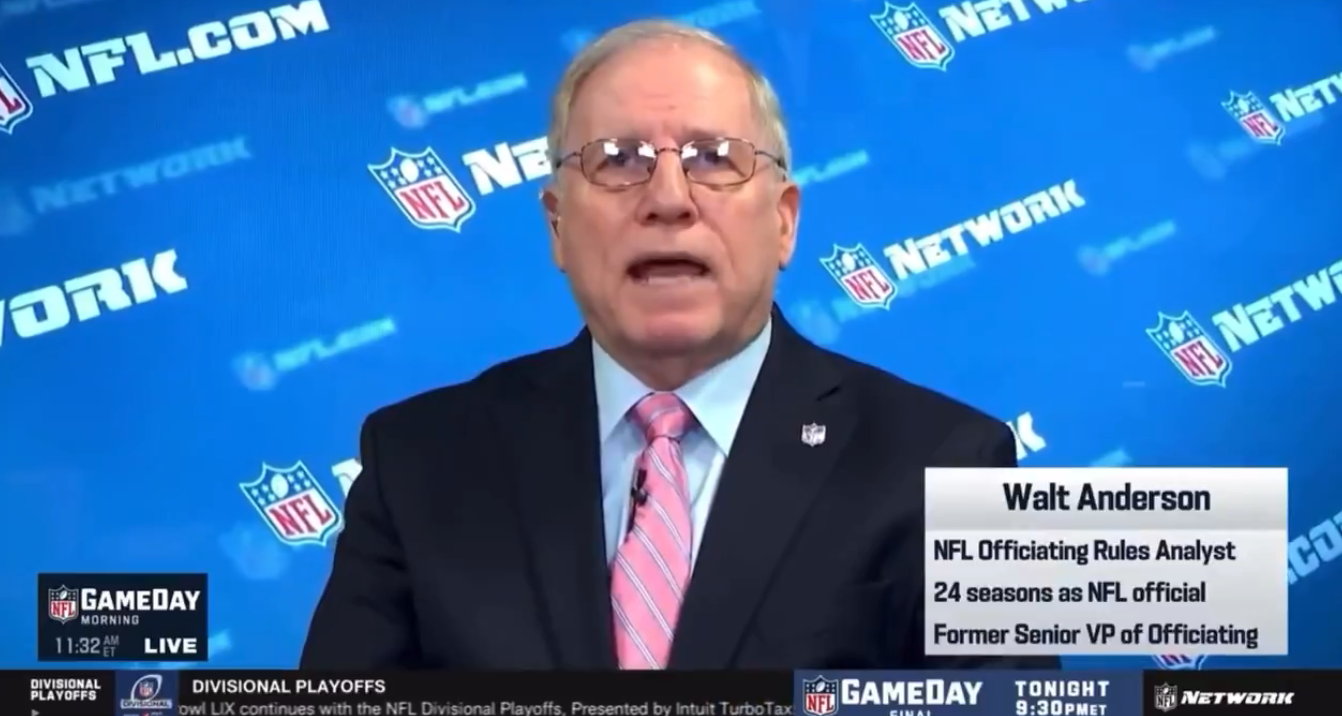
Appearing during his weekly spot on NFL Network's "NFL Game Day," former NFL senior vice president of officiating Walt Anderson broke down the penalties and explained why Martin's crew got it right.
NFL Network's Tom Pelissero shared the clip on social media.
On the first penalty in question, Anderson explained this was a textbook call.
"On the roughing the passer, whenever the defender comes in, and there's a couple of points, and when we end up looking at the video, I think the audience will end up seeing this, but when the defenders come in, and when they end up coming in face to face, if there's contact to the head of the quarterback, that's probably going to be called by the officials, and that's what you can see here," Anderson said. "Now, it has to be forcible (contact). And one of the things we added this year is, if there's no contact at all to the helmet, replay can assist. But on this play, there was contact, and so replay could not help the officials with picking that (flag) up."
Anderson also made a key distinction between roughing the passer and other rules in the NFL's rulebook. When there's doubt about roughing the passer calls, referees are taught to throw the flag first and ask questions later.
"You can debate about whether you felt it was forcible or not, and that's one going to be one of those conversations for the competition committee to consider next year," Anderson continued. "But when he comes in right there, face to face, officials are going to call that. That's the rule for this year. And the other thing that a lot of your audience might not realize is, in most all of the rule book, when in question, officials are not supposed to call a foul. But there's one place in the rule book where it states, by rule, that when in doubt, officials are to call roughing the passer."
On the second penalty, with Mahomes sliding to the ground, NFL Network host Steve Mariucci provided important context.
"It seems that the Texans players collide with each other and hardly touch Patrick Mahomes," he said.
Anderson's response was to explain the unnecessary roughness rule with helmet-to-helmet contact.
"I think you said the right word there, 'it seems like,'" Anderson explained. "Because whether it seems like it or not, officials have to call based on what they see. Now, when a player goes to the ground, he doesn't even have to be touched, he's down. And what happens here is when you can see, and yes, the two players end up colliding. But right here, this is the shot. When No. 39 comes in and his hairline of his helmet strikes the helmet of the runner (Patrick Mahomes) who is already on the ground, that's a foul. And even if replay assist could help in that when there's contact like that, that's not going to be changed by replay assist, even if the committee decides to add that for next year."
Ultimately, Anderson believes the NFL's competition committee will continue to add different coaching points for referees to make their job easier, especially in bang-bang plays where it's a matter of inches.
"This is one of those areas that is always going to be debated in terms of what's forcible, what's not," he concluded. "You want to end up having guidelines, and I'm encouraged that the committee every year add some things for us to help with replay assist. But the game is not ever going to be perfect, and one thing we don't want to do is we don't want to let perfect be the enemy of good. We always want to work at continuing to try to make the game better. Can we use replay assist to help pick up things that are clearly and obviously not a foul? But in those areas that are gray and maybe debatable, we have to leave those on the field."
Chiefs defender calls out Texans for string of embarrassing officiating comments after AFC divisional round loss
Kansas City Chiefs CB Jaylen Watson took exception.


