
Grading the Miami Dolphins’ first week of free agency: A new regime leaves a strong first impression
Miami’s first week of roster moves under GM Jon-Eric Sullivan is in the books. How did he do?


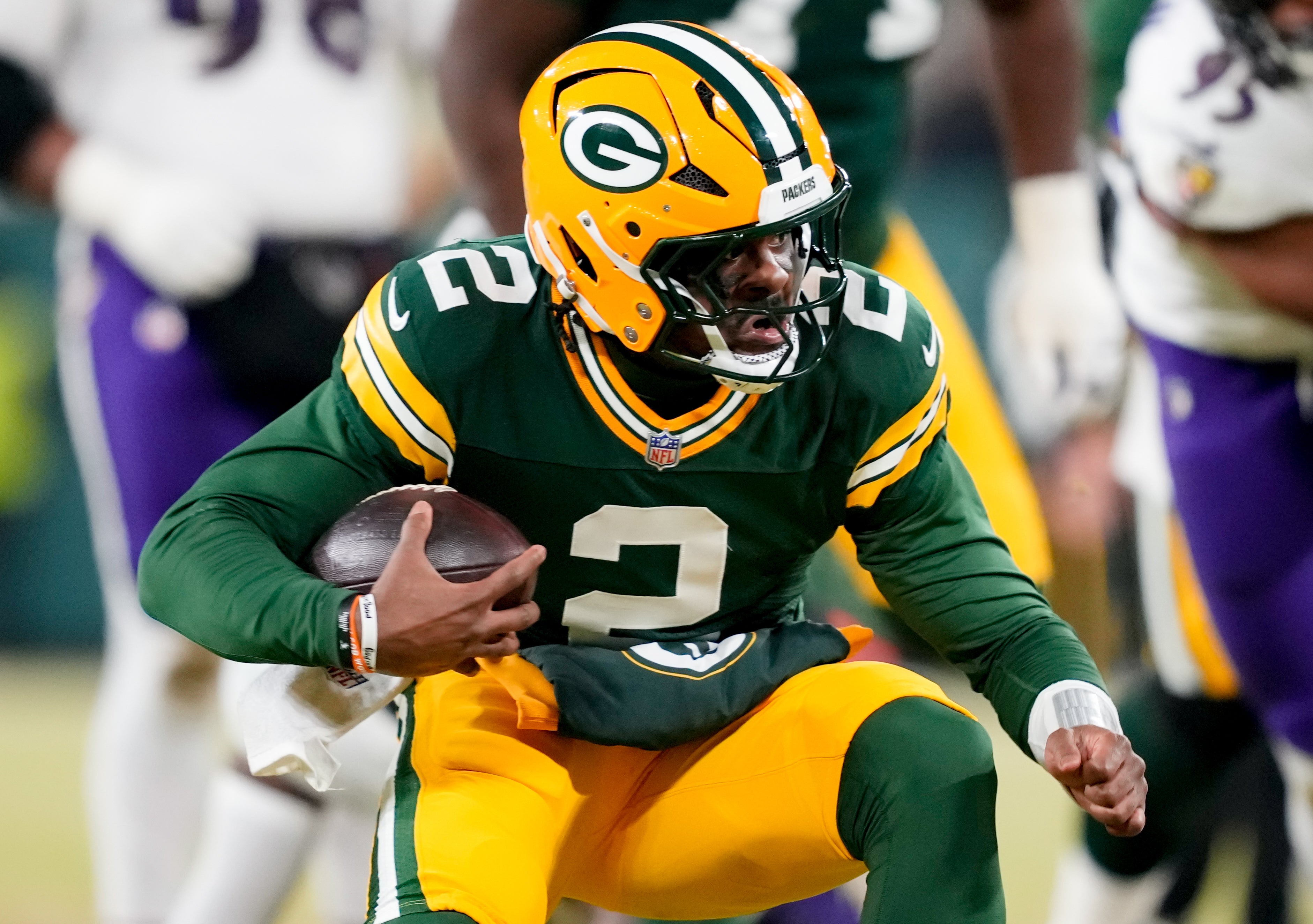
The first week of free agency for the Miami Dolphins is in the books under general manager Jon-Eric Sullivan. And that man was BUSY. The Dolphins logged nearly two dozen signings — many of them cost-effective contracts to help raise the floor of a barren roster. How did Sullivan do? I’ll offer my grade of Miami’s effort. But first, here’s the head count…in case you lost track:
- QB Malik Willis
- WR Tutu Atwell
- WR Jalen Tolbert
- TE Ben Sims
- OL Jamaree Salyer
- DL Matthew Butler*
- EDGE Joshua Uche
- EDGE Robert Beal Jr.
- EDGE David Ojabo
- LB Willie Gay Jr.*
- CB Darrell Baker Jr.
- CB Alex Austin
- CB Marco Wilson
- CB Ethan Bonner*
- SAF Lonnie Johnson Jr.
- SAF Zayne Anderson
- K Zane Gonzalez
- K Riley Patterson*
- P Seth Verndon
- LS Tucker Addington
The best parts of the Dolphins’ first week of free agency
Competition. Competition. Competition. The names Miami has targeted in, essentially, every room on the roster have something to prove. Not all of these guys are going to hit — we have to acknowledge that right off the top. But you don’t think a former second-round pick like David Ojabo has something to prove? You don’t think Jamaree Salyer, after a great rookie season and then being spread all over the Chargers’ line, doesn’t want to prove he can win a starting job outright? Hell, they’re fostering a kicking competition.
The Dolphins have leaned into elements such as the veteran salary benefit wrinkle of the CBA to get cap savings from these signings, too. What is the veteran salary benefit? Here’s how it is defined by NFL Operations:
“The veteran salary benefit allows teams to offer a “Qualifying Contract” to any player with at least four credited seasons at a reduced salary cap hit. Under this provision, a qualifying contract is a one-year deal worth the minimum base salary applicable to a player with his number of credited seasons, plus $187,500 in additional compensation (i.e., signing bonus, roster bonus, incentive, etc.). These contracts are charged against the salary cap at the rate of a player with two credited seasons that league year.”
In short, the Dolphins are attracting veteran players who qualify for a marginal amount of compensation than what is counted against the salary cap.
For example, EDGE Joshua Uche is on the books for a $1.252M cap charge per Aaron Wilson, but his salary cap charge does not include his $187,500 signing bonus — which is the maximum allowance that a player can be credited on this wrinkle in the CBA.
And let’s not forget the swing of the bat on the quarterback position. Miami landed QB Malik Willis on a three-year contract averaging $22.5 million per season. It’s a hefty amount of money. It’s also nearly 2/3rd of what the reported number for Willis was going to be just two weeks ago at the NFL Combine.
The Dolphins need an inspired effort to climb out of the mess Tua Tagovailoa leaves behind as he transitions to Atlanta. This is their first attempt at that and the price is much more digestible than some feared.
Concerns about the Dolphins’ first week of free agency
The Dolphins have done well to stock the pod with options. But players that are available for cheap often are for a reason. None of the Dolphins’ players added in this first wave of action appear to be bad eggs. And all of the one-year options should keep folks focused as the Dolphins try to stack more wins in the draft to bolster the roster. But what’s the ceiling of this group? What’s the floor?
Realistically, we shouldn’t expect this free agency group to move mountains. Ideally, we’d see four or five guys hit it off big and stick with the team as a long-term starter, while many others seize role-specific opportunities on the bottom half of the roster.
The depth chart still presents concerns with starters at guard, tight end, EDGE defender, and in the secondary — and there’s only so much in the way of resources to go around. This is less about anything Sullivan and company did this offseason and moreso just a reality of where the Dolphins sit as a team this offseason.
I’d have loved to get a better return from Minkah Fitzpatrick, if we’re being honest. He was a better player than one valued as a seventh-round draft choice — even as an aging safety. That would probably be my biggest complaint from the first week of action.
I understand the Dolphins’ brass likely coveted getting Fitzpatrick’s $15.6M of 2026 salary off the books more than anything. It saved them about $6 million in cap space, too. I understand why it happened and the restrictions that likely put on finding value; it just doesn’t make me feel better about the return.
Final grade for the first week of free agency
I like the plan a lot. I like the cost-effective swing on Willis. I believe the Dolphins did most everything they could with their pre-existing contracts. I was an advocate for releasing names like K Jason Sanders and FB Alec Ingold. I thought they played it right with EDGE Bradley Chubb as a Post-June 1 release, and I, too, would have traded Minkah Fitzpatrick. This methodical, deliberate approach is sorely what the Dolphins needed as they embark upon a rebuild.
Grade: A-
Miami Dolphins News
Dolphins continue to stack competition at key positions of need with latest reported signing
A little competition never hurt anyone.


