
New Malik Willis contract details reveal how Dolphins created some extra wiggle room against the cap with a controversial tool
The Dolphins tapped into a controversial tool with their Malik Willis contract.


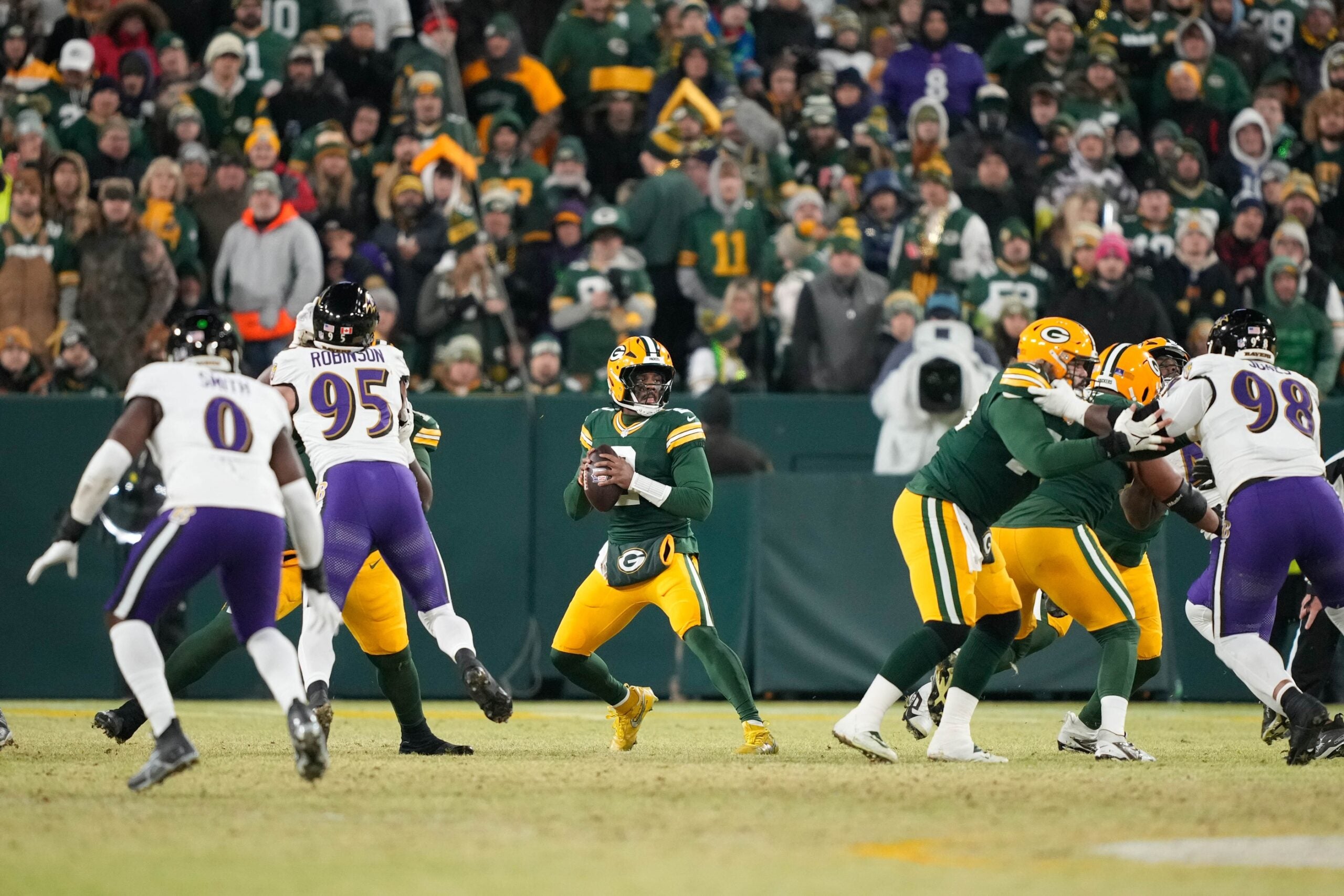
The Miami Dolphins may have a little extra wiggle room than we thought.
Not only did the Dolphins get good news confirmed yesterday with their annual cap adjustment, but they’ve taken steps with their one big contract of the free agency window to ensure that they’ve got the spending power needed to (responsibly) address the many needs on their roster with viable NFL players.
The Dolphins tapped into a controversial salary cap tool in their contract for QB Malik Willis.
Dolphins 2026 salary cap charge for QB Malik Willis drops $3 million thanks to void years
The reported terms of Malik Willis’ deal with the Dolphins featured three years with a value of $67.5 million on the table. From a salary cap perspective, teams can prorate out signing bonuses up to a maximum of five years — or however many years less than five that a contract is for. With Willis, he received a $22.25 million signing bonus.
If that were divided by the three years that he’s under contract with the team, it would hit the salary cap in three equal installments of $7,416,666. But thanks to updated terms of Willis’ contract hitting the public record, we now know that the Dolphins put two dummy years (known as void years) on the back end of the contract to serve as placeholders for portions of that $22.25 million signing bonus.
Willis is still only under contract to play for three years. But from a debt/accounting perspective, this contract is five years in length — meaning the signing bonus is no longer accounted for in three equal shares of $7.416M over three years, but is instead going to be accounted for in five equal shares of $4.45 million across five years.
The result is nearly $3 million less in salary cap commitments in 2026. Willis’ reported cap charge fell from $8.6M before the full details went public to $5.66M. This is likely coming into play with how Miami has been able to close some of their recent free agent signings, including OL Jamaree Salyer, WR Jalen Tolbert, and WR Tutu Atwell.
It may surprise some to see that Miami is implementing void years in contracts when the talk this offseason was about getting into a healthier, more sustainable salary cap situation. But void years themselves, and the idea of deferred debt as a whole in the NFL, are not the problem. The problem comes when teams spend large sums of guaranteed money on the wrong players for too long — as a disproportionate amount of a team’s accounting becomes tied up in figures that can’t be manipulated for players who are aging, declining, or off the roster altogether.
That’s what happened in Miami, where the Dolphins never had their postseason breakthrough, so they kept pushing harder and harder while contracts for players such as Tyreek Hill, Jalen Ramsey, Tua Tagovailoa, Xavien Howard, Bradley Chubb, James Daniels, Austin Jackson, Emmanuel Ogbah, and others soured. The first four in particular saw large sums of guaranteed money handed out hand over fist. Each went awry in their own way.
Many of these contracts included void years, as Miami kept pushing their debt out to try to continue leveling up a roster that felt close…but never got there.
That’s what we should remember as this organization sets out on their new build. Whether the team uses new accounting tricks or the same ones from the last time around, the biggest issue is not void years. It is and will always be that they chose the wrong players to give the big guarantees to and anchor the roster around.
Willis is this regime’s first litmus test of that. And in the meantime, everything else is on schedule…void years in a contract or not. How can we say that? Because cash spending determines your cap health — this year’s cap situation is simply a byproduct of the missteps of the past. And the Dolphins, as of this morning, currently rank dead last in the NFL in cash spending for 2026. Better cap days are ahead, void years and all. Consider it another promise made being delivered by Jon-Eric Sullivan and company.
