
Shocking shifts in key athletic measurements at NFL Combine could impact 2025 NFL Draft stock, but should they?
There may not be a more exhausting conversation in the NFL Draft space than the debate about offensive tackle arm length, and thresholds surrounding it. For many years, it was believed that 34-inch arms was the desired length for an offensive tackle on the NFL level, but that has since shrunk to 33 inches as […]

There may not be a more exhausting conversation in the NFL Draft space than the debate about offensive tackle arm length, and thresholds surrounding it. For many years, it was believed that 34-inch arms was the desired length for an offensive tackle on the NFL level, but that has since shrunk to 33 inches as we have gotten more and more outliers like Penei Sewell and Rashawn Slater.
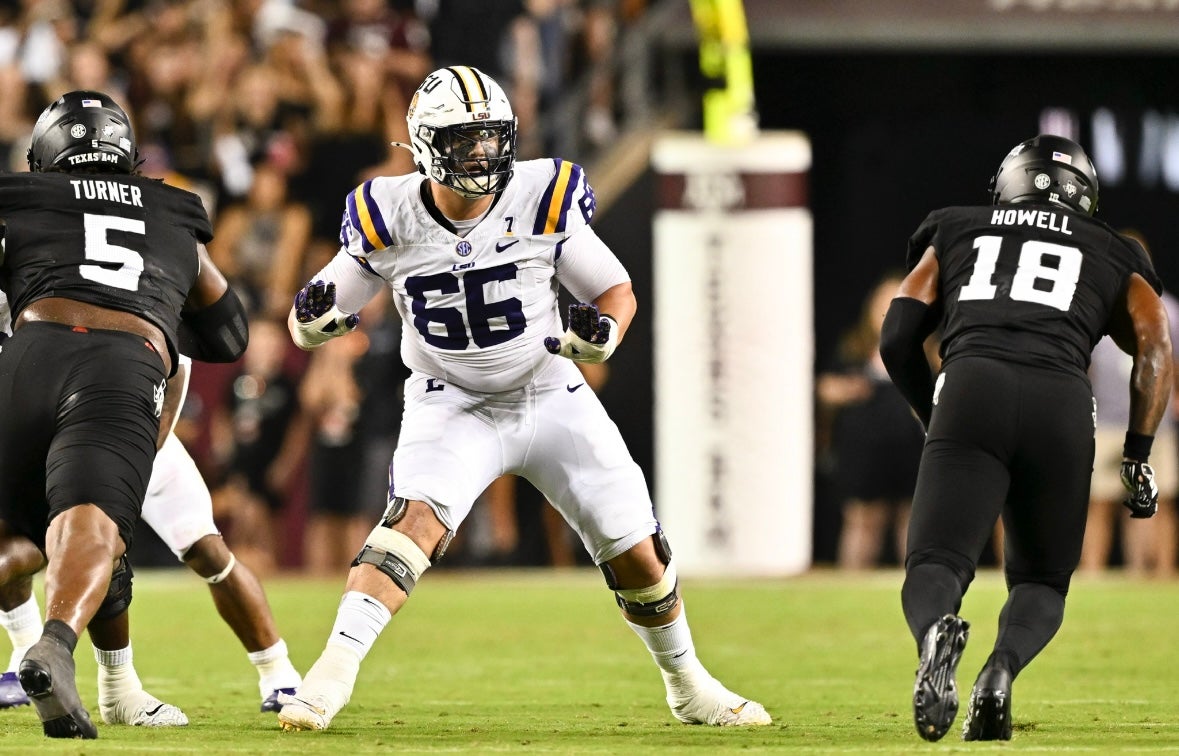
In the 2025 NFL Draft class, the debate has raged on. Players like Will Campbell (LSU) and Kelvin Banks (Texas) have often been a part of these conversations, as has Jonah Savaiinaea (Arizona) and Armand Membou (Missouri). The conversation has centered around finding the right fit positionally, but it always ends up defaulting back to arm length.
At the 2025 NFL Scouting Combine, the conversation continued, but for a somewhat different reason. The weigh-ins are one of the most heavily anticipated parts of the week each year, giving everyone a verified scope for the size of the top prospects in the class.
For many of the top offensive linemen, we thought we already had those measurements for those who participated at the 2025 Reese’s Senior Bowl a few weeks prior. We thought wrong.
Despite both events allegedly using National Football Scouting (NFS) for measurements, we saw some very different arm length measurements. The discrepancy was almost unbelievable.
Here’s how things typically happen in this sequence of the draft process: A player measures at the Senior Bowl, then during training, they continue to partake in exercises and stretches to increase their height and length of their arms. You rarely ever see someone measure shorter than they did in Mobile.
Not only did we see that in Indianapolis, but at a staggering level. 20 offensive linemen who measured had arms a half inch or more shorter than the previous measurement. We also had both Marcus Mbow (Purdue) and Jackson Slater (Sacramento State) measure in a full inch shorter, which is almost unbelievable.
Did NFS send a completely different crew, and if so, how could the results possibly be this different? No matter the hypothetical reasons for the discrepancies, it’s hard to believe that the results altered that significantly in such a short amount of time.
Now evaluators must figure out what to do with this information. Do they trust the preseason measurements, the Senior Bowl, or Combine version? While some may find it arbitrary, these thresholds do absolutely matter. There will always be outliers at offensive tackle, but those players need to have an overcompensating trait to make up for the lack of reach.
This 2025 offensive line class is going to end up being one of the more fascinating data points in recent memory. Not only do we have a higher volume of players being debated between offensive tackle and interior, but we also have inconsistent data that doesn’t feel like it can be trusted.
Evaluators will instead have to trust their eyes, and determine what will translate, and what won’t. In a lot of ways, this class is going to make or break scouts on an individual level. There are no clear thresholds to lean on in this class. Instead, this group will be defined by who can best identify talent and fit.
At the baseline, thresholds are designed to alleviate risk and verify what players put on film. This will be a refreshing experiment that will force evaluators to do the work, and see who fetches the best results without a net to catch their mistakes.
