
Should fans be worried about Oklahoma's unproven tight end room heading into must-win 2025 season?
After a disappointing season out of the tight end room in 2024, many fans were hoping for an aggressive pursuit of proven top-flight talent to turn that position room around. That…didn't quite happen. The Sooners brought in young players from small schools like Kennesaw State, Pittsburg State, and Louisiana Tech, all of whom had virtually […]


After a disappointing season out of the tight end room in 2024, many fans were hoping for an aggressive pursuit of proven top-flight talent to turn that position room around.
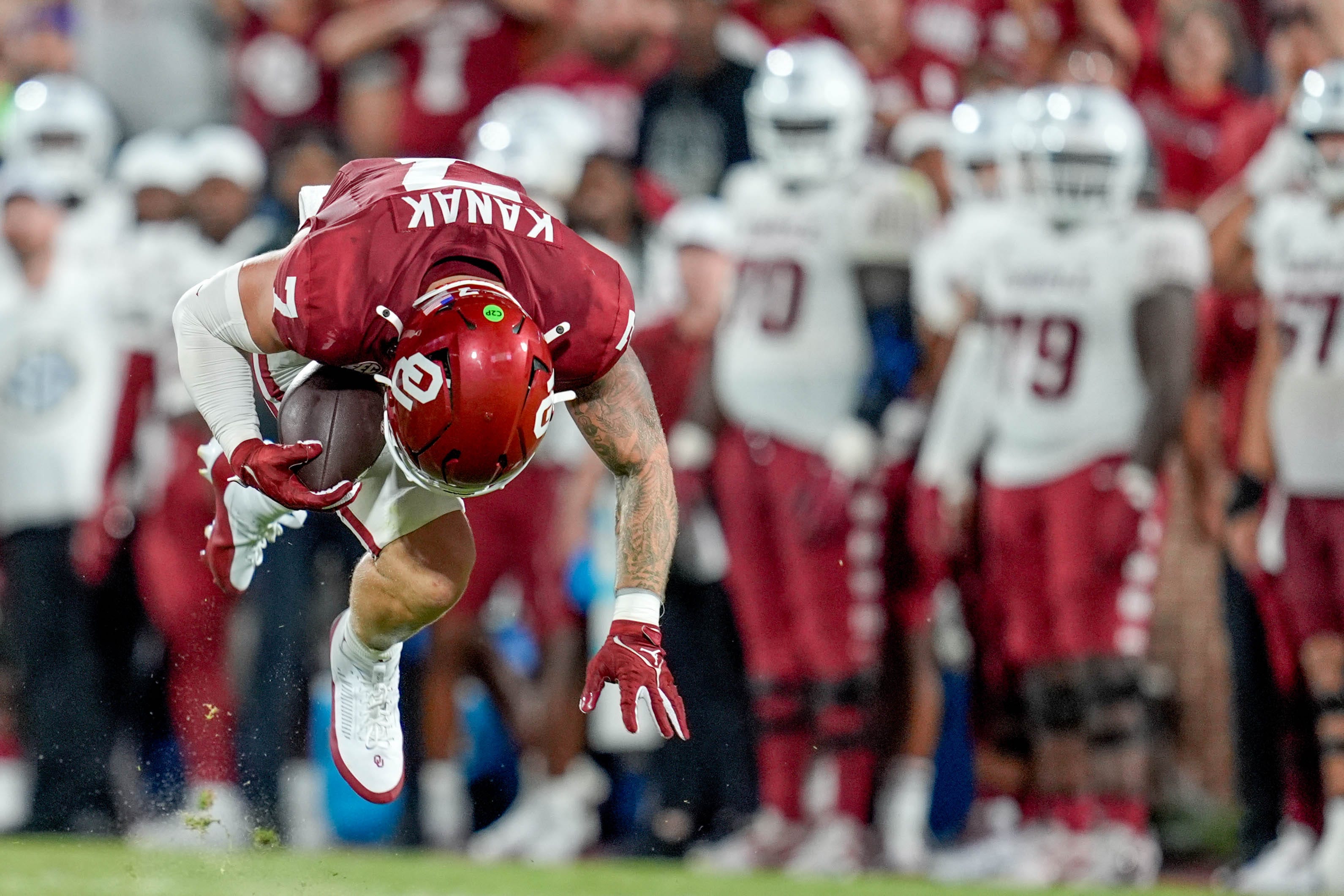
That…didn't quite happen. The Sooners brought in young players from small schools like Kennesaw State, Pittsburg State, and Louisiana Tech, all of whom had virtually no production at these smaller schools. Additionally, Oklahoma is converting linebacker Jaren Kanak over to tight end to add a splash of athleticism to the room.

Should this be a cause for concern for Oklahoma heading into next season? Yes and no.
Yes, in the sense that this plan reeks of pursuing mediocrity and coasting on "upside". Oklahoma had plenty of options to go after in the portal and willingly turned them down to bring in the players they did. Tight ends coach Joe Jon Finley has little to no trust from anyone outside of the program, and this plan gave credence to the criticisms he has endured over his tenure.
However, to play Devil's Advocate here, the flip side of the argument is that the tight end position isn't relatively important in new offensive coordinator Ben Arbuckle's offense. While dismissing any position in an offense is silly, discussing the value of the role in an offense is a worthwhile debate.
Last season, the Washington State Cougars lived primarily in 11 (one running back, one tight end) personnel on just 56% of their snaps and used 0 tight ends on 20% of plays, among the most in the country.
In two seasons as the offensive coordinator at Washington State, his tight end rooms had just 73 targets, with the leader being Cooper Mathers in 2023 with 26. In both seasons, no tight end room was ever top four in targets or receptions. For comparison's sake, tight end Bauer Sharp led the Sooners with 55 targets in 2024.
Many of the routes that the tight ends run in Arbuckle's system are fairly low-depth as well. TE Cooper Mathers had just a 7.0 average depth of target this season. Where Arbuckle relied on them the most was in the red zone, as Mathers finished with six touchdowns, second-most on the Cougars in 2024.
This relative lack of role could explain why the Sooners played it cheap in the portal at tight end.
Overall, I think the state of the tight end room is a symptom of a larger issue for the Sooners. However, given the nature of Arbuckle's offense and the relative gap in talent between it and wide receiver, it might not matter too much for Oklahoma's offense in 2025.
Would I let it stop me from adding a premier player here? No, I still firmly believe there's no such thing as too much talent, especially with the injuries that decimated Oklahoma's offense last season. Maximizing those roles, no matter how small, should be the goal of recruiting.