
Is it a catch? Here's what you need to know about NFL's catching rules for Super Bowl LIX between Chiefs and Eagles
The catch rule is one of the more contentious ones in the pantheon of National Football League history. It's cost multiple teams playoff games and those instances have evolved the catch rule over time. Just in the past 25 years, there have been two major instances where the rule of catching the football was the […]


The catch rule is one of the more contentious ones in the pantheon of National Football League history. It's cost multiple teams playoff games and those instances have evolved the catch rule over time.
Just in the past 25 years, there have been two major instances where the rule of catching the football was the pivotal outcome in the game. The first came in the 1999 NFC Championship Game between the St. Louis Rams and Tampa Bay Buccaneers where Bert Emanuel came down with a diving catch. That is, until it was overturned.
Emanuel's catch technically "hit the ground" meaning that it was incomplete. 1999 was also the first year that the instant replay system was back after a hiatus since 1991. This was the rule in 1999 and it was subsequently changed the following offseason.
The "catch" by Emanuel occurred during the final drive of the game for the Buccaneers and two plays later, the Rams were on their way to the Super Bowl.
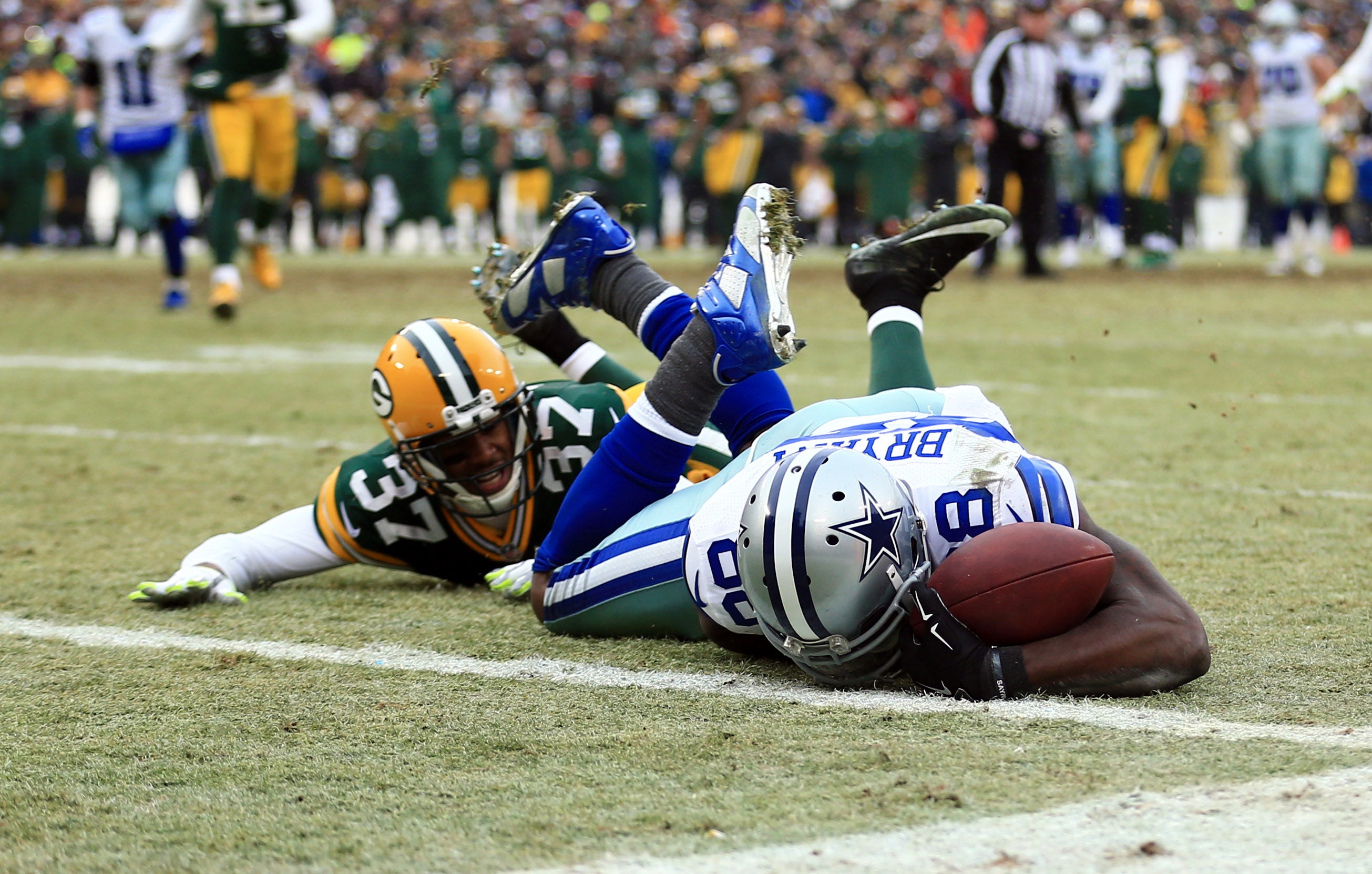
The other catch was the infamous one by Dez Bryant against the Green Bay Packers in the 2014 playoffs ten years ago.
This one was an interesting overturn. Bryant got both feet down and made an effort to extend the ball over the goal line. The referees didn't see that as a football move and ruled it incomplete. That continued the discussion on what is or isn't a catch and it hasn't been for the better.
As we head into the Super Bowl on Sunday night, the rule of what a catch is could come into play. The NFL rulebook has the following listed as a catch:
A player who makes a catch may advance the ball. A forward pass is complete (by the offense) or intercepted (by the defense) in the field of play, at the sideline, or in the end zone if a player, who is inbounds:
a. secures control of the ball in his hands or arms prior to the ball touching the ground; and
b. touches the ground inbounds with both feet or with any part of his body other than his hands; and
c. after (a) and (b) have been fulfilled, performs any act common to the game (e.g., tuck the ball away, extend it forward, take an additional step, turn upfield, or avoid or ward off an opponent), or he maintains control of the ball long enough to do so.
Notes:
1. Movement of the ball does not automatically result in loss of control.
2. If a player, who satisfied (a) and (b), but has not satisfied (c), contacts the ground and loses control of the ball, it is an incomplete pass if the ball hits the ground before he regains control, or if he regains control out of bounds
3. A receiver is considered a player in a defenseless posture (See 12-2-7) throughout the entire process of the catch and until the player is capable of avoiding or warding off the impending contact of an opponent.
4. If a pass is caught simultaneously by two eligible opponents, and both players retain it, the ball belongs to the passers. It is not a simultaneous catch if a player gains control first and an opponent subsequently gains joint control. If the ball is muffed after simultaneous touching by two such players, all the players of the passing team become eligible to catch the loose ball.
5. If a player, who is in possession of the ball, is held up and carried out of bounds by an opponent before both feet or any part of his body other than his hands touches the ground inbounds, it is a completed or intercepted pass. It is not necessary for the player to maintain control of the ball when he lands out of bounds.
Essentially, you need three elements:
- Hold onto the football
- Get two feet or one body part (knee, elbow, butt)
- Make a football move (3 steps, extend the football, jump, etc)
This could come into play on Sunday night, especially with all of the conspiracy theories with the Kansas City Chiefs getting all the calls. A catch should be pretty easy to figure out, but it continues to be a challenge across the league.
