
Longhorns changed their run defense this season presenting Cam Skattebo a massive challenge in Peach Bowl
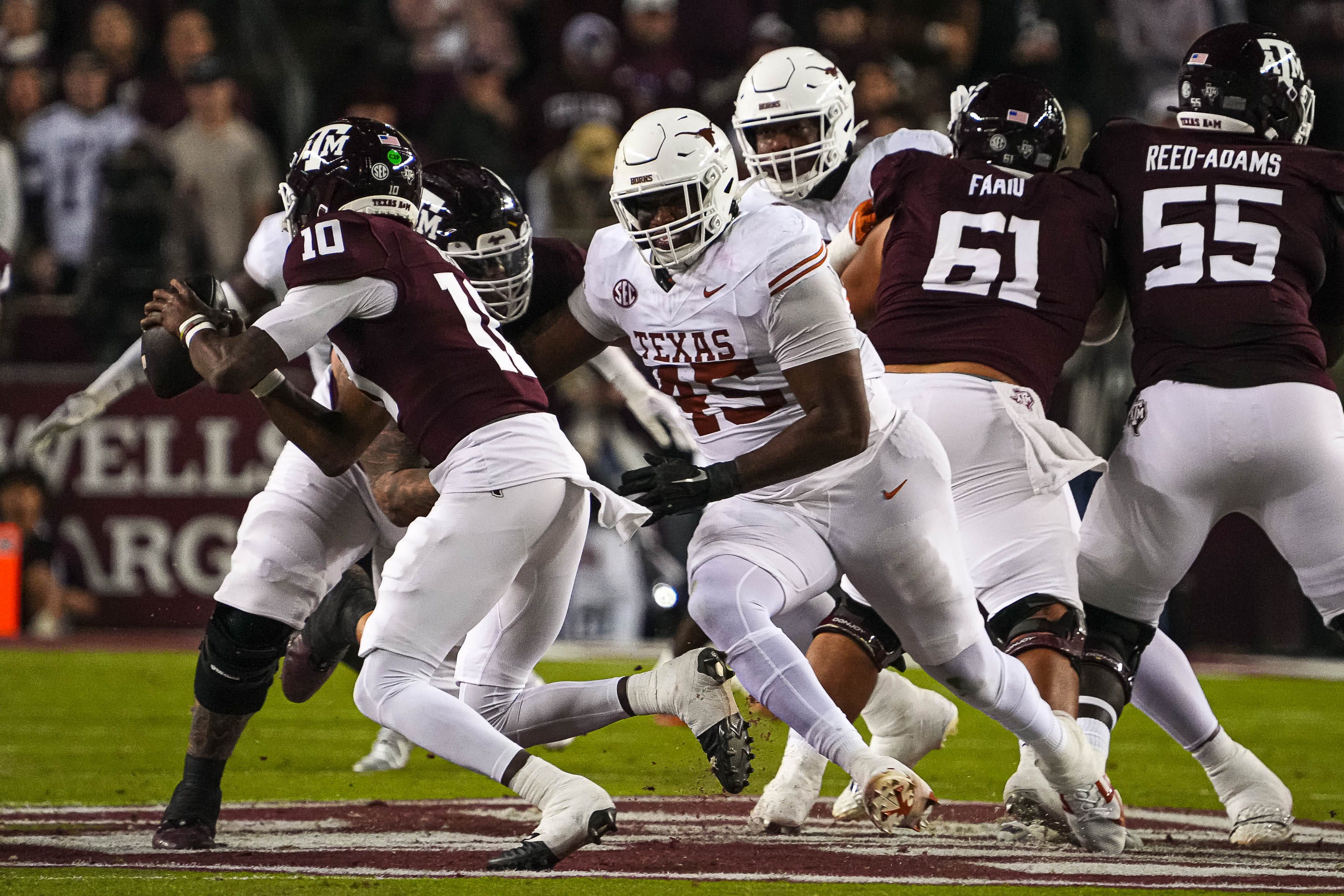
Coaches brought defensive help closer to line of scrimmage and bet that Alfred Collins and Vernon Broughton would have huge seasons

Arizona State’s Cam Skattebo believes he’s the best running back Texas will have faced all season long. Statistically speaking, he’s right.
“They’re a good football team, and I’m excited to play against them and show them what I’m about and see what they’re about,” the 1,500-yard rusher said Saturday.
“No matter who they played, I still think I’m the best.”
If Texas had this matchup in early September, the Horns might be more worried. The unit had to replace two NFL Draft picks in Byron Murphy and T’Vondre Sweat. Defensive coordinator Pete Kwiatkowski was so concerned about their replacements, he changed the defense to bring more help closer to the line of scrimmage.
But now? The Horns have the nation’s 10th-best run defense. “Turn on the tape,” defensive tackle Alfred Collins said. “That's the few words I have. Turn on the tape and you'll see.”
WATCH AND SUBSCRIBE: Follow A to Z Sports’ Texas Longhorns channel on YouTube.
Texas’ defensive renaissance under Kwiatkowski was built on stopping the run. This season, the Horns are allowing 104.2 yards per game. Skattebo averages 130.7.
Kwiatkowski, a three-decade coaching veteran, was skeptical this season could be just as good as the last. With Murphy and Sweat, the Horns had the nation’s third-best run defense. It wasn’t that Collins and Vernon Broughton, two fifth-year seniors, were bad defensive tackles. They were established veterans who were well liked in the locker room.
But Collins had trouble with consistency his entire UT career and never fully earned the coaches’ trust. Broughton came into this season having played in 38 career games and made a total of 30 tackles.
Kwiatkowski decided to give his unit some insurance. By moving a safety closer to the “box,” or the defensive front, he was moving another defender closer to the line of scrimmage to help make tackles.
“Schematically we went to more of a post style defense going into the season,” Kwiatkowski said. “We weren't sure how we were going to be able to play the run with two high safeties with lighter boxes, so that was the main catalyst to that switch.”
With that kind of move, Texas needed excellent secondary play. The Horns got senior Andrew Mukuba, an established standout at Clemson, out of the transfer portal. And coaches put Jahdae Barron on an island at corner. Barron wound up winning the Jim Thorpe Award as the nation’s best defensive back.
It wasn’t so much of a gamble as it was a calculated risk. The coaching staff essentially bet whether Collins and Broughton would rise to the challenge. And they did. Texas lost two massive defensive tackles to the NFL and didn’t miss a beat.
Collins has 47 tackles this season, 5.5 tackles for loss and knocked a ball loose against Arkansas that practically sealed a road win. Broughton has 34 tackles, five quarterback hurries and three fumble recoveries. They played so well, Texas coach Steve Sarkisian was miffed they were passed over for the All-SEC teams.

Their play doesn’t even begin to describe the Horns’ success in goal-line and short-yardage situations. Texas’ defensive line had major stops against Texas A&M and Clemson that turned the tide in UT’s favor.
“You know, we use that as fuel because that’s all we heard,” Collins said. “We knew me and Vern are very high-level defensive linemen, and the way we prepared throughout the entire year leading up to this point, we felt ready. So it wasn't too much pressure.”
Said Kwiatkowski: “Credit to those guys. They took their growth and learning to a new level. As much as we like to tell them to stay off social media and not listen to outside noise, they hear it, and so they knew they had to get better.”
What kind of problems does it cause for an aggressive defense that can’t stop the run?
“Would have left me with a whole lot more of one-on-one tackles from 18 yards deep, which is no fun,” safety Michael Taaffe said.
If the defensive tackles aren’t making the stop at the line of scrimmage, they’re forcing ballcarriers to bounce out wide. That helps the cavalry as it slows down the runner’s pace and leads to easier tackling opportunities, theoretically. “The least they're doing is making the ball carrier stop his feet,” Taaffe said.
And Collins and Broughton eat up multiple offensive blockers. “You just don't see a lot of one-on-ones because they’re playing so well that you gotta double team those guys,” Taaffe said.
Skattebo is known as a runner who bounces off tackles and seeks out contact. He also can make tremendous plays out in space as a pass catcher. Skattebo averages 13.7 yards per reception.
Texas hasn’t faced anyone like Skattebo this season. But he hasn’t faced a run defense this good, either.
“I’m excited to play those guys because I'm going to present to them something new that they haven’t seen before,” Skattebo said. “I'm excited, and hopefully they're ready to play some football.”