
Happy birthday, DKR: Remembering the best moments in 100 years of Texas football stadium history
Longhorns played their first game against the Baylor Bears in War Memorial Stadium on Nov. 8, 1924

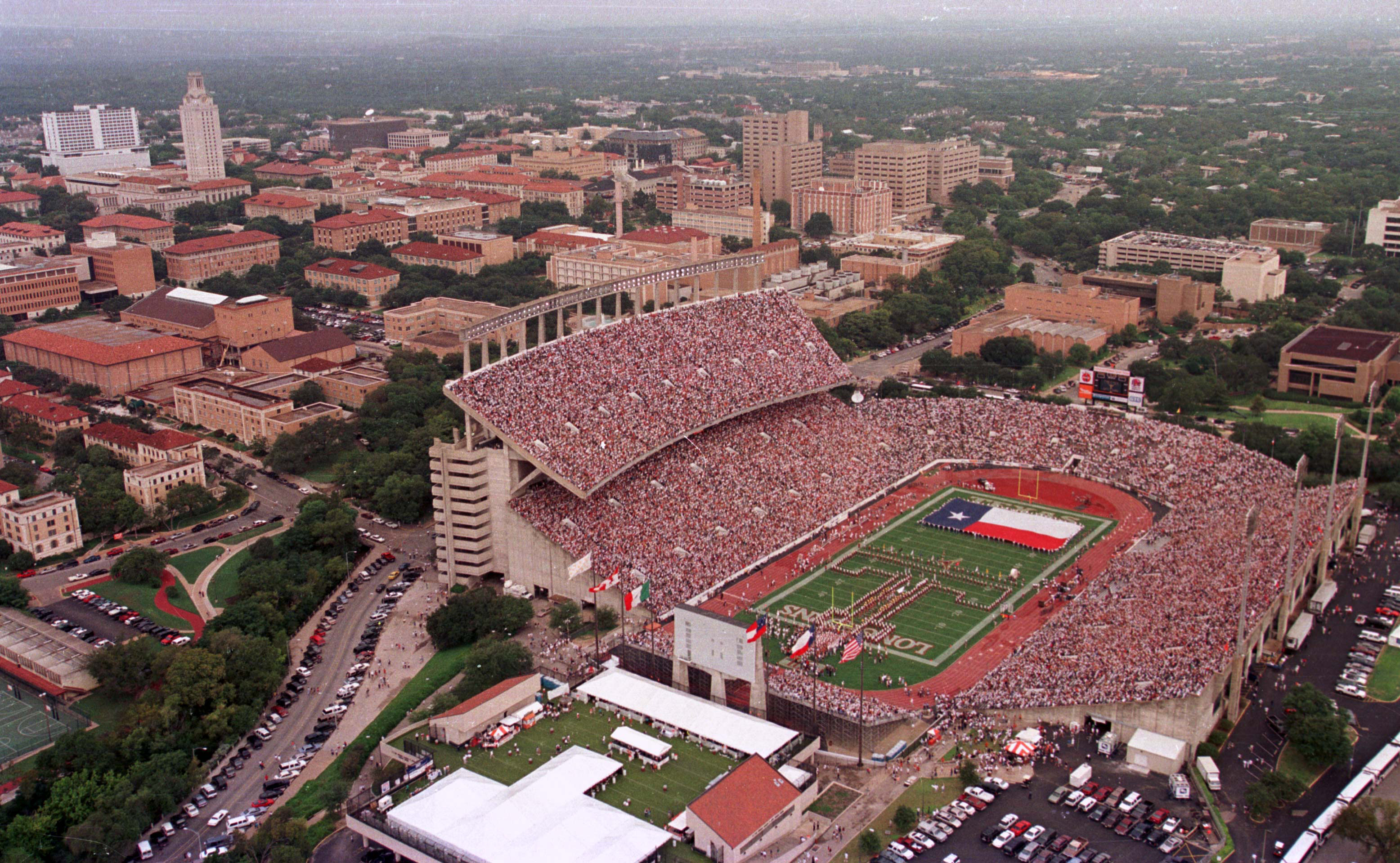
There’s simply too much history to dig through, too many anecdotes, too many moments to share about Darrell K Royal-Texas Memorial Stadium on this Friday, the day of its 100th birthday. The internet is infinite, but your attention span is not.
So let’s just stick to my favorite memory. I’ll go with the date that’s always top of mind — Oct. 21, 1995.
Damn, it was hot that day, especially for late October. What happened? All you have to say is 1995 Virginia, and most Texas fans have instant recall. Phil Dawson!
As a student sitting in the southwest corner, I had a pretty good view of the game-winning field goal as it swirled end over end from 50 yards out. When that thing crawled over the crossbar, the place went berserk.
Ironically, my second favorite moment was actually two weeks later when Texas hosted Texas Tech. It turned rather chilly. What most remember was how Texas’ massive defensive end Tony Brackens splattered the Texas Tech kicker all over the sideline after a fake field goal.
That was the only season where I sat in the stands as a UT student. Starting with the Texas A&M game on Dec. 2, 1995, I moved to the press box and stayed there, first with The Daily Texan student newspaper and then a so-called professional. An ink-stained wretch all around.
Credit goes to athletic director L. Theo Bellmont for kickstarting a funding campaign that gave college football a stadium matching what was outlined in the Texas Constitution as a “University of the first class.”
Stadium began as a ‘concrete box’
The stadium’s history at UT is similar to a lot of major state universities. Money was raised to build a stadium that honored war veterans.
The Longhorns played on Clark Field, and the east side of Waller Creek was a hilly, partially wooded area. In January 1924, construction began on a concrete structure that held 13,500 fans and cost $275,000 with money raised by students and alumni.
Texas started the 1924 season on Clark Field while trees were cut down and the area leveled. On Oct. 25, Texas and Florida played to a 7-7 tie. The next home game, the Horns moved into their new home.
Texas lost to Baylor 28-10 in the stadium’s debut. At the end of the month when Texas hosted Texas A&M, the stadium was christened War Memorial Stadium. Temporary bleachers were brought in, and the place held 35,000 — a massive stadium record at the time.
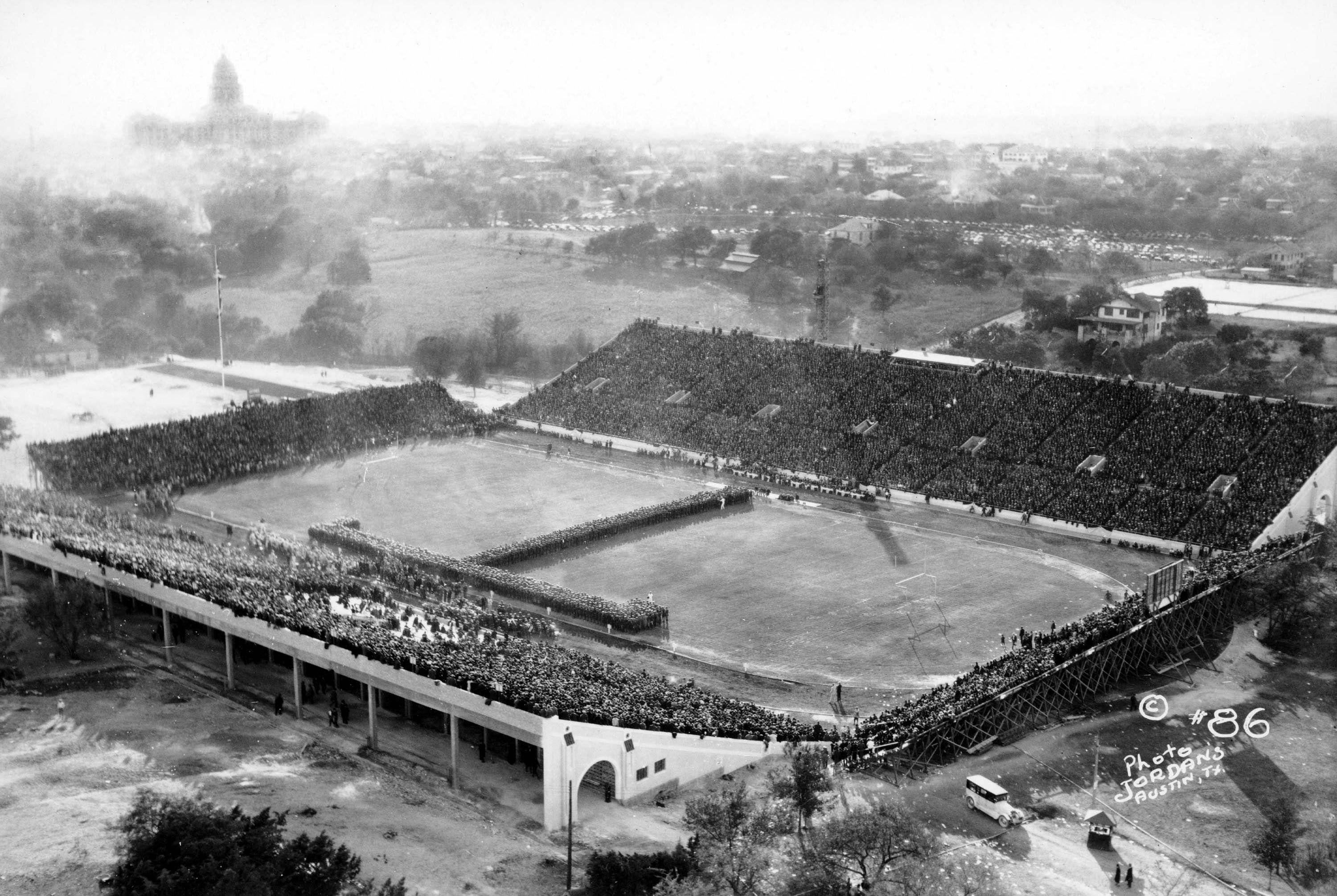
The field was dedicated to the 198,520 Texans who fought and 5,280 who died in World War I.
Two years later, the north end was enclosed to create a horseshoe. That bumped capacity to 40,500. In 1948, there was another expansion, and it was simply renamed Memorial Stadium.
Major changes through the years
The first night game happened in 1955, and the stadium held more than 52,000 when the Horns won the 1963 national title under coach Darrell Royal.
The upper deck was added to the west side, and a new football building was constructed just beyond the south end zone. In 1996, with 83,312 packed inside, the place was renamed in honor of Royal, the school’s greatest coach.
Along the way, artificial turf came and went and came back again, the oval track was removed and the field was lowered in 1999. School officials would like to switch back to natural grass, but there are concerns how the sunlight hits the field nowadays affecting uneven growth.
Renaming it Darrell K Royal-Texas Memorial Stadium ruffled some feathers as some thought it took away from the significance of honoring war veterans. Eagle-eyed Texas fans point out the K has no period. K was Royal’s given middle name.
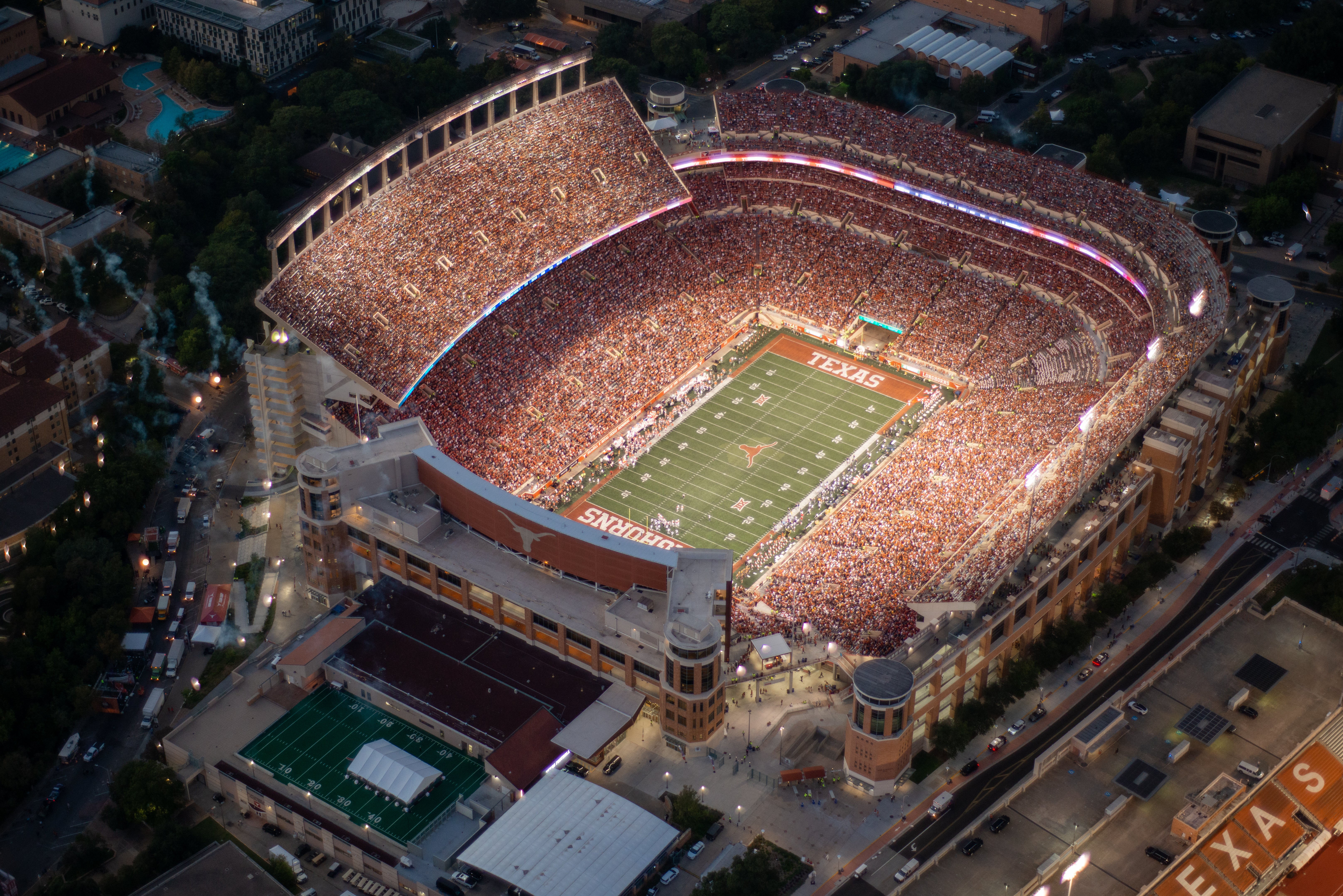
The stadium didn’t see another major renovation until the early 2000s when the north end began to look like how it does today. The school raised $175 million to renovate the south end zone several years ago, and now more suites and a field-level club are accessible on gamedays. The speakers are louder than ever. The first south end zone video board, dubbed “Godzillatron” was replaced by one that’s bigger.
Sarkisian honors DKR’s past
Texas’ current coach, Steve Sarkisian called it “an amazing arena, amazing building.” Florida’s Billy Napier, who will be on the opposing sideline Saturday, said “it’s on the bucket list” for opposing coaches.
“When you have a programs like ours, the University of Texas, you think about the great teams, the great players, the great coaches that have that have competed in the middle of that field, that have walked those sidelines,” Sarkisian said. “That’s kind of what I do every Saturday, when I show up to games, I don't know if you all know, but I go for a walk. And it's just to kind of get myself to be where my feet are.

“I have moments of reminiscing, like to think about Darrell K Royal on the sidelines, or a Mack Brown, or be VY or whomever. I could go on and on and on. But the point is how fortunate we are to be part of this team, to be part of this university, to be part of this program, knowing the greatness that was here before.”
Sarkisian, who grew up in California, admits “I didn't get to see Earl Campbell run. I didn't get to see Ricky Williams run. But what was it like, and how electric was the stadium for some of those moments.”
The school has gone to great lengths to make the stadium as cutting-edge as possible, with amenities like upgraded sound, lights and Wi-Fi systems. We’re a long way from clearing trees out from the east side of Waller Creek.
Odds are Royal-Memorial Stadium will keep evolving for another 100 years.
“We’re not going to win ’em all every week,” Sarkisian said. “But we try to play in a way that our fans and those that are in attendance are proud of the way we play and that we're representing Longhorn nation the right way.”