
The truth about the Tennessee Vols' loss to Georgia that Bulldogs fans and the national media are unwilling to admit
The Tennessee Vols lost 31-17 to the Georgia Bulldogs on Saturday night in Athens, but the final score doesn't even come close to telling the full story of the game. Tennessee didn't play its best game of the season against Georgia. The Vols' defensive line wasn't nearly as disruptive as it's been all season. Additionally, […]


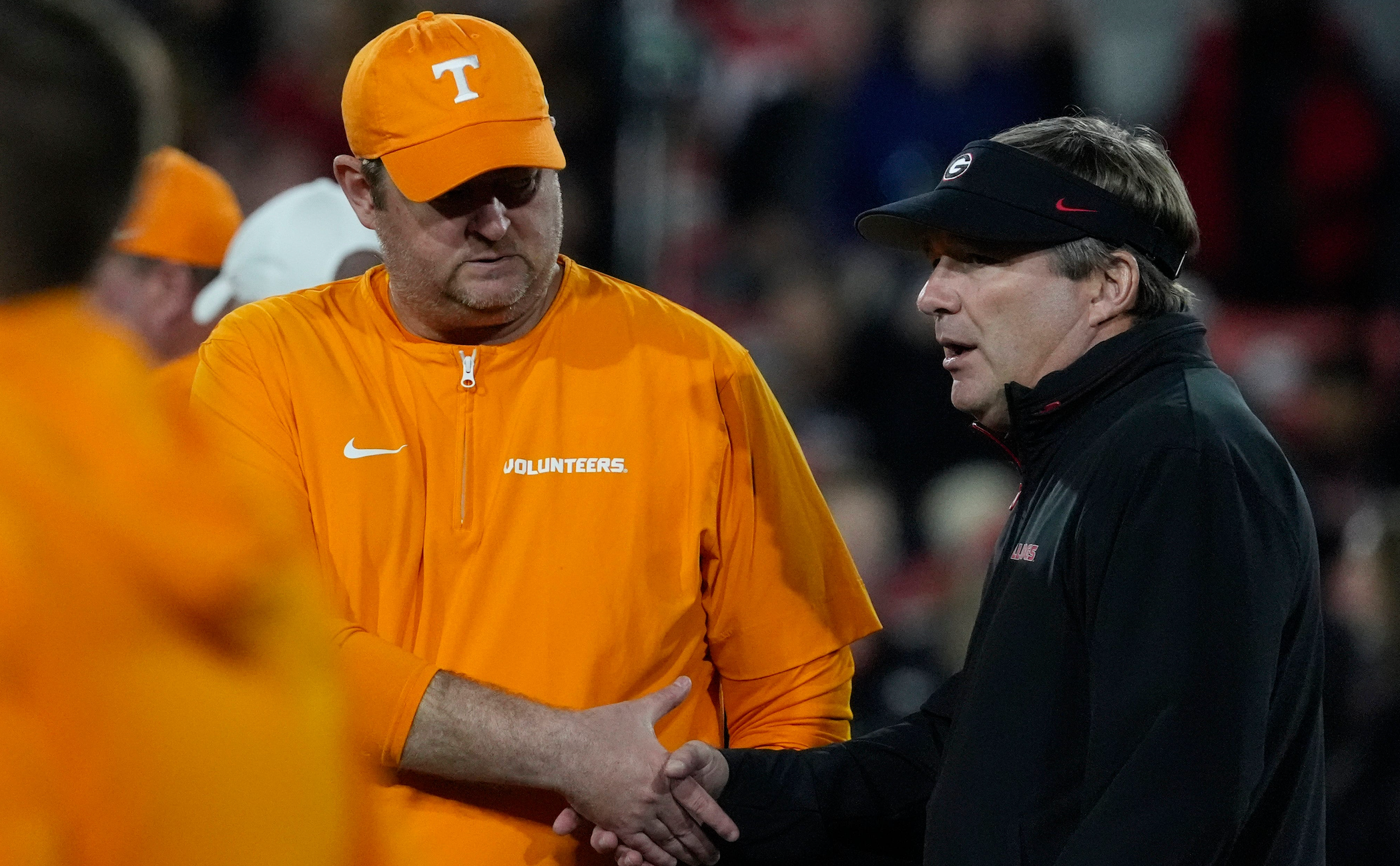
The Tennessee Vols lost 31-17 to the Georgia Bulldogs on Saturday night in Athens, but the final score doesn't even come close to telling the full story of the game.
Tennessee didn't play its best game of the season against Georgia. The Vols' defensive line wasn't nearly as disruptive as it's been all season. Additionally, Tennessee's linebackers and wide receivers had an up-and-down night against the Bulldogs.
Yet the Vols were still very much in the game all night. And if not for a lengthy Georgia drive in the third quarter that was heavily aided by a couple of botched calls by the officials, maybe the game plays out a bit different.
With the game tied at 17, Tennessee failed to get anything going offensively on its first possession of the second half. The Vols chose to punt the ball away from the Georgia 36 yard line (UT actually ended up punting from the 41 yard line after intentionally taking a delay of game penalty).
And that's when the momentum of the game completely shifted in Georgia's favor, thanks in part to some horrendous officiating.
After drawing an obvious offensive pass interference call on wide receiver Arian Smith, the UT defense had the Bulldogs' offense in a 2nd-and-24 situation.
Tennessee's defense then appeared to force a third-and-nine from the Georgia 32-yard line.
Unfortunately for the Vols, a Georgia player's helmet came off while being tackled and the officiating crew incorrectly assumed that a Tennessee defender ripped the helmet off by grabbing the facemask.
Instead of a third-and-nine situation, that call tacked on 15 yards to the end of the play and gave Georgia an automatic first down. Bulldogs fans can roll their eyes all they want, but that was a huge missed call that went in Georgia's favor. The Bulldogs did nothing to earn those yards or that first down, it was simply given to them by the officials.
Later in the drive, with Georgia in field goal range, Tennessee appeared to force a third-and-seven after an incomplete pass from Carson Beck.
And that's when a sequence happened that will make Vols fans start heavily believing in conspiracy theories.
With Georgia about the snap the ball on third-and-seven, officials rushed to the line to stop the play for a review.
On the previous second down play, Georgia substituted late. By rule, Tennessee had to be allowed to match the substitution. The Vols, as has become the norm in college football, didn't get in a hurry to substitute.
Usually in that situation, the official stands over the ball until the defense completes its substitution. We often see defenses take their time — which results in the offense burning a timeout or taking a delay of game. But that isn't what happened in the Tennessee vs Georgia game. The official didn't hold the snap and Vols defensive lineman Jaxson Moi still had a foot on the field. Upon replay, the officiating crew determined that Tennessee should be called for a 12-men-on-the-field-penalty, which resulted in a second-and-two instead of a third-and-seven.
I've seen a lot of Georgia fans trying to justify that call, completely ignoring the last 10 years of college football. If you spend just one Saturday watching college football, you'll see that situation unfold at least once. And it almost always results in the offense calling a timeout or taking a delay of game.
In fact, just a few weeks ago, the SAME officiating crew from the Ole Miss/Oklahoma game held the snap because the Rebels substituted late. Ole Miss head coach Lane Kiffin was forced to burn a timeout because Oklahoma's players didn't get off the field in time and the officials continued to hold the snap until late in the play clock.
That's the exact same situation and the exact same crew. If anything, Oklahoma took longer than Tennessee to substitute (Ole Miss had already completed their substitution and was going to the line whenever Oklahoma decided to match).
I mean, watch this play from the Utah/USC game last year. Utah took their sweet time making the substitution, with the defensive lineman essentially taking his spot along the defensive line before the player he was replacing started to run off the field.
There are countless examples of this play costing the offense a timeout or a delay of game penalty. But in the Georgia/Tennessee game, not only did the Bulldogs not get hurt by the late substitution, it actually hurt the Vols instead. It was an unprecedented call that suspiciously went Georgia's way.
Something else, by the way, that went Georgia's way on that drive was the officials deciding to not call a unsportsmanlike conduct penalty on Smith after he threw a punch at a Tennessee player after a catch he made to extend the drive.
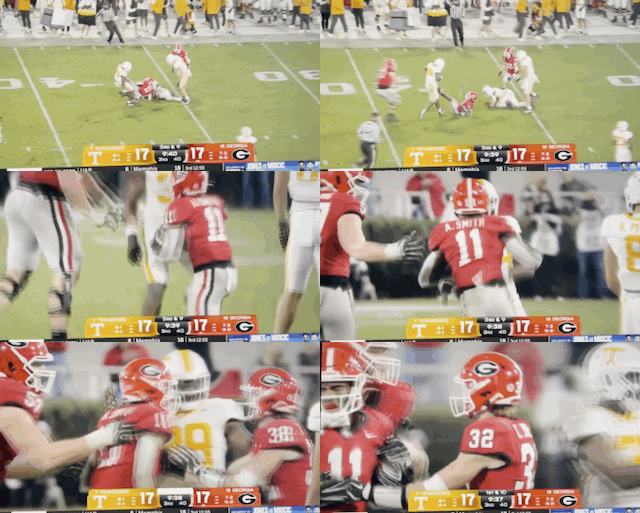
That drive, which was a disaster for the officiating crew, completely changed the way the game was played. If the Vols stop Georgia and force a punt and then go down the field and score, who knows how the game plays out from there.
Now, this isn't to suggest that Tennessee wins the game if that drive is officiated correctly. But again, it would've changed the complexion of the game.
There's of course no guarantee that Tennessee would've stopped the Bulldogs on either of those third downs. And there's no guarantee that Tennessee would've scored if they got the ball back with the game still knotted at 17. But the Vols should've at least had a chance to find out what would've happened in that situation.
It's undeniable that the officials impacted one of the biggest drives of the game (that drive from Georgia ate up a ton of clock, too). And that's something that the national media, unsurprisingly, is ignoring. That's a problem for the Vols. Because it was clear up until that point — until the officials handed Georgia all the momentum in the game — that the Vols were going to toe to toe with the Bulldogs in a raucous road environment. Tennessee is a College Football Playoff-caliber team. But unfortunately for UT, that won't be the narrative from the national media. There will be crickets from them all when it comes to the brutal officiating job that went down in Athens on Saturday night.
