
"We're always trying to learn" Vikings HC Kevin O'Connell and GM Kwesi Adofo-Mensah open up about 2022 NFL Draft and beyond
The Minnesota Vikings went into the 2022 NFL Draft with general manager Kwesi Adofo-Mensah and head coach Kevin O'Connell in their first drafts with the team. They were hired in January and February, respectively, so their time getting their bearing ahead of the NFL Draft was limited. Not to say it's an excuse, but when […]

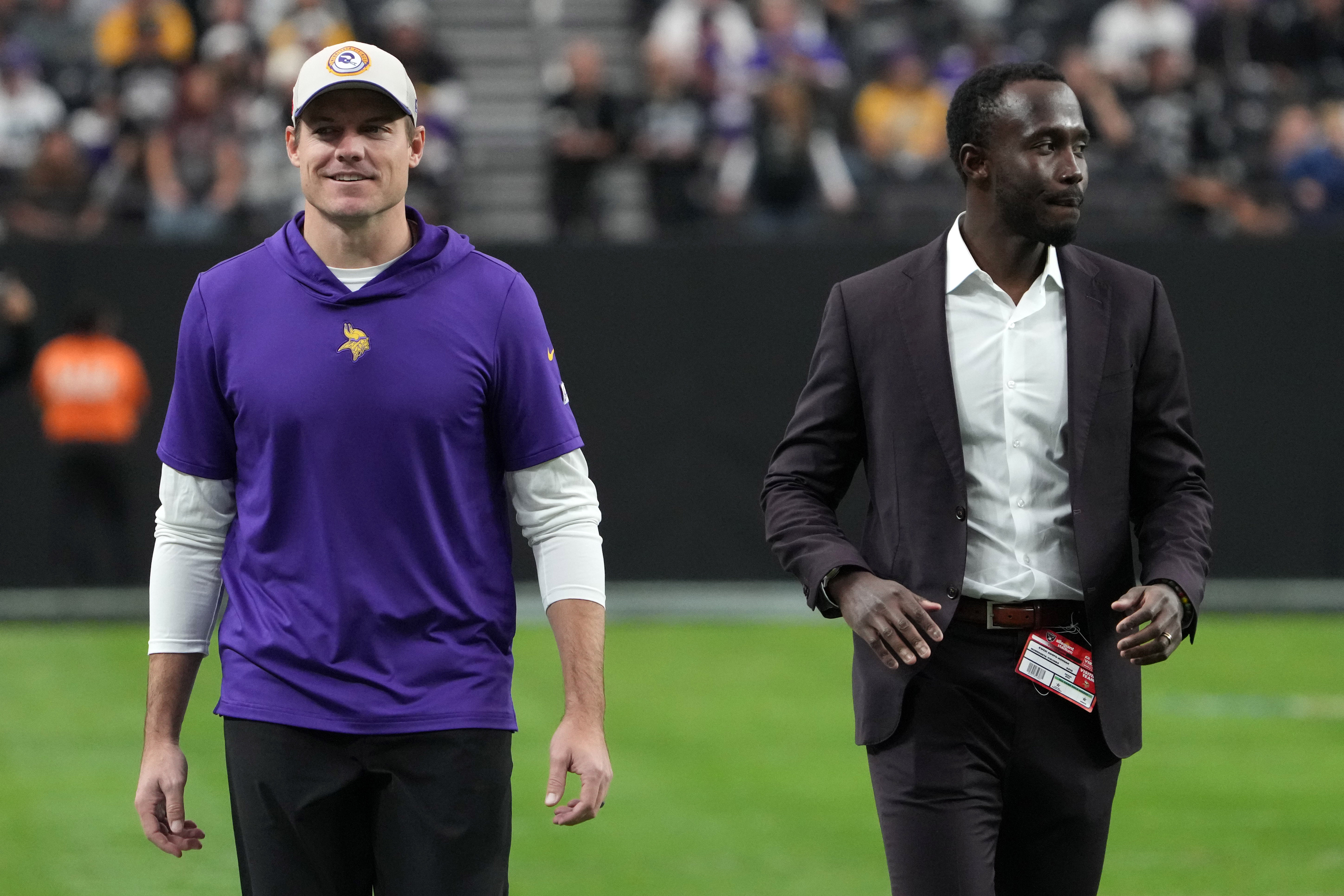
The Minnesota Vikings went into the 2022 NFL Draft with general manager Kwesi Adofo-Mensah and head coach Kevin O'Connell in their first drafts with the team. They were hired in January and February, respectively, so their time getting their bearing ahead of the NFL Draft was limited.
Not to say it's an excuse, but when you evaluate the first draft versus other drafts, you can see a difference in their approach. Why is that? You live and you learn. Plus, it gives you an opportunity to install the system and personnel you want to have in place for the entirety of the process.
How Vikings 33-0 comeback vs. Colts relate to selecting Lewis Cine
Many fans and analysts throw criticism toward the Vikings brass for the selection of safety Lewis Cine. It isn't just that he was selected 32nd overall and ended up being waived by the team this week, they traded down from 12th overall for a controversial haul and passed on Notre Dame safety Kyle Hamilton who was viewed as a slam dunk my many.
There are a lot of moving parts to the conversation but the result of Cine being waived is a tough pill to swallow, especially with the second pick of the Adofo-Mensah era Andrew Booth Jr. having been traded just days prior.
It's evident by looking at the Vikings draft strategy over the last two drafts that they have made significant changes to their process and it's landed them some talented players and undrafted free agents. Adofo-Mensah spoke about that process and how it might have been flawed.
“I thought a lot about those days and competing, trying to compete on multiple timelines and different things like that. I had a conversation with Kev – this is probably a year ago or something around then – and I asked him, ‘What was it like when we were down 33-nothing [against the Colts]?’ You know, when you feel like you're down, when I entered the building: trying to compete, aging roster, salary cap stuff, I think there were times where I felt down 33-nothing. And as we all know from that game, it starts with one play, one drive, and you build.
"And I think at times I might have been guilty of trying to have a 33-point play all at once. I think if you've seen from since then, it's been really foundationally, just taking good steps, building to a certain critical point where I think we compete over the long term.”
The process of trying to get all 33 points at once is a really interesting one. When you are in charge of something that needs fixing, it's human nature to want to get it done right away. When there are a lot of issues to fix, a patient approach is more often necessary.
O'Connell talked about that conversation he had with Adofo-Mensah and he referenced how much a 33-point deficit is.
“He asked me about some of the things I thought about in the moment, and some of the things did apply. It wasn't about trying to do it all at once. It wasn't about anything other than that next play, that next drive being a positive that led to points, and then once you establish that, now it's about maintaining momentum. And then one of the big parts I told him was, ‘Adversity is not done at that point. Just because you start creeping into that deficit, adversity is still going to hit. I remember, in that game, there's still going to be things outside of your control. There were two fumbles we returned for touchdowns that were called [back because] the whistle had blown, the play was over. There was an interception on some miscommunication down the field at a critical moment of the game. We still had to overcome that. So if you think at any point in time you're going to be able to eliminate adversity, you're fooling yourself.
“And then I think at any point in time, if you make it anything other than about each individual play or process, draft pick, free agency, undrafted free agency, having a great training camp, if we think about anything too big picture, not laser-focused where our feet are planted, I think you're going to really give yourself a hard road to overcome that adversity. And how that applies from 33 to nothing in an NFL football game to building a roster that's probably as close as it is. But I do think that we're always trying to learn from the situation.”
It wasn't just that conversation that showed how much the process has evolved. O'Connell also referenced the fact that they had such a short time for that first draft process. He didn't make excuses for it, but rather acknowledged their shortcomings.
“You look at it from a standpoint of, you're trying to get to know your roster and understand, through the interview process and and kind of that early evaluation process, you're learning your own roster, but at the same time, time is not going to be on your side. You're really trying to rob Peter to pay Paul at one point or another, as far as the overall collection of talent and acquisition and development of the players that were already here, how we project our roster, our quarterbacks, all those things. I look back on that and just say to myself, ‘Could I have done better in the moment to help communicate what I thought was the best possible outcome out of that?’ And it's helped moving forward, whether in the moment when you're on the clock, or leading into how we were going to evaluate the quarterback position this year, how we're going to evaluate trying to get an impactful defensive player in our front. All of those conversations have to have a layer of realism [about] the past to help you have the type of future that you want to have. Otherwise, you can be in a scenario where you can make similar decisions that don't work out multiple times. and then it becomes something that is hard to overcome.”
That is the kind of growth you want to see from the Vikings. If you aren't trying to get better, you aren't doing your job. The process has shifted based on the type of players the Vikings have prioritized in the NFL Draft. Even if the first NFL Draft didn't go the way they would have liked, the organization has done a good job shifting and making things work in a better way
