
Cowboys should build on unusual pregame strategy after winning vs Jets
The Dallas Cowboys made an unusual decision against the New York Jets just moments before the opening kickoff that led to the team's second win of the season. They won the coin toss and elected to receive the football. That's a rarity when looking not only at the Cowboys' recent records but throughout the entire […]


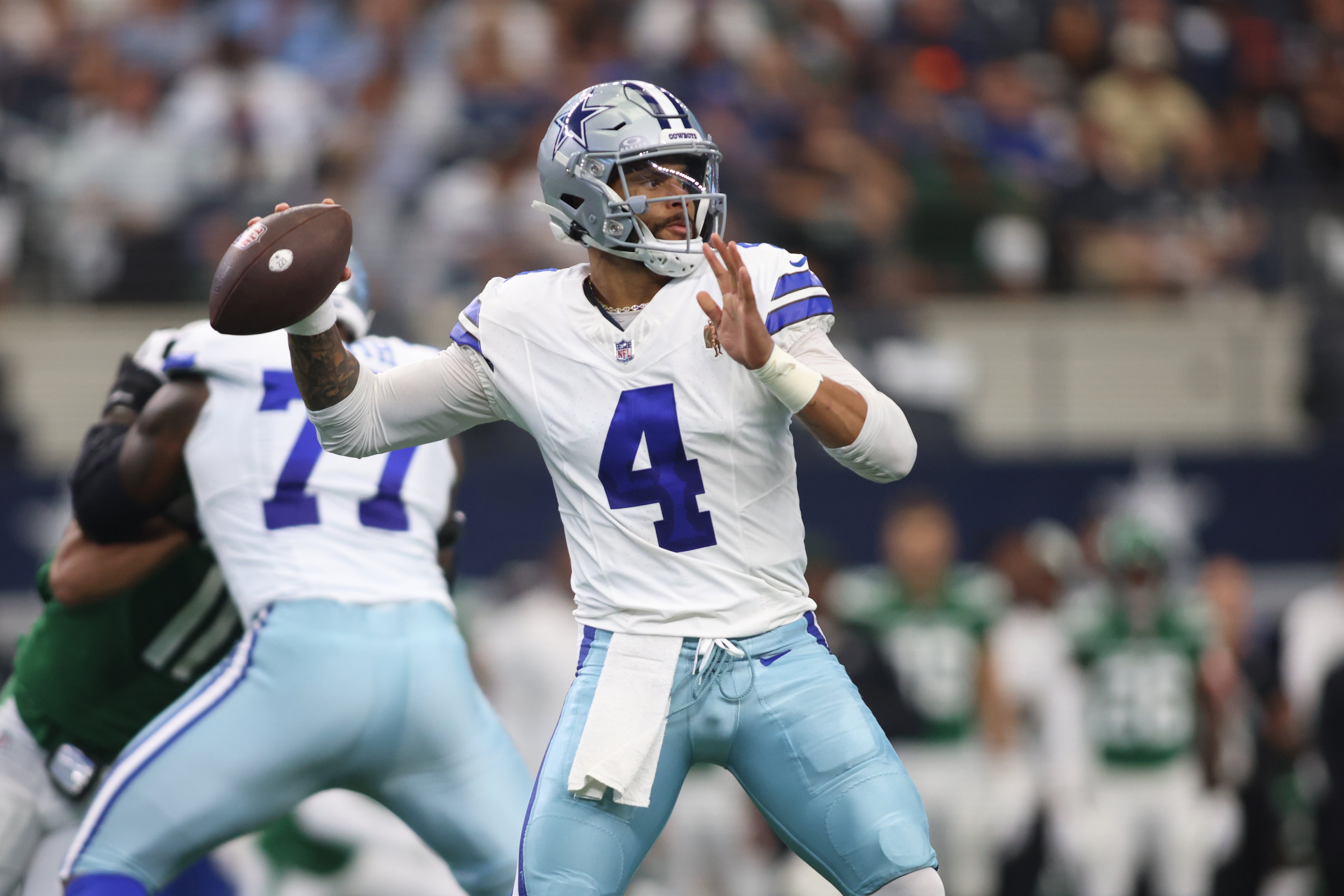
The Dallas Cowboys made an unusual decision against the New York Jets just moments before the opening kickoff that led to the team's second win of the season. They won the coin toss and elected to receive the football.
That's a rarity when looking not only at the Cowboys' recent records but throughout the entire NFL. Let me set the table really quickly for you: In 2022, NFL teams deferred 250 times while electing to receive just 22 times. It seems to almost be a rule. Win the coin toss, you gotta defer.
Although on-field football is ultimately what decides these games, the league is about finding every edge possible that you can. Statistical analysis suggests deferring after winning a coin toss is the way to go for a better win probability. The theory behind it? You get to (potentially) stack two consecutive possessions with the final drive of the first half and the opening drive of the second.
On Sunday, the Cowboys were sure to make their extraordinary choice to receive count. They drove down the field on a 12-play, 75-yard touchdown drive that put them in the driver's seat. Moments after, Micah Parsons' first sack of the game forced the Jets offense off the field on a 3-and-out (first of several).
"The coin toss is a decision that is part of the game management, how you feel the offense lines up against a certain defense and vice versa," Cowboys head coach Mike McCarthy told reporters following his team's 30-10 win. "We just wanted to get going today (…) We were just trying to get out in front."
Looking at the final stats, it's easy to understand why they made that choice. The Cowboys made it a two-possession game early in the second quarter and mostly lived in that world for the entire game (it momentarily was 10-7 following Garrett Wilson's 68-yard touchdown). In turn, that forced the Jets to rely on Zach Wilson dropping back to pass.
No Jets running back carried the ball more than four times. Not a single one made it to 10 rushing yards total for the entire game.
I can't help thinking back to how Week 1 started. The New York Giants received in the first half and ran the ball in nine out of ten plays to get to field goal territory. The Cowboys blocked the attempt and returned it for a touchdown but the Giants, even behind their blunted offensive line, ran on the defense for that drive.
As long as it's viable, that's what offenses will try to do just because it's better than the alternative: Facing the Micah Parsons-led pass rush.
"When they look at our defense, they want to challenge our run defense," admitted McCarthy in August during training camp. "They don't want to play all day against our pass rush."
That begs the question: Should the Cowboys ask to receive the football every chance they get when winning the coin toss? Getting an early lead can end these games before they even start. At the very least, it's worth considering it. It seems like barring facing an elite quarterback or an elite offensive line, this is what games will be looking like for the Cowboys defense.
Of course, the decision also comes down to how confident McCarthy feels he can get a touchdown on the opening drive. It's something I'll be keeping a close eye on moving forward.

Featured image via Tim Heitman-USA TODAY Sports