
40 years old: The legacy of Aaron Rodgers in the NFL
Look at some UFC 1 and 2 highlights on YouTube. Athletes from different sports matching up against each other. Jiu-jitsu, kickboxing, judo, sumo. Fights had the initial intent to determine which martial art was the best and most efficient. Then Marco Ruas happened. The Brazilian fighter was mainly a grappler, but he also had high-level […]


Look at some UFC 1 and 2 highlights on YouTube. Athletes from different sports matching up against each other. Jiu-jitsu, kickboxing, judo, sumo. Fights had the initial intent to determine which martial art was the best and most efficient. Then Marco Ruas happened.
The Brazilian fighter was mainly a grappler, but he also had high-level skills in Muay Thai, boxing, and taekwondo. He became, for all intents and purposes, the first real mixed martial artist. He changed the premise of the sport, of how athletes have to prepare, to grow their skills, to become complete fighters.
A similar process happened in the NFL. There were the obviously cerebral pocket passers, like Peyton Manning and Tom Brady, Philip Rivers and Ben Roethlisberger, Drew Brees and Eli Manning. In the early 2000s, there were running quarterbacks too. Michael Vick, Steve McNair, Donovan McNabb.
But look at how quarterbacks play football now. Patrick Mahomes, Josh Allen, Jalen Hurts, Lamar Jackson. They are all capable of doing everything at a pretty good level. And, let's be fair, Steve Young started this trend in the 1990s.
But Aaron Rodgers made it the NFL standard. He transformed the way people see the position, how athleticism is important and doesn't preclude a player from being a top passer. Right now, a pure pocket passer’s fate is determined. The same applies to a pure runner. And it’s not what teams look for anymore.
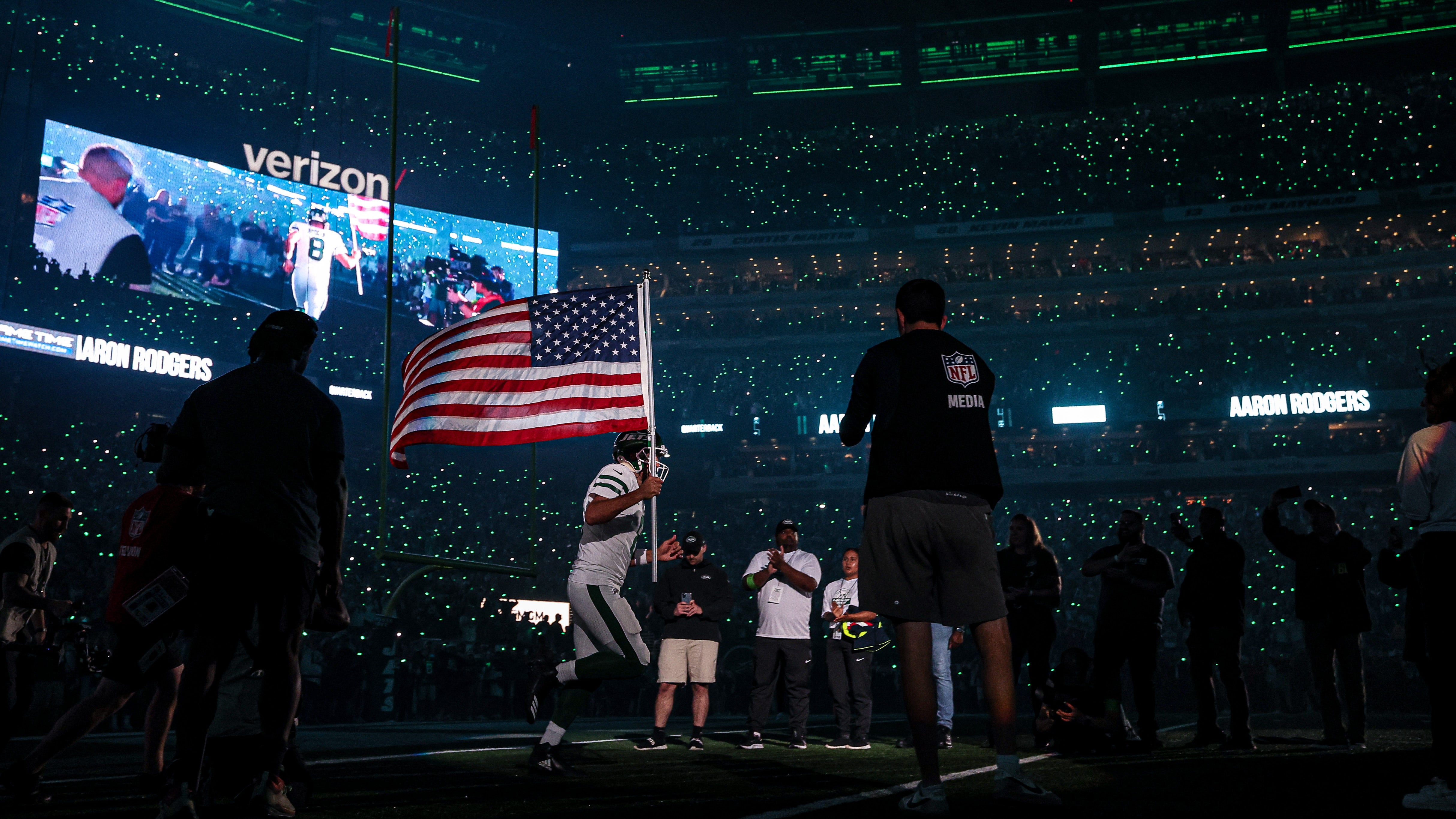
On the day Aaron Rodgers turns 40 years old, it's a good opportunity to remember how dominant he's been, how complete he was in his prime, and how his legacy is felt throughout the NFL.
The art of playing quarterback
Aaron Rodgers won the MVP in 2020 and 2021, but let's not forget that his prime happened well before that. Between 2010 and 2016, especially, it was hard to see any flaw in his game. When Rodgers was at the top of his performance, he was able to do everything.
He read defenses, he had a quick release, he was absurdly precise. He had a strong arm and the ability to create plays with his own legs. The classic championship belt celebration that we’ve seen so many times was reserved for run plays.
Until Patrick Mahomes appeared, Rodgers had by far the highest passer rating in NFL history among qualified passers. And oh, by the way, Rodgers still holds the record and the second place of the highest passer rating in a season — 122.5 in 2011, 121.5 in 2020.
Rodgers has the highest touchdown to interception ratio in history, but he also had nine seasons with at least 200 rushing yards. It doesn't seem like a high number now, but it was back then. For real. Manning had zero, Brady had zero, Rivers had zero, Brees had zero, Roethlisberger had one.
And Rodgers didn't run to run, only. He was also great creating plays to throw outside of structure. His mobility wasn't as pronounced as Michael Vick's, but he had a phenomenal ability to throw from different arm angles and platforms.
"When I'm out there, you just have to react," Rodgers said during the 2014 season. "That's why you work on those throws. When you're in the moment, you can't think to yourself, 'How do I get this to go 47 yards and be 2 yards inside the sideline?' You just have to listen to your body and remember what the elements are and what your wrist snap does to the football."
Arm talent
The ability to throw from different angles, to flick the wrist and throw it absurdly far, always caught the attention. You wouldn't want to teach your young high school quarterback to play like Aaron Rodgers, because it was nearly impossible to replicate what he was able to do. But, year after year, young quarterbacks did start trying to replicate it. To a certain degree, some of them are achieving success. It has changed the landscape of the league.
It's not about strength, because quarterbacks with strong arms have existed in the NFL for decades. It's the capacity to mix strength with extreme accuracy. It doesn't matter how distant the target was.
"Touch is more important than arm strength," Rodgers highlighted. "You want to really allow the receiver to run underneath the throw. It'll give you a little margin for error if you undershoot it a bit. You want the point of the ball to come down, because if you put enough on it and spin it enough, it's going to be very catchable."
It's December 2, 2023. Aaron Rodgers is 40 years old. He's certainly closer to the finish line than to his prime. But legacies are forever, for the Green Bay Packers, and independent of what he will still do for the New York Jets. For professional football. Rodgers, the football player, will have an impact for a long time. The NFL you watch every week wouldn't be the same without him, and that's the biggest compliment an athlete could ever receive.
