
NFL tips its hand on plan for Eagles' Tush Push
The Philadelphia Eagles were left fearing the owner meetings taking place in December when they learned the Brotherly Shove (more commonly known as the Tush Push) was going to be discussed. Amid rumors and hearsay of the NFL potentially leaning to banning the already-iconic and highly controversial play, the Eagles might've suspected their consistent yard-gainer […]


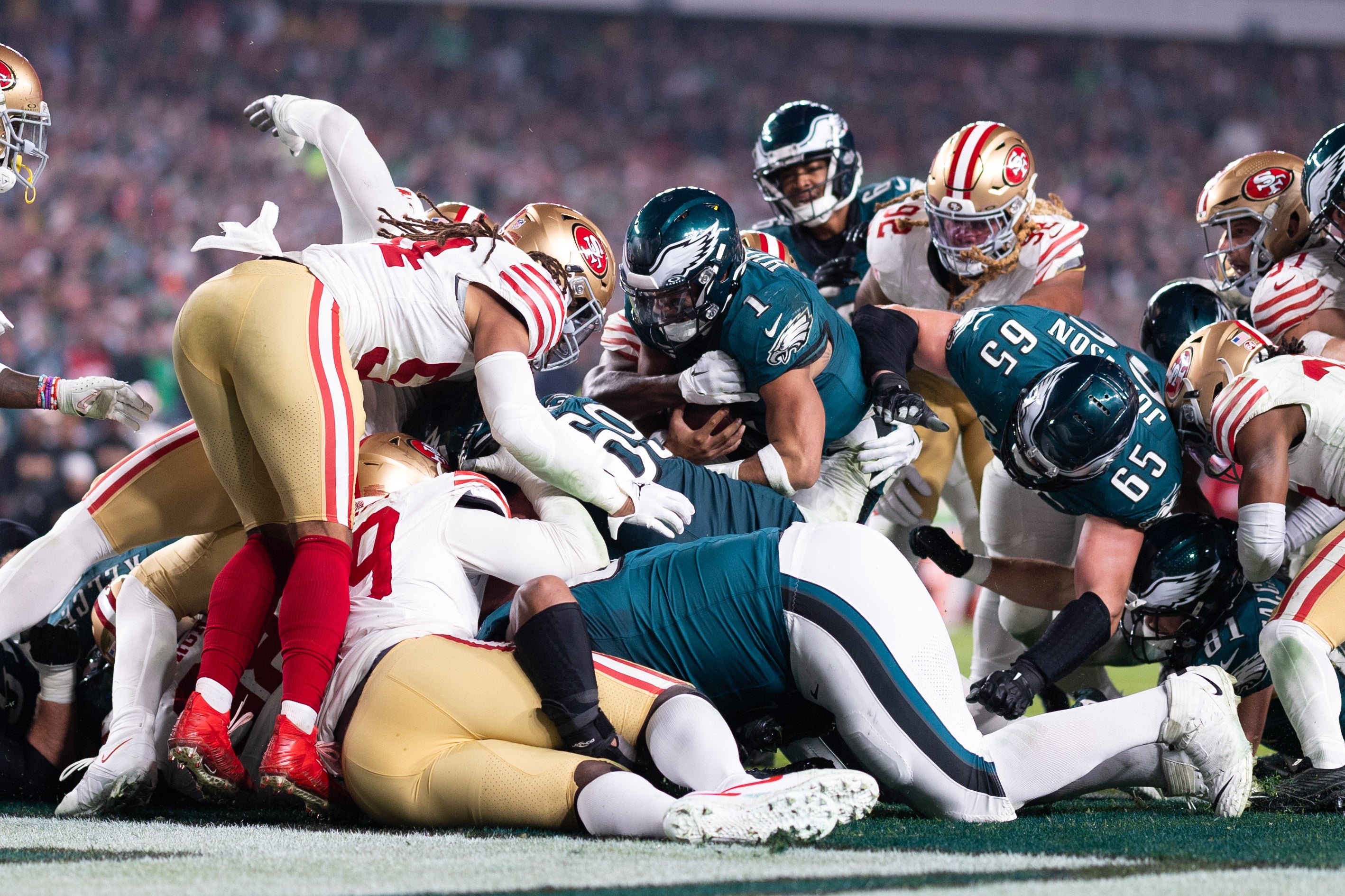
The Philadelphia Eagles were left fearing the owner meetings taking place in December when they learned the Brotherly Shove (more commonly known as the Tush Push) was going to be discussed.
Amid rumors and hearsay of the NFL potentially leaning to banning the already-iconic and highly controversial play, the Eagles might've suspected their consistent yard-gainer would come to an end.
After hearing to Executive VP of Football Operations, Troy Vincent, talk on Wednesday, that might no longer be the case.
"Philly does it better than anyone else; that's a fact," Vincent told reporters per NFL Network's Tom Pelissero. "You don't want to punish anyone for doing something well."
That quote alone does enough to tip the NFL's hand. It certainly doesn't sound like the league is anywhere close to banning the play. Otherwise, he wouldn't have focused on explaining why they wouldn't want to change it. In a way, Vincent explained the case for allowing the Tush Push to be within the rules.
More importantly, Pelissero reported the league is also indicating there's "not enough data to substantiate a greater injury risk on the play."
This part is key because if Vincent is already admitting the Eagles do it better than everyone else (thus proving it's not a boring play that works just the same for everyone), competitiveness isn't an issue. Therefore, the only way the NFL could then ban it is if posed a risk to player safety.
And if the NFL can't prove it does, how exactly does it go about banning it?
Wednesday's stance from the league after the meetings should certainly be taken as a huge win for the Eagles, who appear to be trending toward many more years a play defensive coordinators have given up trying to figure out. Instead, it's all about stopping Philly from getting to a position where they can even call the play.
