
Packers defensive investments don't yield projected results
General manager Brian Gutekunst took over for the Green Bay Packers five years ago. With half a decade of evidence, there is already an indication of what the executive likes, what he prioritizes, and how he intends to build a football team. Organizationally, the Packers decided to hire an offensive-minded head coach. There is high […]


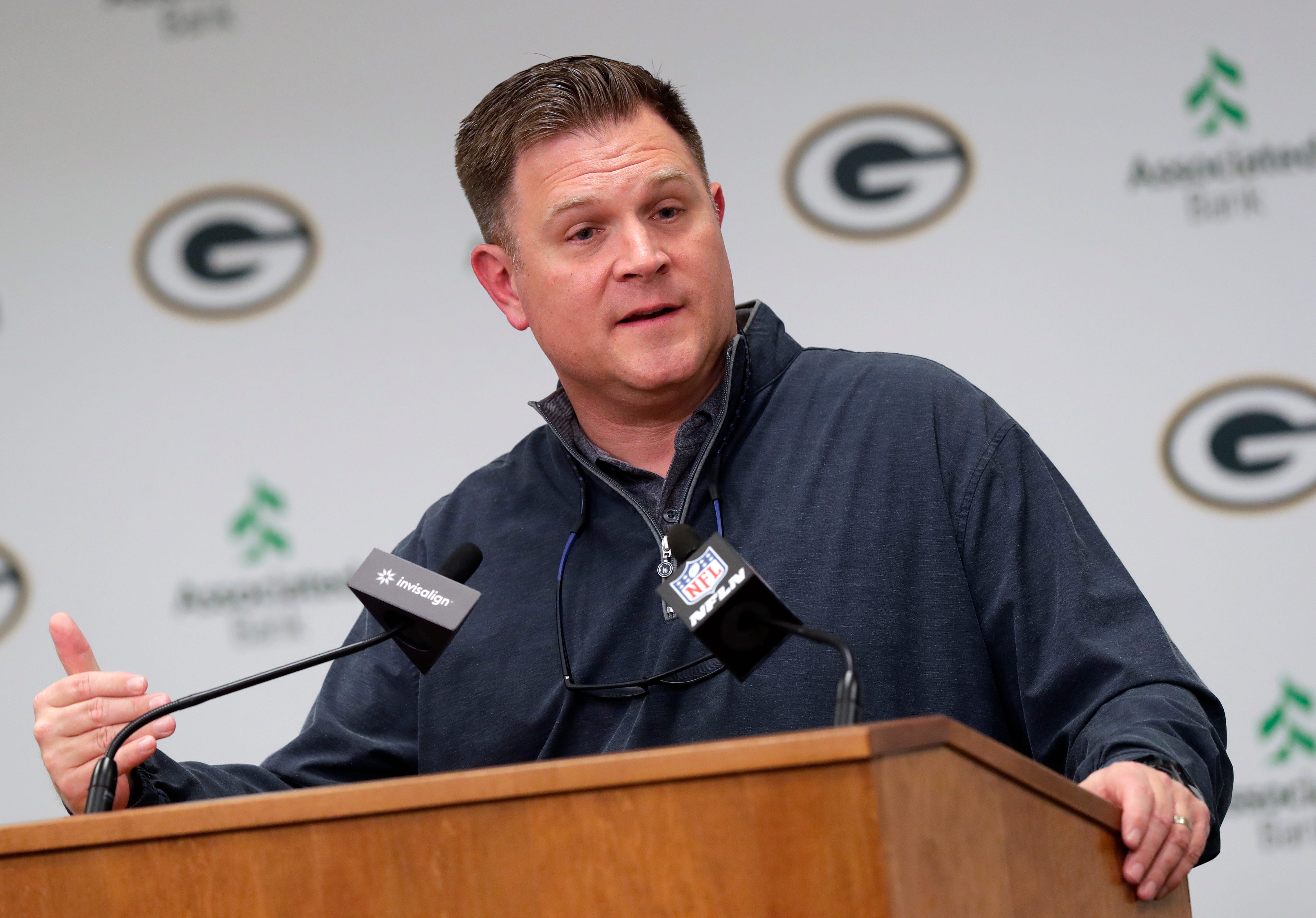
General manager Brian Gutekunst took over for the Green Bay Packers five years ago. With half a decade of evidence, there is already an indication of what the executive likes, what he prioritizes, and how he intends to build a football team.
Organizationally, the Packers decided to hire an offensive-minded head coach. There is high investment at the quarterback position, and volume for the offensive line. But the defense receives most of the attention and capital in terms of drafting and free agency.
The main idea is that a good quarterback and a solid system will make the offense work. Meanwhile, talent is a necessity to create a strong defense. So far, the plan has shown to be flawed.
Investment
There is an obvious difference in how Gutekunst operates on offense and defense. Under the current GM, the Packers paid Aaron Rodgers and David Bakhtiari, Aaron Jones to a limited degree, but the team also has shown willingness to let important players leave in free agency (Corey Linsley, Allen Lazard, Marquez Valdes-Scantling). On defense, the team has been much more proactive to add external free agents (Za'Darius Smith, Preston Smith, Adrian Amos, Rasul Douglas, De'Vondre Campbell), but also to pay top money to their own players (Jaire Alexander, Rashan Gary, Kenny Clark).
The difference is evident when you analyze the cash spending. In 2023, the Packers are sixth in money spent on defensive players, at $127,329,538. The only NFL teams to spend more there are the San Francisco 49ers, New York Jets, Pittsburgh Steelers, Seattle Seahawks, and Miami Dolphins.
On offense, the Packers are literally the least expensive roster: $73,261,701. No other team in the league is spending less than $80 million. The Baltimore Ravens, the highest spender on offense, are at $170,584,384.
But the contrast is not only in terms of money. The draft approach is obviously very different as well. Since Gutekunst was promoted to GM in 2018, quarterback Jordan Love is the only offensive player drafted in the first round. On defense, the first-rounders have been abundant: Jaire Alexander, Rashan Gary, Darnell Savage, Eric Stokes, Quay Walker, Devonte Wyatt, Lukas Van Ness.
You might argue that Gutekunst has spent a lot of day 2 picks on offensive players, but the total of draft capital invested in each side of the ball is not particularly close. Based on the Jimmy Johnson draft chart, the Packers have used 6,957.4 points of draft capital on defense, and 4,336.7 on offense since 2018. For you to have a baseline, the first overall pick is worth 3,000 points.
Performance
It's not a secret that the Packers have been an offense-first team. That was the case with Aaron Rodgers, and it hasn't changed with Jordan Love.
Last year, a down offensive year for Matt LaFleur's unit, they were 11th in DVOA. The defense had its best year with Joe Barry as the coordinator, and they were 20th. In 2023, the Packers are 10th on offense and 30th on defense after 16 weeks.
It's important to put everything together to make it clearer: the defense is 6th in cash spending and 30th in performance, while the offense is 32nd in cash spending and 10th in performance — DVOA is relevant because it takes opposition into consideration, downplaying the impact of facing weak teams.
What could they do?
For the future, Brian Gutekunst could certainly adjust his approach. Especially since the 2011 CBA, the impact of rookie offensive players is huge, and the surplus value offensive playmakers generate is the difference between good and great teams.
On defense, however, the Packers investment hasn't been worth it. Be it for bad investments or (mostly) because of bad coaching, the approach hasn't worked. Meanwhile, it's possible to see around the NFL teams spending much less and producing more — the Minnesota Vikings and Los Angeles Rams are good examples this year.
The first step is to hire a quality defensive coordinator, something the team hasn’t had in a long time, and then build a cheaper defense with pieces that fit his system, not necessarily based on raw talent and physical ceiling.
The Packers have shown ability to sustain a strong offense despite the lack of investment. Imagine what they can do with a modernized process.
