
Will Bengals finally be proactive at trade deadline?
Throughout the past three years, the front office of the Cincinnati Bengals has taken a sledgehammer to the outdated principles that defined the franchise. Pick any concept of football operations; they've improved on it to some degree.Trading for and away players? That's been left untouched. It's not as if the Bengals never do it, but […]


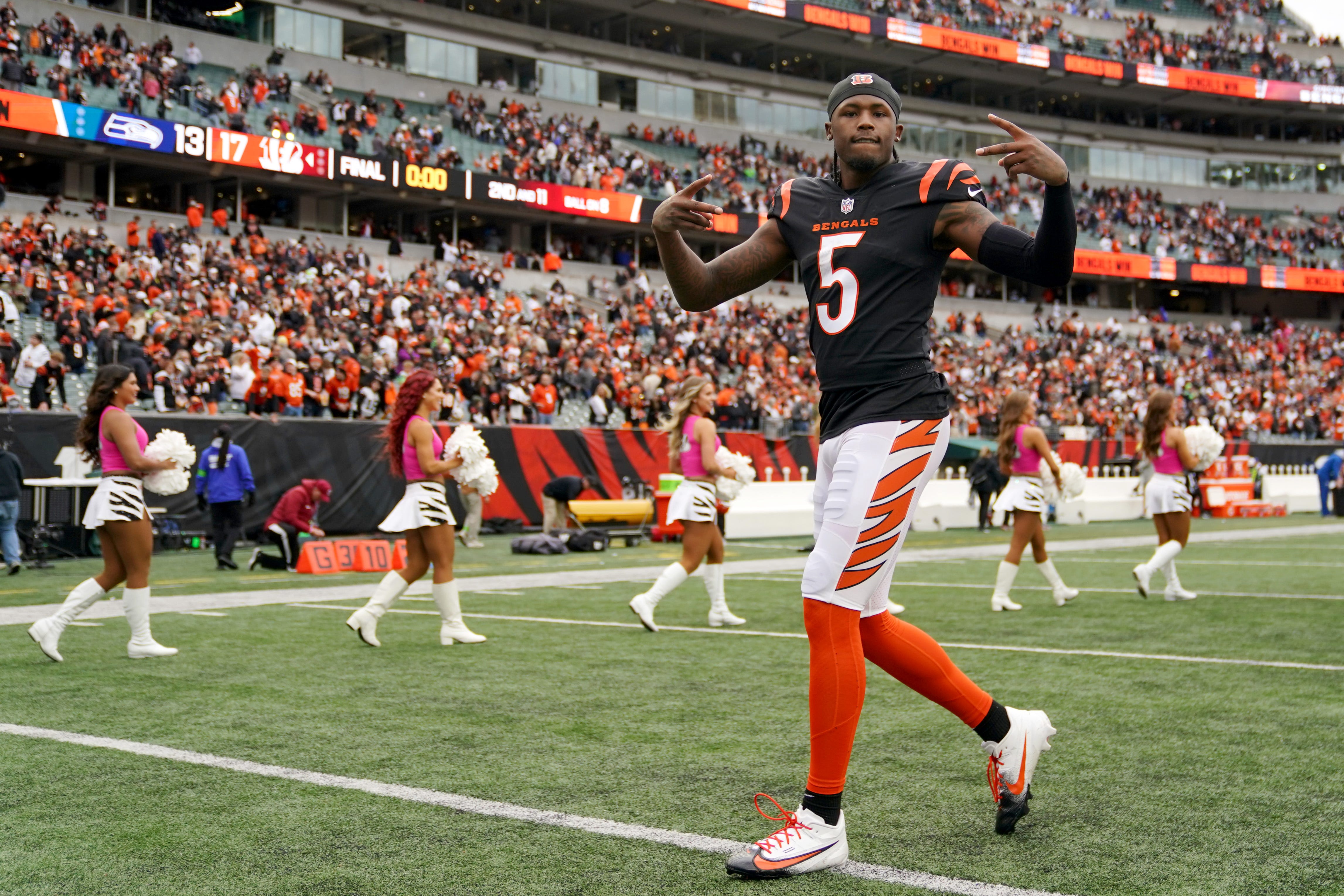
Throughout the past three years, the front office of the Cincinnati Bengals has taken a sledgehammer to the outdated principles that defined the franchise. Pick any concept of football operations; they've improved on it to some degree.
Trading for and away players? That's been left untouched.
It's not as if the Bengals never do it, but the way they do it has always remained the same. Player-for-player trades in an attempt to secure a rising talent ala Reggie Nelson or B.J. Hill, or sending off overly disgruntled stars ala Carson Palmer or Carlos Dunlap.
What does this mean for the upcoming trade deadline? Not much.
The Bengals have always scoffed at trading away their best players, consistently touting their unwillingness to make other teams better. Look no further with how they handled the Tee Higgins trade rumors.
"Trading Tee Higgins is not on my mind," Director of player personnel Duke Tobin said at this year's NFL Scouting Combine. "That's their problem. They want a receiver, go find your own, you know? In my opinion, Tee Higgins is a good piece for the Cincinnati Bengals. The trade stuff is a little ridiculous right now."
Such rumors were not brought up in jest. Higgins was entering the last year of his rookie deal, and the Bengals were beginning the process of extending Joe Burrow to what would become the largest contract in NFL history at the time. Ja'Marr Chase is also a shoo-in to receive a massive extension of his own, instilling what looked like a unique dilemma for Tobin and Bengals management.
The Bengals were true to their word. A Higgins trade was never entertained, and he's still here despite both sides failing to reach an extension prior to the season. The price to come to an agreement was likely higher than the team was willing to reach, just like the price for trading him away was for any inquiring franchise.
Higgins seems like as good of a starting point as any when it comes to internal trade deadline candidates. The fourth-year receiver has had a rough first six weeks to the season. He had two duds sandwiching his lone quality performance of the season during the team's 1-3 start, and suffered a rib fracture that has impacted his performance and availability since.
If the Bengals didn't even consider trading him when his value was at a high-point during the offseason, why would they do so now that his value is considerably lower? Top on the fact that he's not demanding to leave or forcing the team's hand in the process, he will not be going anywhere.
The Bengals will always value their own players more than future draft picks, which makes it ironic how they value future draft picks more than players from other teams. Not even a late round pick-swap has spurred them to take on an external player. Only when it's player-for-player, or in some cases multiple picks head their way like the Chad Johnson trade. Hell, the Bengals didn't even part ways with Dunlap without getting B.J. Finney in return. Those were some dark times indeed.
Palmer was an exception just like Burrow was when it came to guaranteed money. The former first overall pick had value as a starting quarterback and threatened to retire if he wasn't traded. The Bengals were able to get a first-round pick in addition to a second-rounder from the Oakland Raiders; two eventual top-40 picks for a player who was dead-set on never playing a down in Cincinnati again.
That's robbery, and it's what the Bengals expect when dealing in trades.
Trades of that magnitude are especially rare midseason at the deadline. Usually it's late-round picks that get exchanged for vets in need of a change. But even those picks look sacred in the Bengals' eyes. When you see a seventh-round pick, they see T.J. Houshmanzadeh. A lowly fifth-rounder? That can be Marvin Jones. Why give up a fourth-rounder who's not Geno Atkins when you can just draft Atkins with that pick instead?
It's undoubtedly faulty logic to an extent, but it's how they roll. Their actions speak for themselves.
Pure urgency may be the lone variable that gets them to move off this line of thinking. Sitting at 3-3 with legit Super Bowl expectations is not the ideal place to be in. If there's a player they feel can help push them forward for the cost of a player they no longer want, perhaps a deal could be reached. It's just tough identifying who that player on the roster is, as well as imagining them giving up any sort of draft capital with the future of their roster so uncertain.
Halloween may be a day of fright, but when October 31st arrives, don't expect any surprises from the Bengals.
