
Grading every Packers free agency move after intense sequence of decisions
What a week, huh? Captain, it's Wednesday. The meme is very much applicable to the last couple of days for the Green Bay Packers. Josh Jacobs and Xavier McKinney are in, Aaron Jones and David Bakhtiari are out. General manager Brian Gutekunst made a series of other moves as well, including a new contract for […]


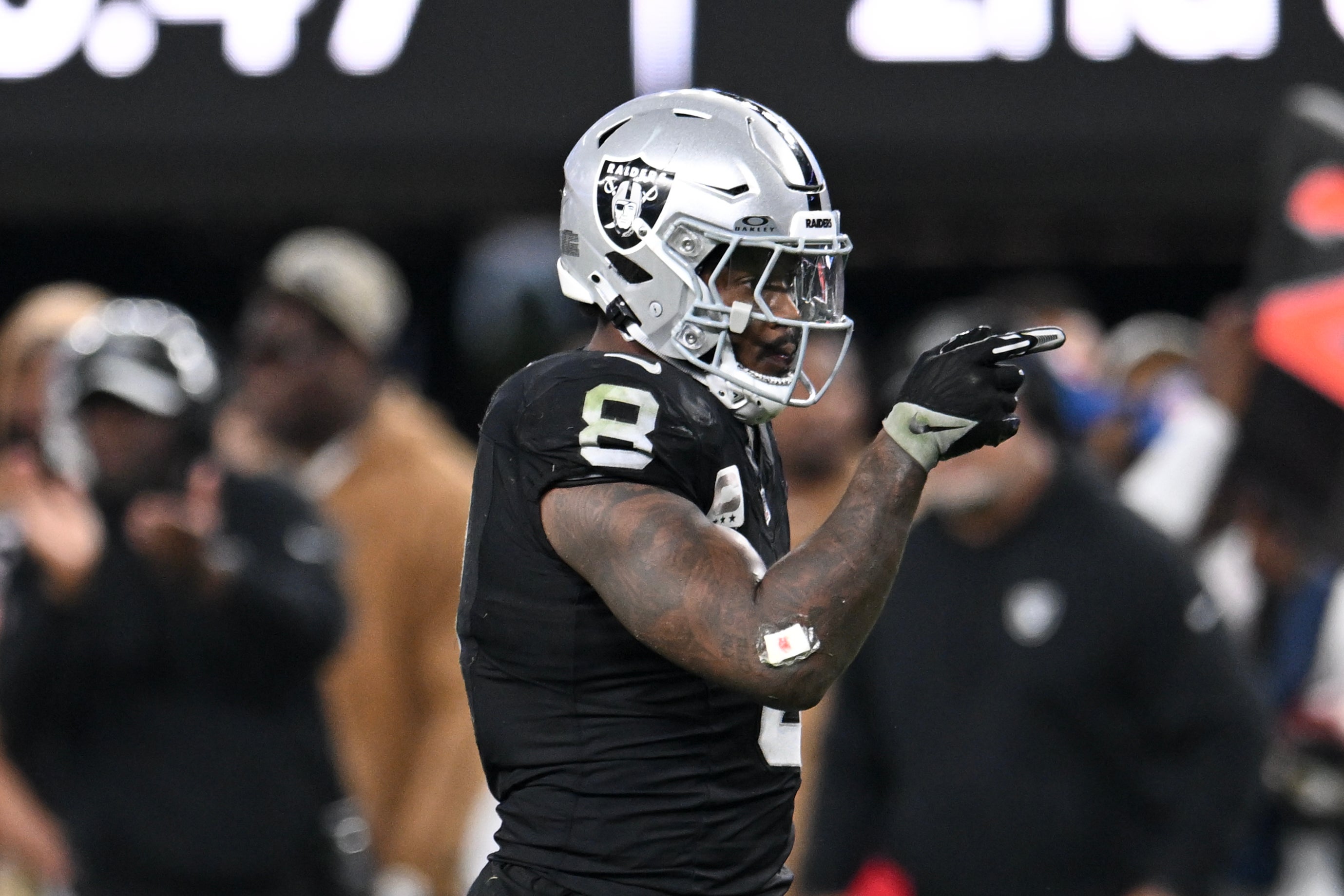
What a week, huh? Captain, it's Wednesday. The meme is very much applicable to the last couple of days for the Green Bay Packers. Josh Jacobs and Xavier McKinney are in, Aaron Jones and David Bakhtiari are out.
General manager Brian Gutekunst made a series of other moves as well, including a new contract for kickoff returner Keisean Nixon. Therefore, let's evaluate everything the Packers did in the first wave of free agency.
Signing Josh Jacobs – B
Jacobs is still pretty young at 26 and he has been one of the most productive running backs in the NFL since he was a first-round pick in 2019. He led the league in rushing yards two years ago, which led the Las Vegas Raiders to franchise tag him in 2023.
It's a solid move, as Jacobs is younger and stronger than Aaron Jones. That being said, it's not an A because frequently running backs don't carry over the success from one team to another. There's an inherent risk to adding an external running back, even more pronounced than in other positions.
Releasing Aaron Jones – D
That's a tough one. Jones was not only a good player, but also a beloved person among Packers fans. That shouldn't drive decisions, though.
However, even strictly on a football level, it's a questionable move. He played 11 games last season and is a smaller back, which created doubts about his future in Green Bay, but he still played at a high level. Sure, it made sense to sign Jacobs, but for the exact $7 million contract Jones received from the Minnesota Vikings, it would be possible to pair them.
It would be a lot to spend on running backs, but the rest of the offense was so cheap that it would have been viable. Moreover, Aaron Jones would function as a running back 2, preserving him to high-leverage moments.
Better a year early than a year late, though, and Jones is 29. His prime is probably gone, so it's not an absurd decision.
Signing Xavier McKinney – A-
The minus there is just because the price was a bit too high compared to previous expectations. According to A to Z Sports' top 105 free agent list, he was expected to sign a three-year, $34.95 million contract — $11.65 million yearly average. It ended up being much more than that, at $17 million per season.
But that's still a solid signing because McKinney is 24, so he's going to spend his prime years in Green Bay. He is also a huge upgrade compared to what the Packers had at the position over the last couple of years.
The safety position probably still needs at least one more piece, but McKinney is a promising player who fits the team's timeline.
Releasing David Bakhtiari – B-
The Packers didn't have many options, to be fair, but that doesn't mean it was the ideal outcome. Green Bay could (and might) have tried to negotiate a paycut, but that would depend on Bakhtiari wanting to do that. A trade was also possible, but realistically no other team would absorb such a high cap hit.
It was an unfortunate situation all around, and the Packers were left with no good alternatives.
Re-signing Keisean Nixon – B
It was slightly more than Nixon got last year, but the structure is better. It's a three-year, $18 million deal. So even though the average is $6 million, there will probably be a lower cap hit in 2024 and a bigger, non-guaranteed salary in 2026. Nixon is a valuable special teamer and a decent defensive piece, even if the Packers would be smart trying to upgrade the starting nickel corner position.
Re-signing Tyler Davis – C
The Packers certainly like Tyler Davis more than I do. He had a poor preseason in 2022, full of drops and fumbles, but the Packers kept him and he led the team in special teams snaps. Last year, he was expected to have an important role again, but tore his ACL in the preseason.
With Luke Musgrave, Tucker Kraft, and Ben Sims on the roster, Davis won't be an offensive factor, even though he can return to his special teams role.
Re-signing Corey Ballentine – B-
Ballentine is a depth piece at cornerback. Ideally, the Packers would have a better situation and he would have to play defensive snaps, but injuries last year forced Ballentine into the starting lineup for several games.
Letting Darnell Savage leave – C
Savage played well in 2019 and 2020, but took a step back when Joe Barry became the defensive coordinator. The three-year, $7 million contract that he received from the Jacksonville Jaguars was too much, but it would have been interesting to watch him in Jeff Hafley's system.
Letting Jon Runyan leave – B
Runyan is still better than Sean Rhyan, but he was not a positive starter anyway. And the New York Giants gave him $10 million per season, a number the Packers would never match. Now, the only problem is that Green Bay will need to add more pieces to the interior of the offensive line — but that was probably the case even if Runyan had been kept.
Letting Jonathan Owens leave – A
He was a depth piece that was forced to play because the safety group last year was bad. Now, he has gone to the Chicago Bears on a two-year deal, and the Packers will rebuild their safety room — a project that started with the Xavier McKinney signing.
