
The smartest trading down strategy is available to the Packers in the draft
The Green Bay Packers are not smarter than everyone else. The reason behind a sequence of good draft classes is the number of total picks general manager Brian Gutekunst has made. Since 2022, no other team in the league has had more picks. The Packers had 11 in 2022, 13 in 2023, and are slated […]


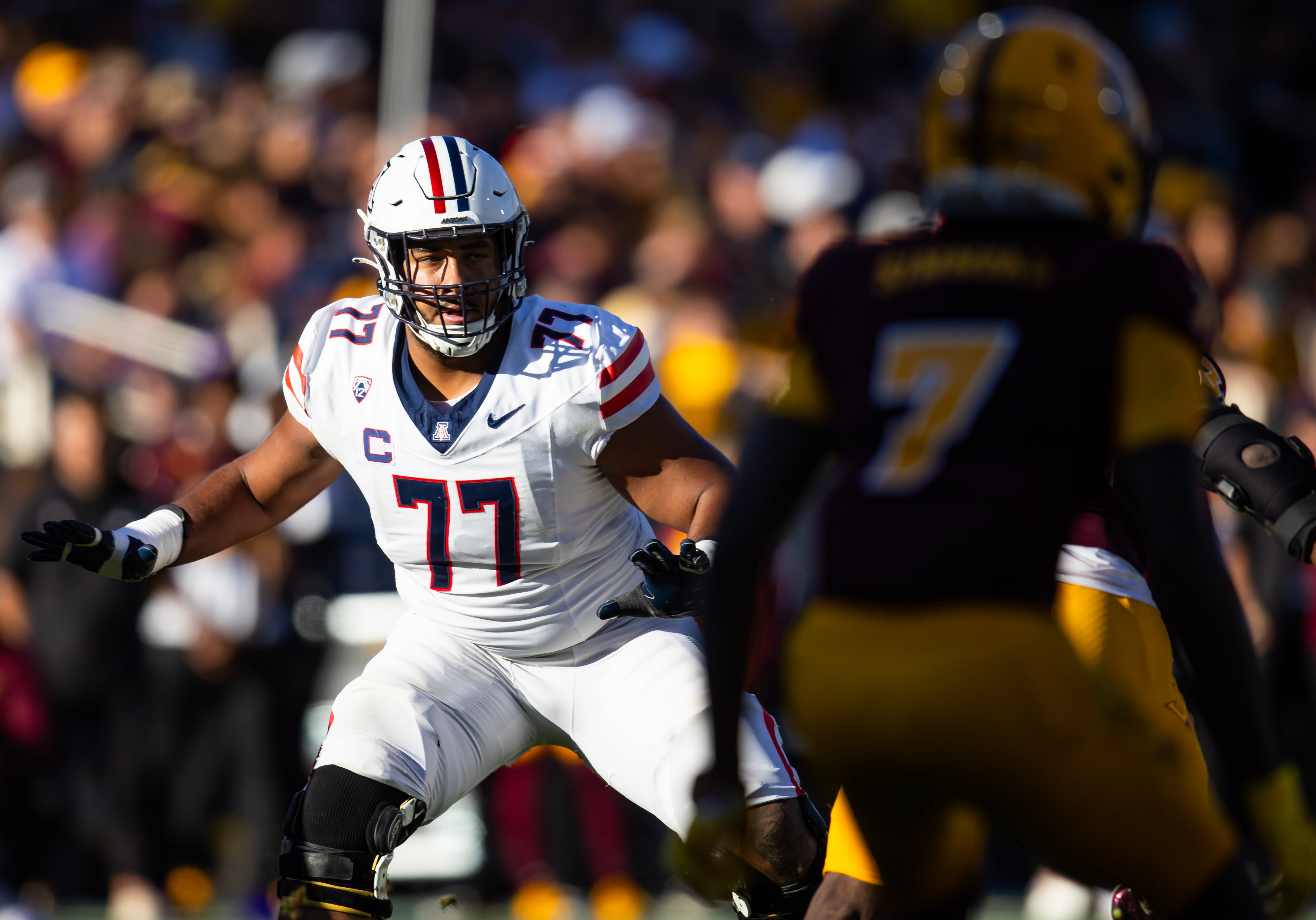
The Green Bay Packers are not smarter than everyone else. The reason behind a sequence of good draft classes is the number of total picks general manager Brian Gutekunst has made. Since 2022, no other team in the league has had more picks. The Packers had 11 in 2022, 13 in 2023, and are slated to have 11 again this year.
Teams that don't trust their scouting process too much tend to have better processes, because they know how uncertain the draft is. Usually, as a process, trading down is better than trading up, unless it's for a quarterback.
Over the last three years, the excess of draft capital for the Packers have happened mostly because the team got first- and second-round picks trading Davante Adams to the Las Vegas Raiders in 2022, plus two second-rounders by moving Aaron Rodgers to the New York Jets last offseason. Now, without obvious moveable pieces, Gutekunst can still find a way to accumulate picks.
First-round talent
Teams never give first-round grades to 32 players. Usually, it's a number between 15 and 20 prospects. This year, most analysts have said that the class will have something around 17, 18 true first-rounders. Obviously, each team has a different group of players, so eventually the franchise can get a first-round graded player late in the round.
However, the Houston Texans trading down from 23 to 42 is a significant indicative of how the NFL sees the class. The talent level from those two areas of picks is not that different.
Sure enough, maybe a player the Packers like unexpectedly falls, and that's why teams usually wait for draft time to make this type of move. But a trading down from 25 is certainly a viable strategy for Green Bay.
Number of picks
As previously mentioned, the Packers already have a high number of draft picks this year, 11. There's no point in adding 13, 14 players because several of them wouldn't make the 53-man roster.
But that doesn't mean the Packers couldn't find a creative way to maximize their resources.
Next year, Green Bay is slated to make "only" eight selections, their seven original ones and a compensatory seventh-rounder for losing Yosh Nijman in free agency. The Packers could have two more comp picks, but the signings of Xavier McKinney and Josh Jacobs canceled out the losses of Jon Runyan and Darnell Savage.
Moreover, aggressive teams tend to devalue future picks. With that in mind, a good strategy for the Packers is trading down without adding more picks this year, but instead getting 2025 picks.
That's the advantage of having an opening window with a young quarterback in Jordan Love. The Packers are in no rush to add good players right now. They can find ways to put themselves in a better position in the future as well.
Potential scenarios
Via the PFF simulator tool, it's possible to have an idea of what the Packers could get with a move down. By going from 25 to 45, trading with the New Orleans Saints, Green Bay was able to get a second- and a fourth-rounders in 2025, plus a swap of late-round picks.
Trade:
- Packers receive: Pick 45, 2025 2nd, 2025 4th, 2025 6th
- Saints receive: Pick 25, 2025 7th
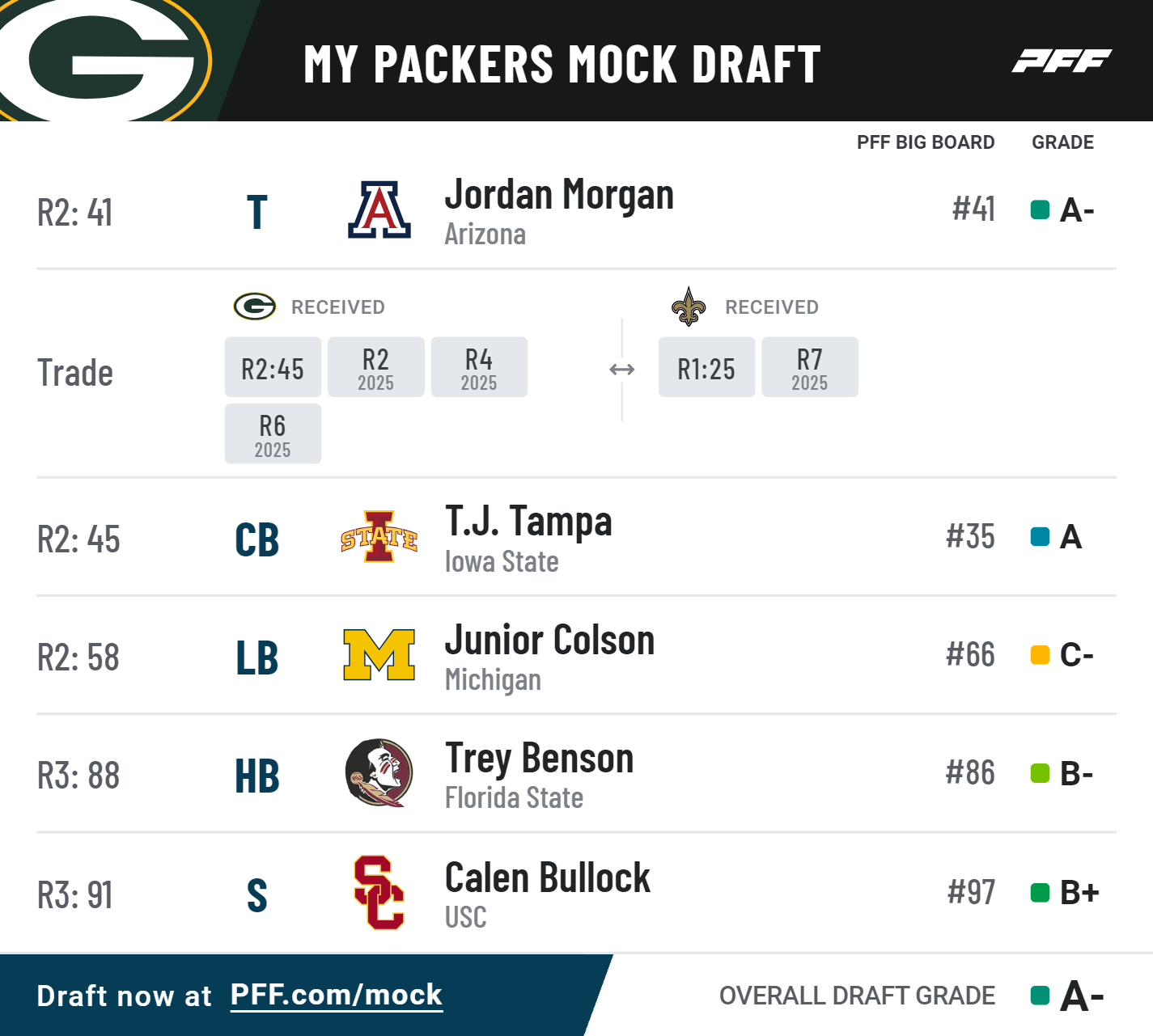
Even with a big trade down like that, the Packers would still be able to find good prospects. In the same simulation, with the 41st pick (acquired from the New York Jets in the Aaron Rodgers' trade), the Packers could get offensive tackle Jordan Morgan — a player that has been mocked to Green Bay with the 25th pick anyway. With the 45th pick acquired in the trade down, the Packers could get cornerback TJ Tampa.
Rationale
When a team doesn't need a quarterback, stockpiling draft picks is generally a smart way to operate. The Packers can't have too many picks in a single year to extract more value out of their players, but adding more future capital is a smart move.
Unless there is a prospect falling that the Packers like a lot, trading down from the end of the first round might be a perfect medium- and long-term move by Brian Gutekunst.
