
New report states Alabama players' reaction to Rose Bowl loss contributed to Nick Saban's decision to retire
The college football landscaped changed in January 2024 with the retirement of Nick Saban as Alabama head football coach. While the move wasn't shocking – after all, Saban is 72 years old – the timing of the move was a surprise to some, as Saban called it quits just nine days after Alabama fell to […]

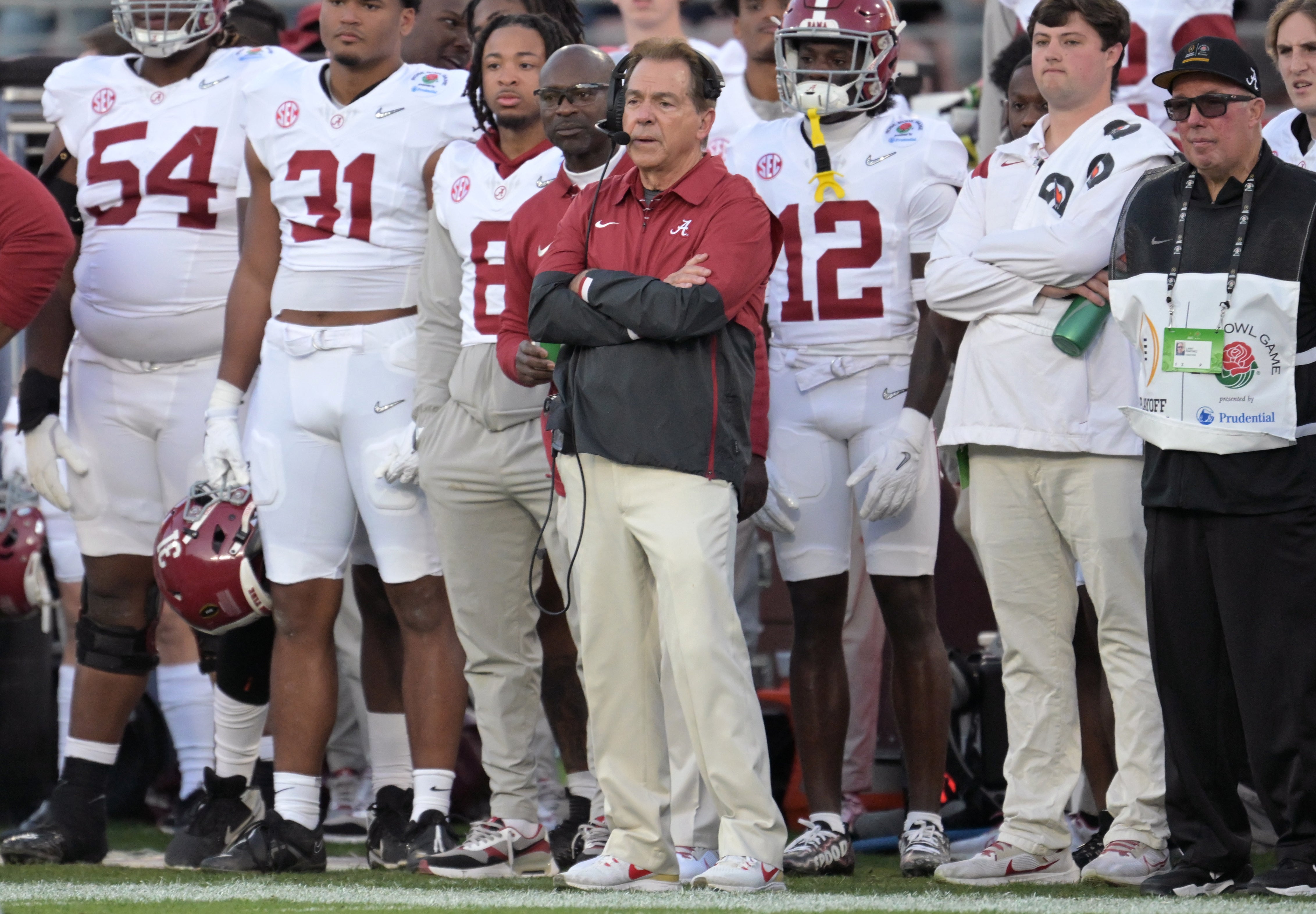
The college football landscaped changed in January 2024 with the retirement of Nick Saban as Alabama head football coach.
While the move wasn't shocking – after all, Saban is 72 years old – the timing of the move was a surprise to some, as Saban called it quits just nine days after Alabama fell to Michigan in the College Football Playoff semifinal against Michigan in overtime 27-20.
However, a new report from ESPN's Chris Low shed some light on why the legendary coach decided to call it a career when he did. Per Saban's comments in the article, some of his team's actions immediately following the loss to Michigan as well as back in Tuscaloosa shortly after the game "contributed" to his decision to leave when he did.
But Alabama's 27-20 overtime loss to Michigan in the CFP semifinal at the Rose Bowl on Jan. 1 was a hard one for Saban to digest. Not only was Saban upset about the way his team played, he was especially disheartened about some of the things that happened afterward — in the Rose Bowl locker room and back on campus, when he met with some of the players.
"I want to be clear that wasn't the reason, but some of those events certainly contributed," Saban said of his decision to retire. "I was really disappointed in the way that the players acted after the game. You gotta win with class. You gotta lose with class. We had our opportunities to win the game and we didn't do it, and then showing your ass and being frustrated and throwing helmets and doing that stuff … that's not who we are and what we've promoted in our program."
Once back in Tuscaloosa, as Saban began meeting with players, it became even more apparent to him that his message wasn't resonating like it once did.
"I thought we could have a hell of a team next year, and then maybe 70 or 80 percent of the players you talk to, all they want to know is two things: What assurances do I have that I'm going to play because they're thinking about transferring, and how much are you going to pay me?" Saban recounted. "Our program here was always built on how much value can we create for your future and your personal development, academic success in graduating and developing an NFL career on the field.
"So I'm saying to myself, 'Maybe this doesn't work anymore, that the goals and aspirations are just different and that it's all about how much money can I make as a college player?' I'm not saying that's bad. I'm not saying it's wrong, I'm just saying that's never been what we were all about, and it's not why we had success through the years."
There's no doubt that the college football landscape is undergoing a massive change as the NIL era begins in full. Players have more control and leverage than ever as far as what they can secure financially – and now, thanks to the states of Tennessee and Virginia, legally.
And even at Alabama, the majority of players don't go on to star in the NFL. A large number do, but like every other school, most players' best chances at taking advantage of their athletic skills and name, image, and likeness opportunities are at the college level. That may not be why Alabama had success over the years, but the rules were different then. Clearly Saban doesn't want to be a part of that new world. And that's understandable to a degree.
However, the reasoning about his players tossing their helmets or being upset about losing is quite a stretch. That was a tough loss for the Tide on a huge stage. If players being emotional about losing was enough to contribute to a decision on leaving, then that's pretty weak.
Regardless, an incredible era is over, and the Crimson Tide will look to try to sustain their decade and a half of incredible success with a coach who's had just a small taste of it at the sport's top level.
