
NFL exec explains why Bengals didn't trade down and pass on Myles Murphy
Each of the last four NFL Drafts had the Bengals picking either at the bottom of the first round, or the top of the second round. The general range is considered a prime jumping point to trade down and acquire additional picks. They only traded down once, and it was to land offensive lineman Jackson […]


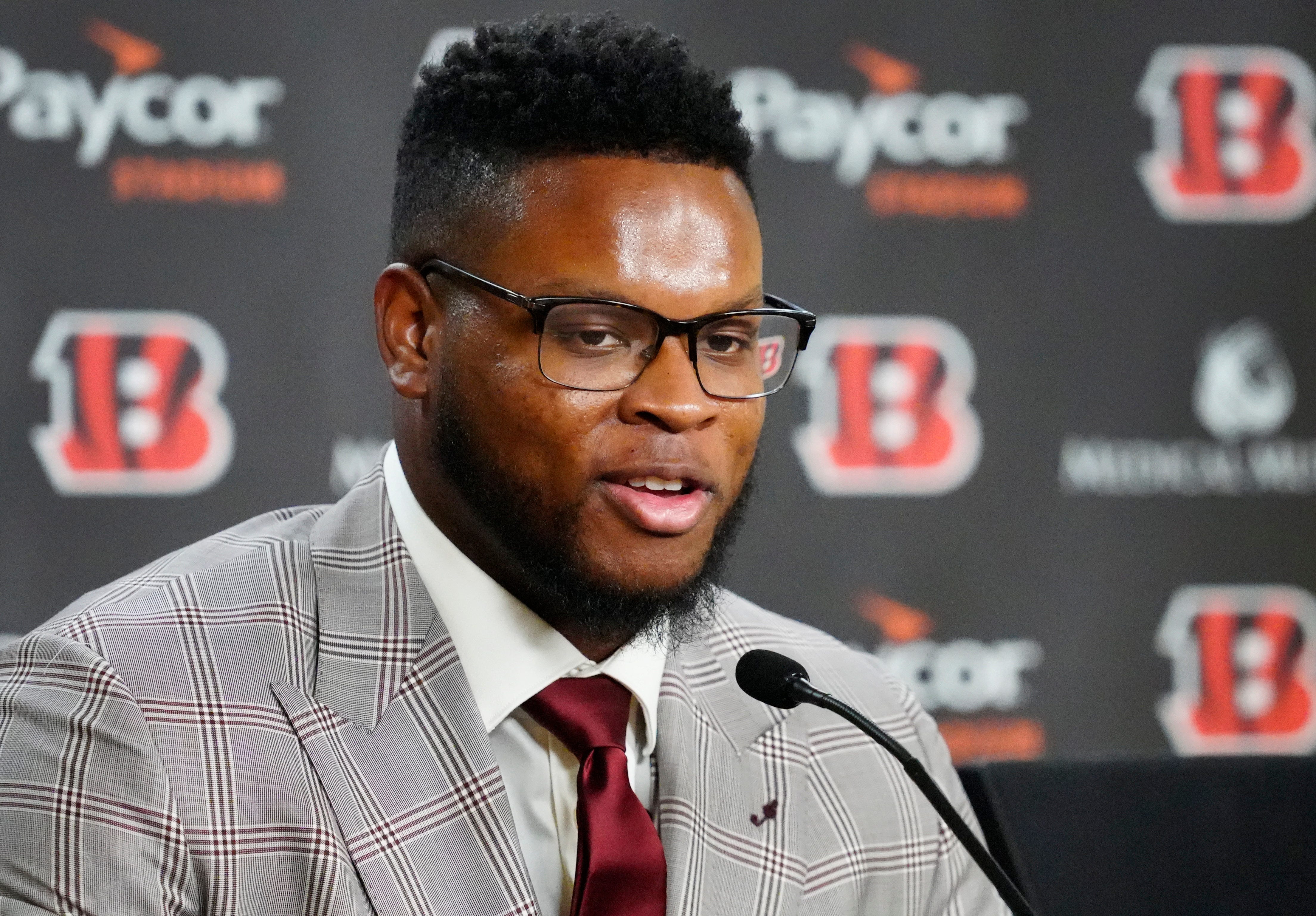
Each of the last four NFL Drafts had the Bengals picking either at the bottom of the first round, or the top of the second round. The general range is considered a prime jumping point to trade down and acquire additional picks. They only traded down once, and it was to land offensive lineman Jackson Carman in the middle of the second round.
The three times they stood pat, they did so because a top-tier player was staring them in the face. Tee Higgins in 2020, Dax Hill in 2022, and it happened again a week ago at the 28th overall pick.
Myles Murphy was in the top half of the team's top 28 graded players of the 2023 NFL Draft class. That he fell to the Bengals made it an easy decision to do nothing but submit the pick and call no one but Murphy.
Director of college scouting Mike Potts said the Bengals had a handful of offers to move back from the 28th spot, but the chance of taking a player like Murphy was too great of an opportunity.
"So the way the process goes is we're actually feeling a ton of trade calls," Potts explained on Hear That Podcast Growlin'. "We probably had, I would say upwards of five offers to move back off of that 28th pick, but if a guy like Myles, we knew if he was there we were in all likelihood—unless we were blown away by an offer—we were gonna stick and pick a high caliber guy like that. If we felt like we were dropping down a level of player, we would have probably moved back and taking the best of those multiple offers that we had there. We got a guy that we didn't feel like we were dropping down a level of player. It was a guy that we targeted."
The Bengals have traditionally structured their big board into three tiers in the first round: 1A, 1B, and 1C. Murphy seemed to be the best 1A or 1B player remaining on the board for Potts and the Bengals. And if all that remained were 1C players, a trade down may've occurred.
Potts compared Murphy to the likes of Higgins and Hill, who were selected five and three picks, respectively after Murphy in their draft classes. The commonality they share is the grade they all received.
"Those were those were all picks and similar range, 28 to 33 range," Potts explained. "So a similar caliber of player that we thought could have went higher than that late first to top of the second, in Tee's situation. We thought those guys were easily first round players, and we were happy that they were there. Now, if we felt like we were dropping down a level of player, we had deals in place that we're picking at 28 and Myles Murphy maybe goes at 27 or a couple other guys that we'd like go those picks right before us, we certainly would have pulled the trigger on that on that trade and move back."
We've no idea how far down the Bengals would've traded back had they accepted one of their offers, but they likely wouldn't have gotten Murphy in the process. You'd have to go back 34 years for the last time the Bengals didn't have a first-round pick. Trading out of the round entirely would have to have an enticing deal attached to it.
Cincinnati will want to keep picking at the end of the first round for obvious reasons. The more players like Higgins, Hill, and Murphy that fall to them, the more repeatable the process can become.
