
NFL Draft: Insider reveals reason Texans may pass on top QB
We are just days away from the 2023 NFL Draft, and the Texans are one of the most difficult teams to project. On one hand, the team desperately needs a franchise quarterback, something the team has not had since Deshaun Watson. On the other hand, the team hired a defensive-minded head coach in DeMeco Ryans, […]


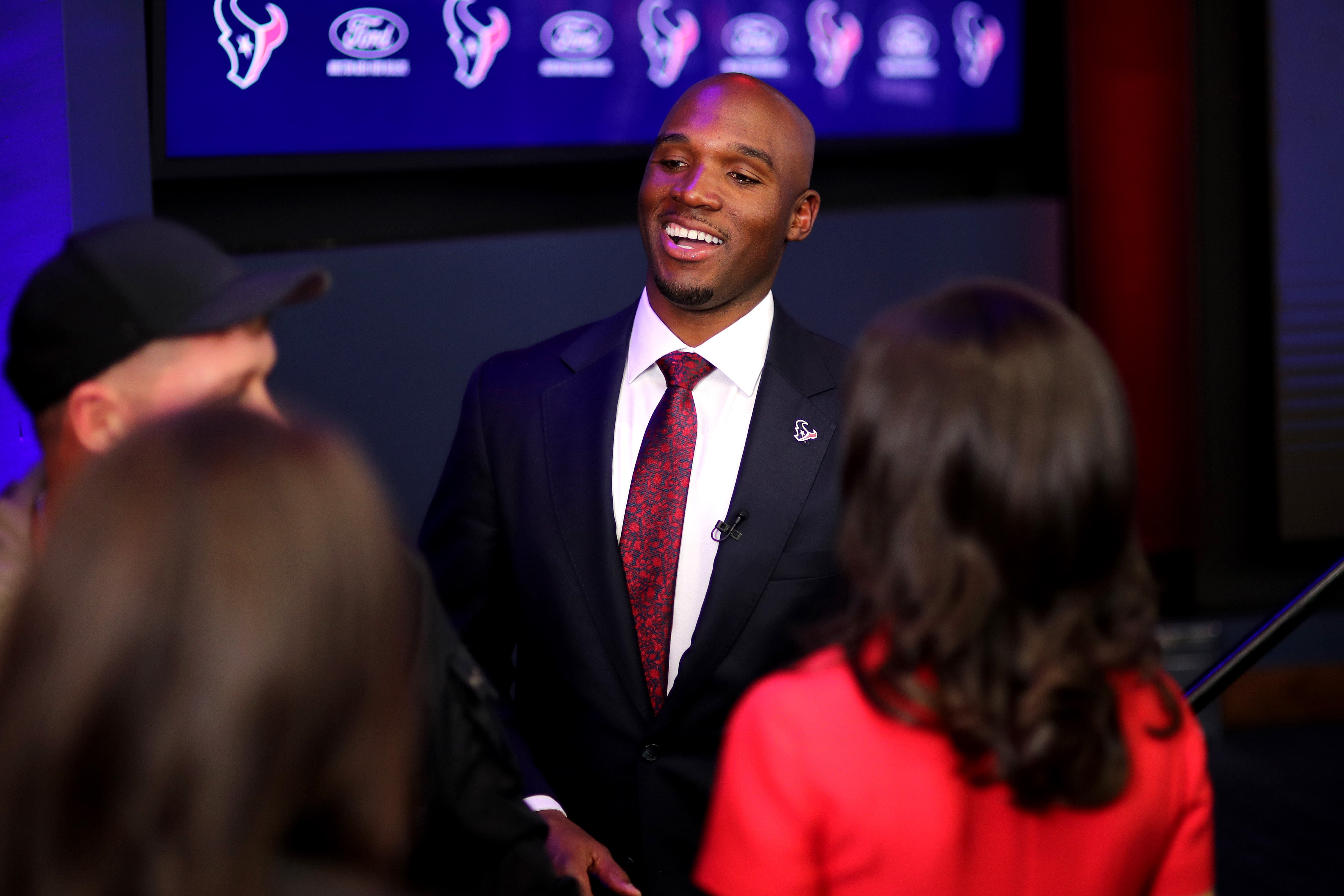
We are just days away from the 2023 NFL Draft, and the Texans are one of the most difficult teams to project. On one hand, the team desperately needs a franchise quarterback, something the team has not had since Deshaun Watson.
On the other hand, the team hired a defensive-minded head coach in DeMeco Ryans, and rumors abound that general manager Nick Caserio will not draft a QB just for the sake of drafting one.
The Athletic's Dane Brugler, a noted draft expert, recently revealed the reason that he does not believe that the Texans will select a certain top QB prospect in this class.
On The Athletic Football Show, Brugler, Robert Mays, and Nate Tice were discussing the S2 Cognition test and the performance of Ohio State QB CJ Stroud. Stroud's score was reportedly 18% (out of 100), which was the lowest score among QB prospects. Bryce Young, widely expected to go No. 1, had the highest score of 98%.
According to Brugler, the San Francisco 49ers are one of the teams with the highest regard for this test. Head coach Ryans and offensive coordinator Bobby Slowik both came to Houston from San Francisco, potentially bringing that mindset with them.
For the record, Brugler does have the Texans ultimately selecting Stroud at No. 2 but admits that he is "more and more unsure," about the pick. So what exactly is the S2 Cognition test, anyway?
The test, which replaced the Wonderlic, has nine different segments, all of which are graded separately (sort of like the SAT). The measurements used in each section include a quarterback's ability to track multiple objects, make complex decisions, and filter through if/then scenarios with different defensive scenarios — with an ability to improvise. The test takes 45 minutes and is run through a gaming laptop, ultimately measuring a players' ability to quickly dissect information that appears on the screen in front of them.
Essentially, the test measures how well college QBs would theoretically adapt to the fast-paced style of play in the NFL. Stroud's test results imply that he will not be great at making split-second decisions or progressing through reads at the NFL level.
Will these lackluster test results be enough to dissuade the Texans at No. 2? We're just two days from getting that answer.
