
Bears HC thinks NFL's rule change will blow up in its face
The NFL is always trying to find ways to make the game safer (at least that's what they say) and that "philosophy" is the driving force behind their latest decision that allows teams calling for a fair catch during a kickoff to start at their own 25-yard-line. ARTICLE 4. PUTTING BALL IN PLAY AFTER FAIR […]


The NFL is always trying to find ways to make the game safer (at least that's what they say) and that "philosophy" is the driving force behind their latest decision that allows teams calling for a fair catch during a kickoff to start at their own 25-yard-line.
ARTICLE 4. PUTTING BALL IN PLAY AFTER FAIR CATCH. After a fair catch is made, or is awarded as the result of fair-catch interference, the receiving team has the option of putting the ball in play by either a: (a) fair-catch kick (drop kick or placekick without a tee) from the spot of the catch (or the succeeding spot after enforcement of any applicable penalties or rule) (3-10 and 11-4-3), or (b) snap from the spot of the catch (or the succeeding spot after enforcement of any applicable penalties), unless a player on the receiving team makes a fair catch of a free kick behind the receiving team's 25-yard line, in which case the ball will be put in play at the receiving team's 25-yard line.
“The kickoff play for us has been a play that has had a lot of changes over the years, all really driven by health and safety,” Rich McKay, chairman of the NFL’s competition committee, recently told NFL Network’s Judy Battista. “The concussion rate on the play has gone up [and] it's gone up because the ball is being returned more by kicks that are being hung inside the 5-yard line. College made this rule change in maybe 2018 or 2019. We looked at their data and said, 'You know what, this is the right thing to do now.'”
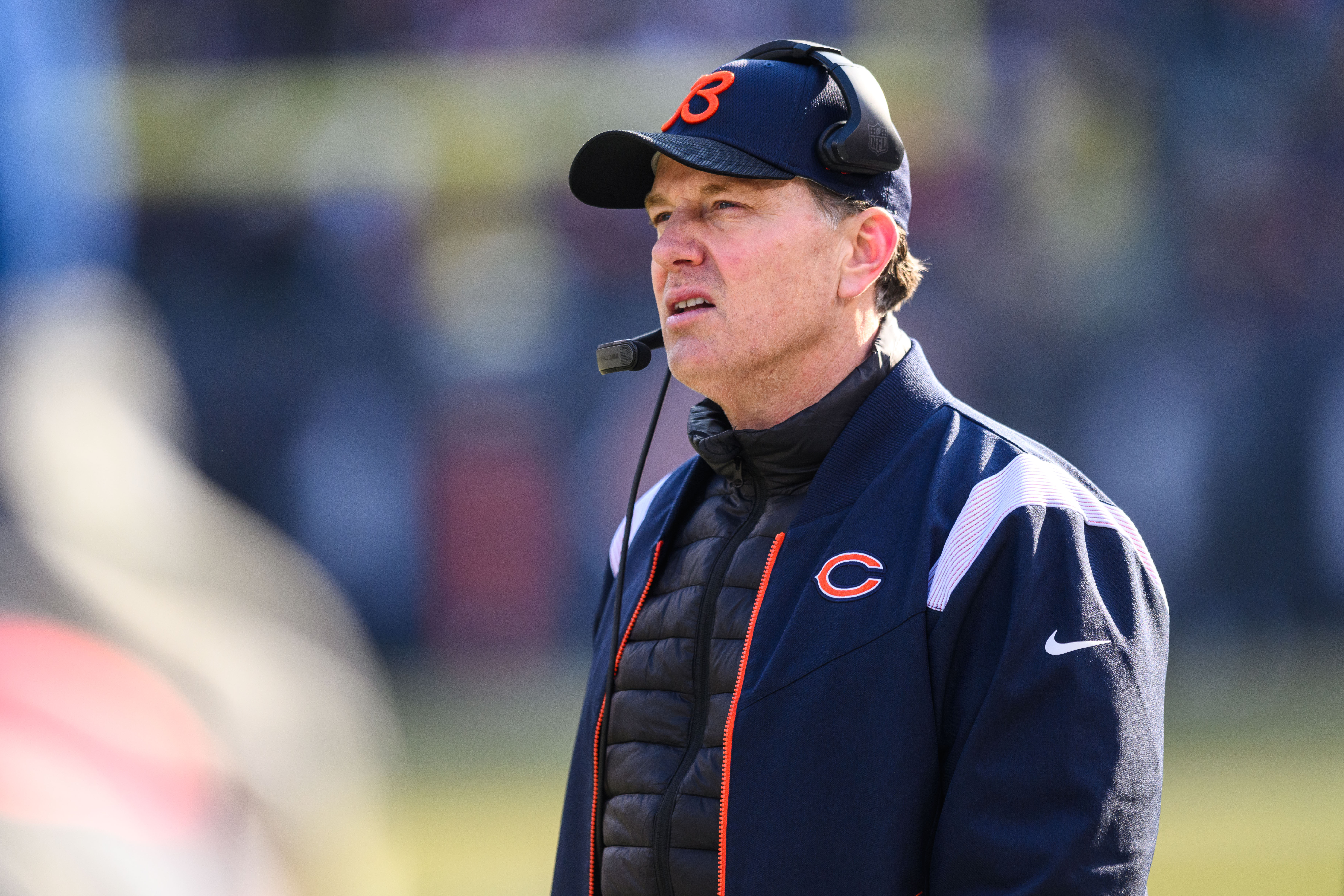
Chicago Bears head coach Matt Eberflus thinks the NFL is setting itself up for some unintended consequences, however.
"Yeah, that's a great question. I think it'll change tactically, what teams are going to do, because the rule is in now," Eberflus told reporters Tuesday. "There's nothing you can do about it, but it will change. I think you'll get more squib kicks, I think you'll get more dropkicks, and more drive kicks -those types of things- and make guys return it. And I suspect you'll see more returns than less. That's just what I'm thinking right now. But we'll see what happens."
It makes sense. Special teams coordinators and coaches are going to adapt and find ways to cover shorter kicks. They'll figure it out pretty quickly, too, because most of these guys are the smartest football minds in the world and they know the game like we know the back of our own hand(s).
Fortunately, the rule is only in play for one year. But at the same time, it could be one year that makes the NFL look really silly.
This is the second time the Bears have disagreed with the NFL's agenda. They were one of the eight teams to vote no on the league's proposal to instill the ability to flex Thursday Night Football games and, make teams play a second Thursday night game.
Right now, the Bears are looking a lot smarter, too. Because both of these recent decisions are bound to create problems in a big-picture sense.
