
How to predict QB success in the NFL: Meaningful metrics that lead to NFL Draft capital for College Football quarterbacks
Predictive data-driven modeling has surpassed film analysis when it comes to finding successful NFL QB prospects


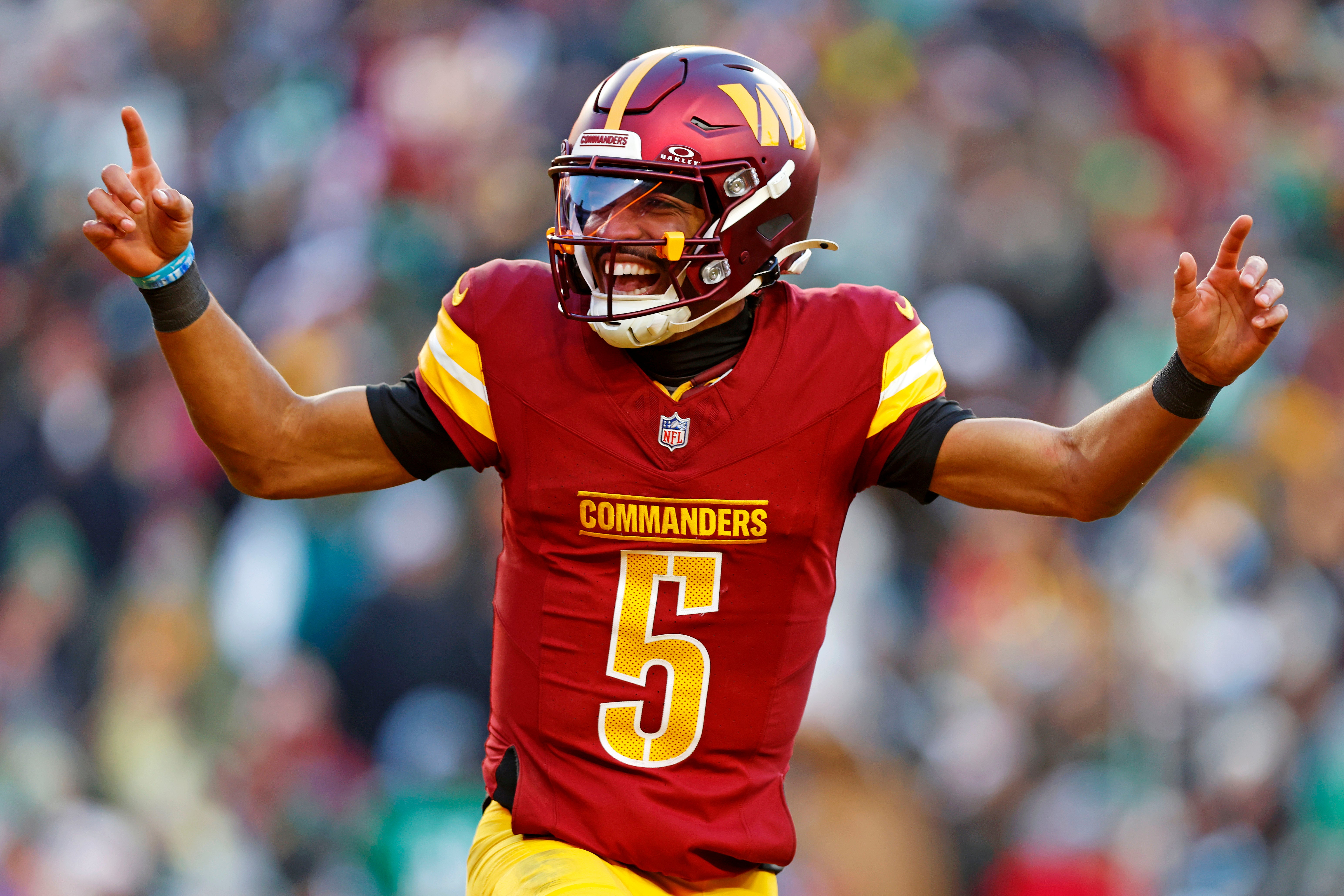
Believe it or not, we can indeed predict which quarterbacks will succeed in the NFL.
Not just with film analysis. Not just with traits analysis. Although, both of those can certainly help and should be a part of any prospect puzzle.
How do we predict QB success in the NFL as the best passers in college football leave for the pros?
In this modern era of data analytics, we can and do predict quarterback success with the help of predictive modeling. The best NFL teams have been doing this for at least a handful of years now. The bad and on-their-way-to-bad NFL teams will stay that way until they do.
Does predictive modeling come with a 100% hit rate? Absolutely not. Nothing does when it comes to football.
That’s where the rub on this topic usually stems from. Data analysts sometimes overpromise or misrepresent what their models actually do. Film-driven analysts sometimes demand that any data-driven prospect analysis method in football must be near perfection or therefore find its meaning to be utterly null and void. Both responses to the film vs. analytics debate in prospect analysis aren’t very helpful.
However, what might be more helpful is explaining the how, why, and what predictive modeling can tell us when it comes to quarterback analysis in the year 2025. Not only that, but also diving into what meaningful metrics to look for that can lead to future NFL Draft capital for aspiring college football quarterbacks.
To do so, we’ll be diving into one specific multi-pronged QB model that has proven in recent years to predict NFL Draft capital extremely well. Then we’ll take a look at the best returning quarterbacks in college football who–based on this model–could be selected early in the NFL Draft over the next few years.
What can predictive modeling tell us about quality of quarterback play?
When it comes to predicting the future of football with data it’s best not to look at just any one stat in particular, but rather combine several stable meaningful pieces of information together to form a larger collaborative model.
Why?
Independent stats like total passing yards, yards per attempt, completion rate, touchdown rate, and most raw counting stats don’t really hold much predictive value by themselves for obvious reasons. One major reason being that most individual stats don’t usually account for the “how” or “why” behind what happened on the field–which is why film analysts generally approach many metrics with skepticism.
However, useful stats like “EPA per play” help account for situationally specific value added. “Total adjusted net yards per attempt” accounts not only for yards, but the outcome at the end of those yards (like touchdowns, interceptions, and sacks). Passer rating, QBR, and a number of other miniature models of quarterback performance try and tell a more complete story of true impact of on-field play too. With that said, even when most of the more complex metrics like the ones listed above stand alone they’re still a bit lacking. That is why you group several together if and when we confirm each have independent predictive value themselves.
This is also exactly why film analysis comes in handy too, because regardless of how many meaningful metrics you stack on top of one another there is quite often still some contextual piece(s) missing that we can see by simply watching the games in detail (which again, is a great thing).
Unfortunately, what film analysis can also do–when it is our sole or primary approach to prospect analysis–is skew our perception of players based on a small sample of isolated moments instead of a complete body of work that tells a more accurate predictive story of a prospect’s future.
For example, when a quarterback throws a bad interception in a playoff game, or takes a huge sack to lose a game against a conference rival, those low moments can sadly weigh too heavily in our memories or confirm preconceived biases that are largely incorrect when it comes to that players true tendencies. Conversely, highlight throws or spectacular runs can often overshadow the big picture shortcomings and inconsistencies that show up over the larger course of a quarterback’s resume. Those small sample film-related biases often leaves many analysts reaching for traits-heavy prospects with a handful of phenomenal plays who simply aren’t very good at actually playing football (like Anthony Richardson for instance, who had the worst meaningful metric profile selected in the first round of any NFL Draft this century).
That is why predictive modeling ultimately–and almost always–is more accurate than any film analyst can possibly be (regardless of who they are or their experience) because when done correctly it weighs every snap and outcome in the overall profile in a balanced way to create (the closest thing to) an unbiased assessment of prospects.
Over the years, I personally have created various predictive models like Scheme Adjusted Pass Efficiency (QB model that adjusts for things like play action, pre-snap motion, and average depth of target), Sack Probability Added Over Expected (for QB sack avoidance prediction), the Adjusted Production Index (for skill position players), and more. All of them combined various pieces of information together to tell a very specific story and predict future NFL success, but none quite like what we’ll be discussing today.
The model we’re diving into today isn’t something I have named just yet, so we’ll just call it the “QB model”. This 18-pronged data-driven model helps tell a contextual story of quarterback production through a number of lenses: efficiency, accuracy, consistency, situational value added, run game contribution and mobility, plus sack avoidance. But what goes into it exactly? And how has it done in recent years in terms of predicting the future?
How has this QB model done with predicting NFL Draft capital and what goes into it?
To keep things simple, this QB model includes several meaningful metrics like TANY/A (total adjusted net yards per attempt), EPA per play, QBR, passer rating, rushing yard market share (percentage of team rushing yards), pressure to sack rate, and a dozen more variables weighted together in a way that predicts future NFL Draft capital and future success at a high rate.
How successful is it?
Let’s take the 2024 draft class to get an idea. The QB model compared every FBS quarterback against one another through the lens of 18 different meaningful metrics and correctly identified all six of the first round quarterbacks, ranking them as the top six prospects among all passers who declared for the 2024 NFL Draft. However, interestingly enough it ranked them in this order rather than the precise order in which they were selected:
1. Jayden Daniels
2. Bo Nix
3. Caleb Williams
4. J.J. McCarthy
5. Michael Penix Jr.
6. Drake Maye
Jayden Daniels put together such an absurd 2023 season that he essentially broke the model with the highest score in recent college football history. Selecting him obviously worked out well for the Commanders.
Bo Nix finished as a distant second, putting together an absurdly productive and efficient season. He broke a handful of college football records as he add 45 passing touchdowns and three interceptions in his final season.
Caleb Williams and Drake Maye both had stronger 2022 showings than 2023, which is an added layer to this analysis. Quarterbacks who post elite seasons the year prior to their final season can still often earn first round NFL Draft capital, even if they show some inconsistencies down the stretch as juniors or seniors. That was more true of Maye than Williams in 2023, but both still posted special numbers overall.
Back in 2023, this QB model preferred C.J. Stroud as the top pick over Bryce Young, but liked them both as the clear one and two top options. It did not like Anthony Richardson whatsoever.
Then this past spring, the model liked Cam Ward and Jaxson Dart almost equally as the clear one-two options and only true first round prospects in the class. It also fancied Kurtis Rourke (but does not adjust for injuries), Dillon Gabriel, and Will Howard as possible day two picks. The model also identified Shedeur Sanders, Jalen Milroe, Tyler Shough, Kyle McCord, and Riley Leonard as “draft-worthy” quarterbacks, but was not particularly high at all on Quinn Ewers (who did sneak in as a seventh round pick and the final QB selected in the draft).
Without going through every single draft over the past several years, the point has obviously been made. The QB model is imperfect, but it has also been extremely accurate. Far more accurate in fact than my own personal rankings most years (unfortunately), but I’ve learned just to listen to the model more here recently.
Given that predictive ability of the QB model, who should college football and NFL fans be keeping their eyes on in 2025?
Who are the best returning QBs in College Football?
Top QB Model Scores Among Returning Power 4 Conference QBs in 2024
- Sam Leavitt, Arizona State
- Sawyer Robertson, Baylor
- Drew Allar, Penn State
- Haynes King, Georgia Tech
- Kevin Jennings, SMU
- Cade Klubnik, Clemson
- Josh Hoover, TCU
- Diego Pavia, Vanderbilt
- LaNorris Sellers, South Carolina
- Garrett Nussmeier, LSU
First off, Arch Manning is notably absent from this list solely because his sample size of work fell just short of necessary levels to be included by most measures. However, even more notable, his smaller sample of productive dominance would have ranked him first overall among all FBS quarterbacks already. If he takes another step forward this year it’s quite likely he’s considered the clear top quarterback in all of college football.
Sam Leavitt and Sawyer Robertson kicked things off a bit slow to open the 2024 season as first year starters for Arizona State and Baylor respectively, but destroyed much of their competition down the stretch with high efficiency. Leavitt’s added value as a rusher gave him an edge overall in the top spot.
Drew Allar, Cade Klubnik, LaNorris Sellers, and Garrett Nussmeier shouldn’t surprise anyone as top ten returning power conference quarterbacks. All four are expected early-round selections in the 2026 NFL Draft. For Allar and Klubnik, both need to open things up a bit more in the vertical passing game to round out their final year profile. Sellers needs to cut down on creating pressures for himself and his less than ideal interception rate. Nussmeier must showcase a bit more mobility and overall situational efficiency.
Top QB Model Scores Among Returning Non-Power 4 Conference QBs in 2024
- John Mateer, Washington State (transferred to Oklahoma)
- Darian Mensah, Tulane (transferred to Duke)
- Gio Lopez, South Alabama (transferred to North Carolina)
- Maddux Madsen, Boise State
- Braylon Braxton, Marshall (transferred to Southern Miss)
- Devon Dampier, New Mexico (transferred to Utah)
- Chandler Morris, North Texas (transferred to Virginia)
- Parker Navarro, Ohio
- Tucker Gleason, Toledo
- Joey Aguilar, Appalachian State (transferred to Tennessee)
One thing that should stand out right away is that six of the top ten Group of Five conference quarterbacks in the country transferred up to power conference schools (and Braxton followed his coach to Southern Miss for a fun rebuild year). This is no coincidence. The entirety of college football saw them as some of the best in the nation and took action accordingly.
John Mateer and Darian Mensah both put together profiles in 2024 that–if not for the lower level of competition they faced–would typically net them early-round NFL Draft capital. If those two post strong years at Oklahoma and Duke they’re almost assuredly going to be drafted early on day three next spring (or perhaps even before that).
Finally, if you’re a college football fan still reading on to see if this pretentious nerd left out your team’s quarterback entirely, I probably did. The good news is you can just blame the model, not me.
However, with that said, quarterbacks like Oregon’s Dante Moore, Avery Johnson (Kansas State), Rocco Becht (Iowa State), Marcel Reed (Texas A&M), or Nico Iamaleava (now at UCLA) could all post breakout seasons and quickly rise up the rankings according to the QB model. All of them (except for Moore) have a significant and efficient enough body of work that indicates they’re on typical trajectory to compete for a “draft-worthy” final season grade. We’ll find out if that actually happens soon enough.
If you have any questions or comments make sure to reach out to me personally. I’ll be back with more College Football and NFL coverage here at A to Z Sports soon! Follow me (@FF_TravisM) and A to Z Sports (@AtoZSportsNFL) on X for all the latest football news!
