
The Minnesota Vikings have an offensive line problem once again with it being both their fault and one they couldn’t prevent
There is no simple answer to this issue.


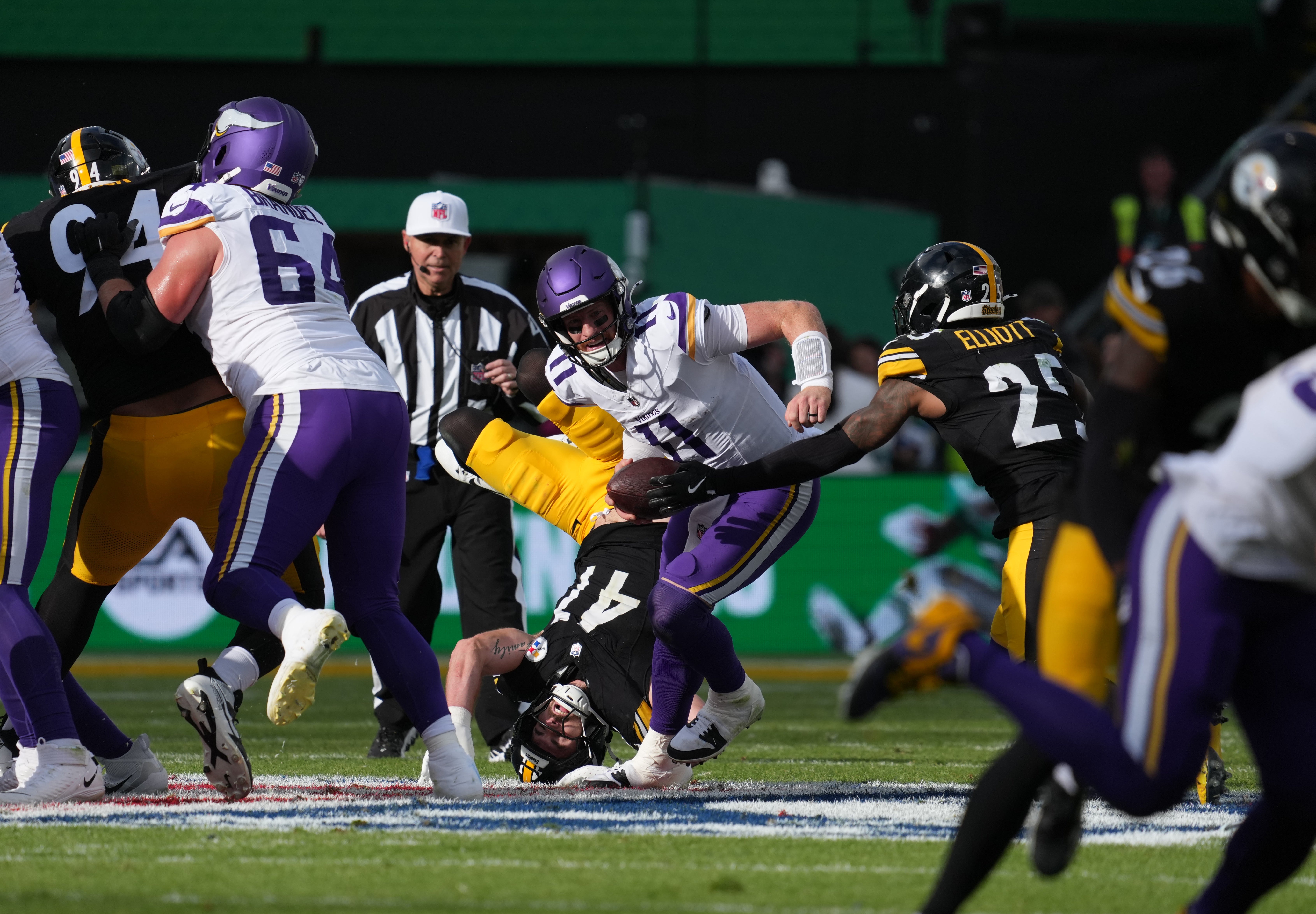
Once again, the Minnesota Vikings have an issue on the offensive line.
We’ve been down this road before, especially since Steve Hutchinson left the franchise after the 2011 season. There have been numerous attempts to fix it with the NFL Draft, free agency, and the trade market. Overall, there are still numerous issues.
This year, the Vikings thought they had it fixed after replacing the entire interior offensive line. Through four games, the questions are still boundless, but how much can we really fault them?
Vikings’ offensive line issues aren’t all their fault
Let’s start with the biggest issue for the Vikings’ offensive line. They have dealt with way too many injuries this season, which is incredibly challenging to manage. It’s a lot harder to replace an offensive lineman.
Why is that? There is a major shortage in offensive line talent.
Look across the league at how many teams have issues on the offensive line. It’s a borderline epidemic because the development of those players is lacking. Only one Jeff Stoutland exists, and he coaches for the Philadelphia Eagles. The lack of great offensive line coaches has been a big aspect of this epidemic.
It’s also tough from a talent identification standpoint. There is no clear template for identifying good offensive linemen, as it requires a combination of athleticism, strength, and technique. Often, you find a player who has one or two of those traits in the NFL Draft with the hope of developing them into a starter. But for every Kolton Miller, there is an Evan Neal.
That’s where the Vikings come into play. For the majority of Sunday’s loss to the Pittsburgh Steelers, the Vikings had just two starters: left tackle Christian Darrisaw and right guard Will Fries. Left guard was the Vikings’ swing player in Blake Brandel, center Michael Jurgens (2024 seventh-round pick) replaced Kelly, and Justin Skule was in for O’Neill.
In theory, all three are fine for being backups, but all of them playing at once creates issues, especially when facing a defensive front led by T.J. Watt and Cam Heyward.
Having good backup offensive linemen is beneficial, but can you actually find them? Where are these great backup offensive linemen out there? Realistically, if you wanted to have really good backups, you need to draft and develop them like the Vikings did with Brandel.
There are two arguments you can make against the Vikings here. One, signing Kelly to be your starting center, considering his injury history. Hindsight is always 20/20, but he’s only played in every game for three seasons since joining the NFL in 2016.
Having a second-year seventh-round pick as his backup was a major gamble, and it’s been up-and-down as expected. As far as Skule ($2 million), here are the other options they could have had and what they are getting paid. Spoiler alert: it’s bleak
- Washington Commanders OT Andrew Wylie: $4 million (starter)
- Jacksonville Jaguars OT Chuma Edoga: $3.5 million
- Chicago Bears OT Matt Peart: $3.5 million
- Miami Dolphins OT Larry Borom: $2.5 million
- Los Angeles Rams OT D.J. Humphries: $2.5 million
- Steelers OT Calvin Anderson: $2 million
- Carolina Panthers OT Yosh Nijman: $2 million
The other aspect is helping your offensive line out more with quick game. Why are the Vikings doing under-center play-action so often? Where is the quick game? Well, head coach Kevin O’Connell did provide more quick-game options for the offense, but it was evident that quarterback Carson Wentz wasn’t taking them like he should.
We need to remember that the offensive line can look much worse because of their quarterback, and Wentz holding the ball too long was a problem. Whether it was double-clutching and not trusting his eyes, he was responsible for the majority of the pressure issues on Sunday.
The reality is that everyone needs to improve, but the offensive line has more issues than just poor play. It’s a combination of everything, and there are only so many that can be fixed immediately.
