
Vikings can maximize offense under Carson Wentz by making one simple change to emphasize what he does best
It’s not something the Vikings can use the entire season, but it can work for a shot time


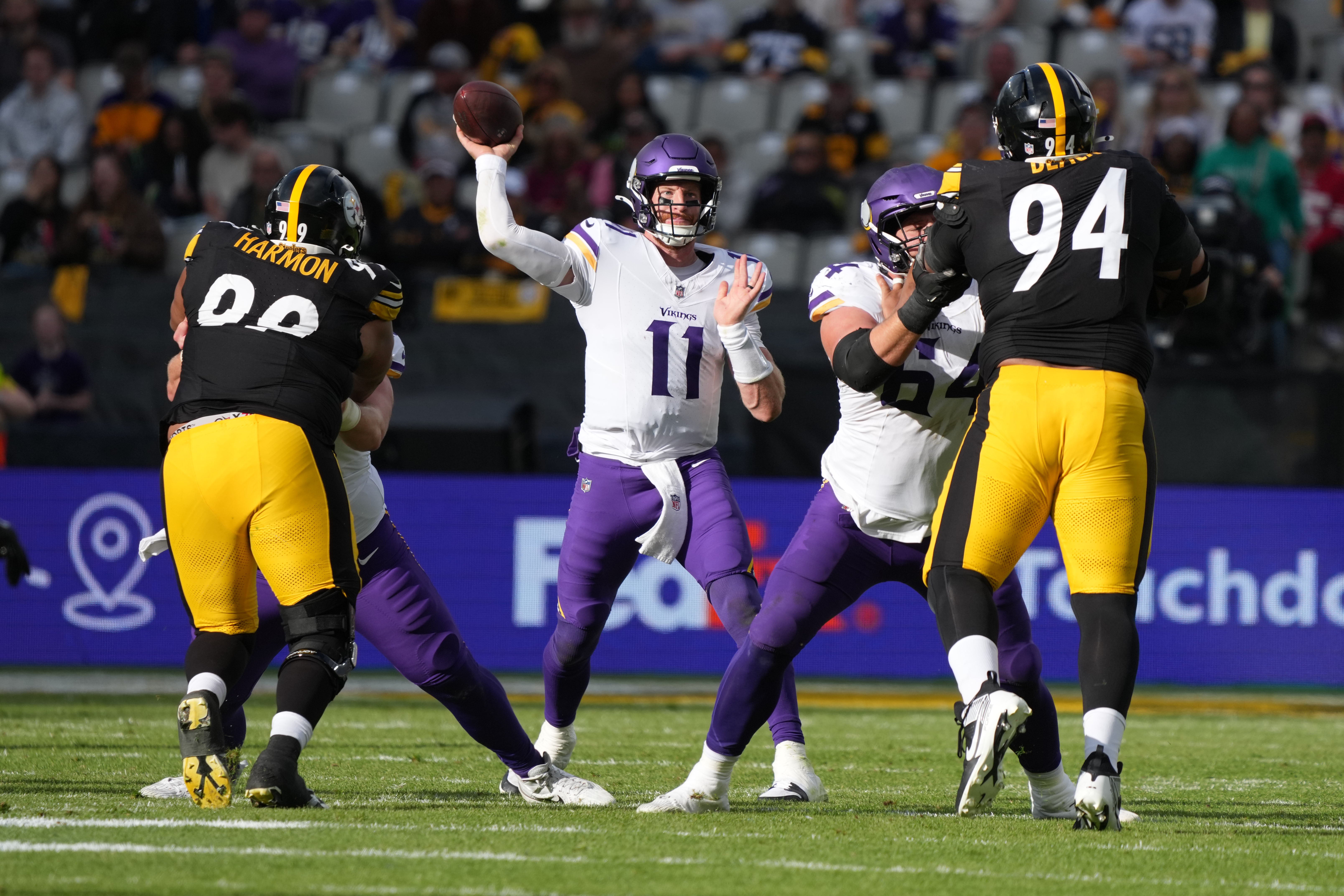
When you look at the Minnesota Vikings offense under Carson Wentz, it’s been a very up-and-down game.
There have been some incredibly high moments, including the offense putting up 34 points in a 48-10 rout of the Cincinnati Bengals. He was efficient, and the offense was explosive through the air and on the ground. On Sunday afternoon against the Pittsburgh Steelers, the execution of the offense wasn’t there, despite head coach Kevin O’Connell scheming up a good game plan.
How can the Vikings get some consistency with the offense in the final game before the bye week? One element the Vikings haven’t tried yet could be the solution.
Adding tempo to the Vikings’ offense could help Carson Wentz
In the college football world, tempo is a really good element to keep defenses on their toes. Using that can help the offense, and at the college level, it can be something you can rely on across the board.
In the NFL, that’s not something you can use as a crutch consistently. However, you can use it in short spurts to maximize things and make it a little easier on your quarterback. Why would it work for this Vikings offense operated by Wentz? He was arguably at his best when the clock was a factor.
Wentz operated the two-minute drill effectively in the first half, driving them down the field. He was playing under control in those situations and making better plays than in normal situations.
Wentz was comfortable in the pocket and attacking vertically. He saw the pressure coming and hit Jordan Addison on a glance route with ease. This is a quick game throw as well, something that O’Connell did a lot more than it seemed live.
There were some minor issues with managing the game clock, but it turns out that there wasn’t a working clock on one side of the field. That makes a difference. Wentz continued to operate the offense quickly and did so really well.
Wentz did a good job operating the offense’s quick-game plays with speed and efficiency. His averaging 2.66 seconds in time to throw wasn’t a mistake. O’Connell has made a shift in how he calls plays to maximize what this offense can do, and running some no-huddle could be the next step. It’s a temporary solution, but it works with Wentz being a temporary quarterback.
