
Packers face an uncommon crossroads with multiple roster calls to make and depth factoring heavily
Restricted free agency will be busy in Green Bay.


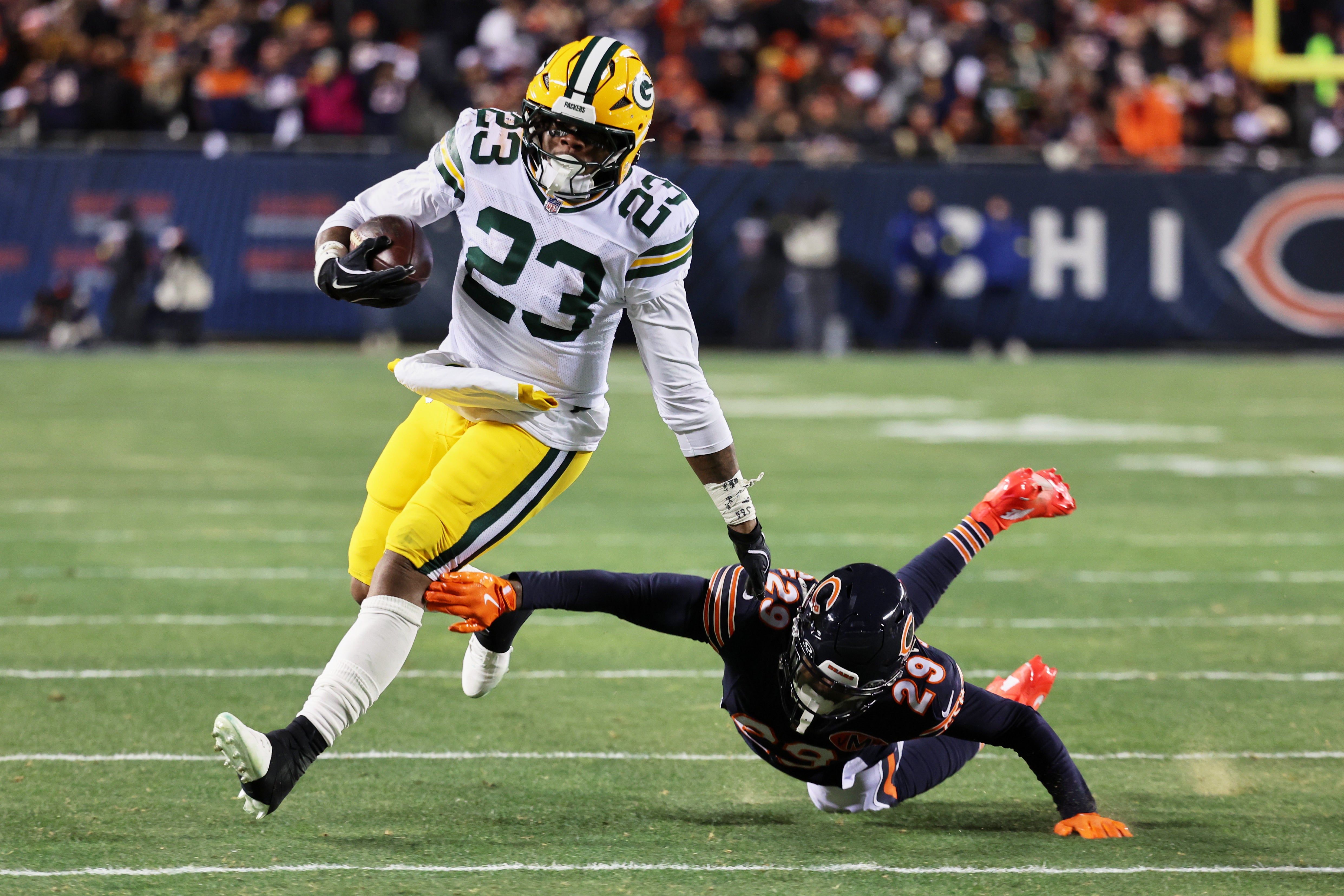
For a player to become a restricted free agent, it’s usually a very particular situation. Since drafted players have four-year deals to enter the NFL and restricted free agents are players whose contracts expire after three accrued seasons in the league, it’s a somewhat rare situation. It works for undrafted free agents or for players who got cut during their original deals.
Nevertheless, this is an unusually busy restricted free agency period for the Green Bay Packers. Each year, teams may have one, two RFAs. This offseason, the Packers will have to make decisions on eight total players.
They are: Edge defenders Brenton Cox Jr. and Arron Mosby, defensive tackle Jonathan Ford, safety Zayne Anderson, running backs Emanuel Wilson and Chris Brooks, tight end Josh Whyle, and offensive lineman Darian Kinnard.
What the Packers can do
The most frequent occurrence should be the Packers simply declining to place a restricted free agent tender on the players. In this case, they would become unrestricted free agents and available to sign with anyone — including back with the Packers, like tight end John FitzPatrick did last offseason. The only downside here is that those players wouldn’t count for the compensatory pick formula like regular unrestricted free agents.
If the team wants to be safer, it can use one of four restricted free agent tenders, which are projected by Over the Cap by increasing the previous year’s respective tender by the same rate as the increase of the salary cap. OTC doesn’t project the original-round tender, but we can still have an idea.
RFA tender projections for 2026
- Rights of first refusal – $3.453 million
- Original-round tender – around $4.5 million
- Second-round tender – $5.658 million
- First-round tender – $7.893 million
When the team places a tender, the player can sign it and play on a one-year contract — which allows him to go back to the market a year later as an unrestricted free agent if he accrues the fourth season in the NFL.
However, tendered players are free to sign offer sheets from other teams. If someone does it, the original team has the option to match the offer or to get the corresponding compensation — or nothing for the rights of first refusal.
Packers’ situation in restricted free agency
Three players could realistically receive the original-round tender — the Packers don’t have good reasons to apply higher tender than that this cycle. Edge defender Brenton Cox Jr. and offensive lineman Darian Kinnard could offer depth for a reasonable value at premium positions. Maybe the Packers will try to bring them back on smaller deals, but that would have some risk.
The other is running back Emanuel Wilson — but that already feels like a stretch, especially because fellow running back Chris Brooks is also an RFA, and $3.4 million for a year of a backup running back is a relatively big investment.
All of the other players should not be tendered, hitting unrestricted free agency — and with a potential open door to return.
It’s a unique offseason for the Packers in this regard, and general manager Brian Gutekunst has several decisions to make over the upcoming weeks.
