
Nick Singleton injury update: Titans rookie RB not practicing but orthopedic surgeon details where he can still win in rehab process
The Tennessee Titans rookie running back is still recovering from his offseason Jones fracture surgery, but Singleton can utilize one of the “advantages” of this specific injury.


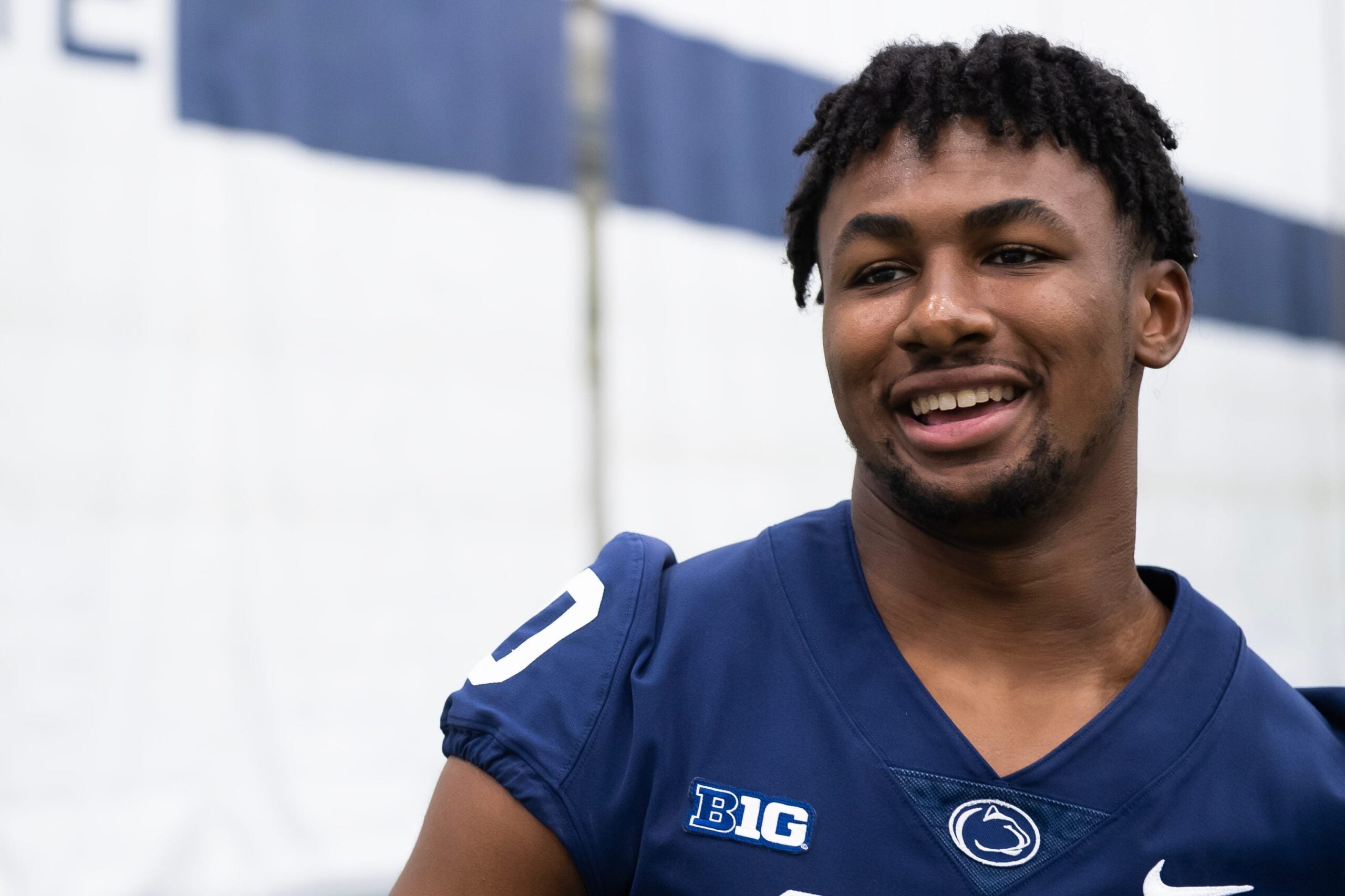
The Tennessee Titans drafted Penn State running back Nick Singleton in the late fifth round of the 2026 NFL Draft, and if not for a foot injury in late January, he would have likely been picked way earlier.
Singleton had a Jones fracture injury (break of the fifth metatarsal) in his foot while at a Senior Bowl practice in Mobile, Alabama in late January. The surgery shortly followed in Birmingham, which forced the running back to not participate in any drills or athletic testing at the NFL Scouting Combine later that same month.
Flash forward to May 21 where the local media was able to cover our first Titans OTA practice of the offseason with rookies joining the veterans. Singleton was not participating in practice with his new teammates, but was spotted on a side field going through some rehab drills for his foot.
I don’t personally know where he is in his rehab process or how he’s feeling, but I do think it’s a positive sign he was seen on a field being active.
I did, however, speak with a local foot and ankle orthopedic surgeon Dr. Ronald Derr, from Bone and Joint Institute of Tennessee in Franklin, about the Jones fracture and the running back position, with Singleton in mind.
Jones fracture injury typical recovery time
Titans fans are no stranger to running backs with this injury. This is the same foot break Derrick Henry dealt with in 2021, where he missed the second half of the season and returned to the playoffs 11 weeks after the injury occurred.
I asked Dr. Derr what a typical recovery time could be and then what an ideal recovery time could be for a running back.
“I think most studies show that the earliest the player will come back is roughly six weeks,” Derr said. “If you’re really pushing hard and you need them, but typically, if you can have about three months for that to really heal, that can really be a benefit to the player, to have that extra time.”
Since the Titans don’t have a game for another three months, it’s wise for the team to take the slower, more patient route. If we think surgery happened in early to mid February, this week of OTA practice is 13 to 14 weeks since the procedure.
Where Nick Singleton can still ‘win’ during his recovery
For any athlete, the longer you’re out with injury, the more concern can creep in about losing strength and explosiveness. However, this is where Derr says Singleton can keep his strength up in the weight room.
Singleton is on record for having one of the most incredible weight room performances in Penn State history, which includes NFL star running back Saquon Barkley (another weight room legend).
Singleton’s 665-pound back squat is a Penn State running back record. His 435-pound bench press broke Barkley’s best of 405. Add in a 395-pound power clean with a 4.35 second 40-yard-dash and maximum tracked velocity of 23.5 mph, you have a beast of an athlete.
Derr says any athlete recovering from a Jones fracture can get back into certain weight room lifts even before returning to on-field exercises.
“Once they feel confident that the fracture has healed appropriately and the bone has united, the advantage of this type of injury is that as long as his foot remains flat on a stable surface — whether during a leg press, squat, or other grounded exercise — he can gradually return to lifting based on his tolerance and begin rebuilding his strength,” Derr explained.
“The greater challenge comes when he rises onto the ball of his foot and begins placing more stress along the outside of the foot, or when muscle forces start pulling on the area. Those are the movements that will require more gradual progression and fine-tuning as he returns to the season. Given the caliber of athlete he is, I would expect the team to take a cautious and deliberate approach to avoid setbacks and not advance him too quickly. That said, he should still be able to do quite a bit in the short term to maintain his overall strength.”
Once training camp comes around in late July, Singleton should be a good spot to show off what type of player he can be for the Titans offense.
More on the Jones fracture injury and surgery from Dr. Ronald Derr
“A Jones fracture is a specific type of fracture that occurs in the fifth metatarsal — the long bone on the outside of the foot that connects the midfoot to the small toe,” Derr added. “The fracture occurs near the base of the bone in an area with a less reliable blood supply, which can make healing more difficult, particularly in athletes.”
He noted that the location of the fracture is also subject to significant stress during athletic activity, especially when pushing off the foot or landing with the heel elevated.
“Because of the forces placed on that area and the limited blood flow, Jones fractures have historically been more challenging to heal, especially for high-level athletes,” Derr said.
Derr explained that the most common surgical treatment involves placing an intramedullary screw directly into the center of the bone to stabilize the fracture and promote healing.
“The screw stays completely within the bone, so you don’t feel it externally,” he said. “Its purpose is to compress and stabilize the fracture while also helping stimulate healing by bringing healthy bone into the fracture site.”
He compared the screw to reinforcement inside concrete, helping provide both stability and compression to accelerate recovery.
“You can put some bone graft inside of the bone when you do that, or you can inject it from the outside into the fracture itself,” Derr added. “For most players, the screw inside the bone is the way it seems to work the best, and has very little chance of causing external irritation with the shoe rubbing on the outside of the foot.”
“For most athletes, the screw fixation technique tends to provide the best outcome. It offers strong stabilization while minimizing irritation along the outside of the foot, especially when wearing shoes or cleats.”
