
Cowboys Scheme: Brian Schottenheimer’s offense did something better than the Shanahan-McVay guys, and it paid off for Dak Prescott
Today’s NFL is all about the Kyle Shanahan and Sean McVay offenses. But a scheme expert explains why Cowboys head coach Brian Schottenheimer did something better than them.

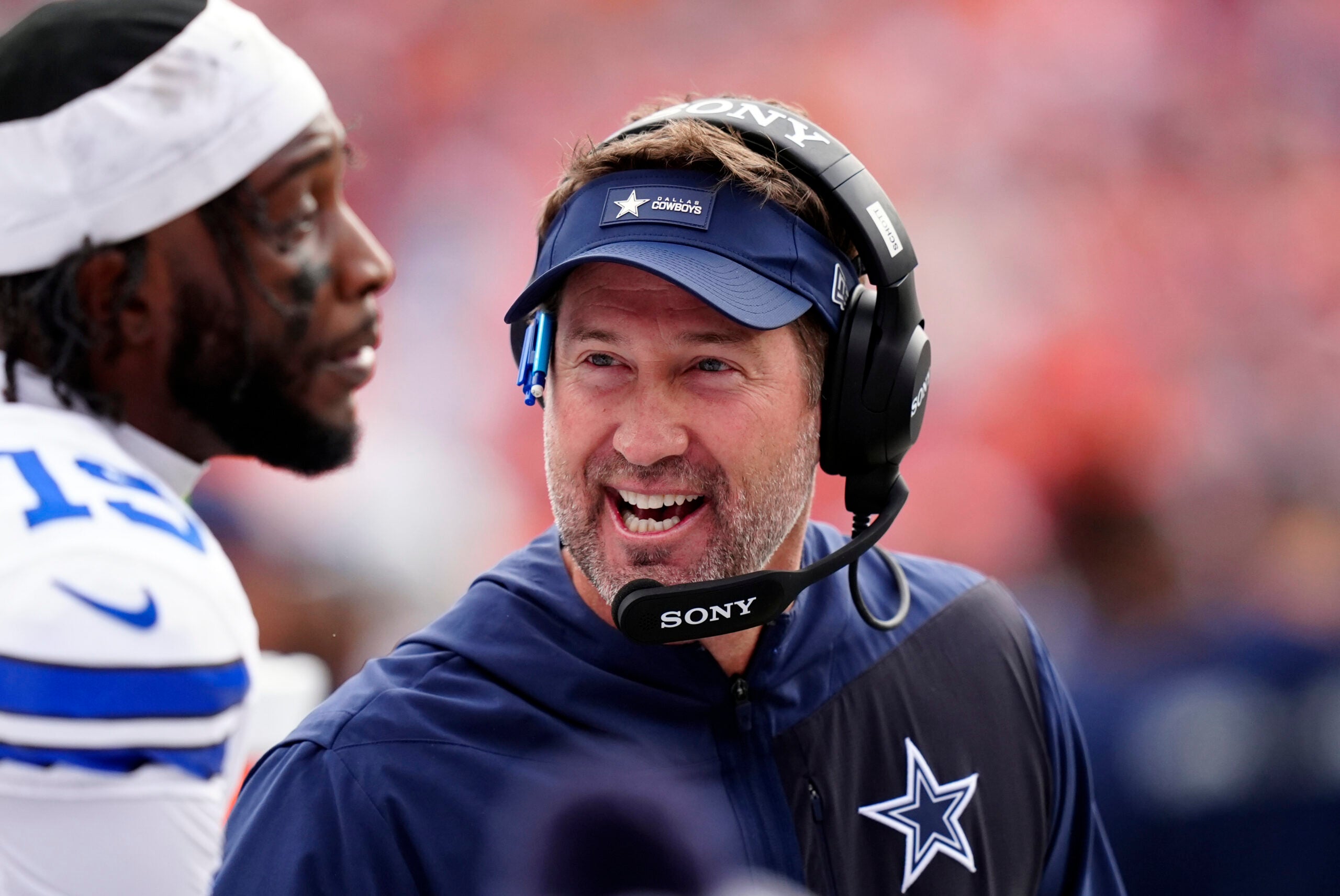
What made the Dallas Cowboys offense so good in 2025? Well, you may be thinking about George Pickens and CeeDee Lamb making plays left and right. Not to mention, Dak Prescott getting rid of the ball just in time to avoid pressure or Javonte Williams avoiding a tackle for loss at all costs.
Those are all correct answers. But one of the overlooked aspects of it is how the Brian Schottenheimer offense made life easier on Prescott by doing something not even the McVay-Shanahan offenses do as well. Let’s dive in.
Cowboys offense
Football coach and scheme expert Bobby Peters recently published the “complete offensive manual” for the 2025 Cowboys. He joined me on the A to Z Sports Dallas show for a conversation on Dallas’ scheme and one of the things that stood out the most was his insight into the way Schottenheimer protected Prescott from opponents’ pressures.
“I think the biggest thing, and something that I really tried to focus on in the book, was the different ways they were able to combat the more popular blitz paths or pressure paths that defenses want to bring,” Peters said. “Especially with the Shanahan–McVay guys, their protection schemes are all relatively the same across their trees, so good defensive coordinators can kind of game the system and get free rushers.”
In today’s NFL, having a leg-up on the Shanahan-McVay coaching tree is a massive compliment. And considering the Cowboys’ pass protection woes at offensive tackle last year, the coaching staff should be applauded for making up for it with solid protection from designed pressure.
“There were a lot of instances across multiple concepts in both the five-step and seven-step packages where defenses would bring pressures (say a linebacker and a corner from the same side, like an overload pressure) that would normally give the Shanahan–McVay two-three jet protection calls trouble,” Peters explained.
“They’d get a free rusher every single time against those looks. Dallas, by mixing in different old-school West Coast protections, was able to pick those up and consistently gash defenses downfield.”
So how did they do it? Though it may be tough to bring up every single answer they had, Peters did provide an enlighting example.
One example of Cowboys’ pass pro magic
Peters broke down in detail one of the Cowboys’ pass protection calls. For those unfamiliar with Xs and Os lingo, I promise it’s still worth reading, as Peters does a great job explaining it:
“What Dallas did, just one example, that middle read concept we just talked about (a route in which a receiver decides if he’s running a post or an in-breaking route based on coverage) was they’d get into a 21 personnel I-formation. So you’ve got two backs in the backfield, and they’d run what in the old West Coast offense is called ‘hound’ or ‘fox’ protection.
“What they’re doing is half-sliding the line one way, and both the running back and fullback go the other way. In some cases, the fullback will have any edge pressure — outside backer to corner blitz — and then the running back will have the MIKE and be responsible for the mike linebacker. Then they have their checkdowns if those guys don’t blitz. They want to get out and control those underneath defenders.”
That means the Cowboys have a plethora of ways to handle opponents’ pressures.
“So not only are we picking up these blitzes in protection, but we’re also getting rid of the ball in quick game to get the ball out of Dak’s hands quickly and beat those pressures that way too,” Peters added. “So you’ve got two different tools in the toolbox for defeating modern NFL pressures.”
Schottenheimer’s staff received a lot of praise last year for having such a “complete” offense (something that also showed in their run game!). This is the kind of nitty gritty that made it stand out. You can check out my full conversation with Peters below.
