
Tennessee Titans QB coach Shane Tierney flips the script on how Cam Ward should view big vs. small receivers
The Titans WR room is built up better than it has been in years, but it’s lacking in size. The way Cam Ward’s coaches want him to approach that, though, is different than you might think


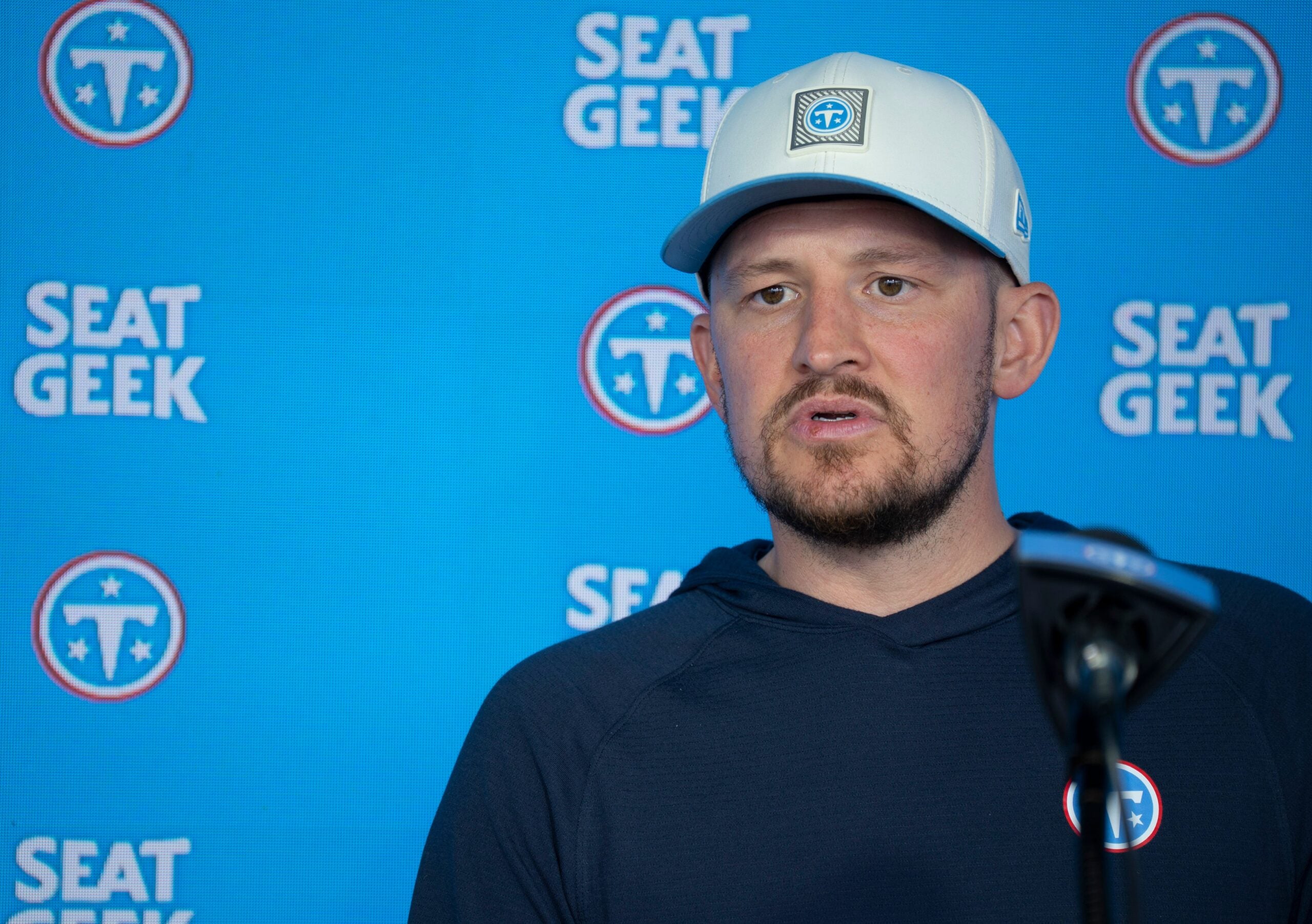
The Tennessee Titans receiver room heading into 2026 is full of varied skill sets, but the group skews smaller than average.
Outside of Elic Ayomanor—who fits the classic X-receiver mold from a physical standpoint—the Titans lack the kind of imposing, big-bodied targets some of the NFL’s more feared passing attacks have. Calvin Ridley can play X, but he’s no AJ Brown or Marvin Harrison Jr. from a size perspective. Chimere Dike and rookie Carnell Tate can line up outside, but neither is going to bullyball a cornerback. So how does this coaching staff teach Cam Ward to maximize what he has?
Titans quarterback coach Shane Tierney offered a revealing answer during mandatory minicamp, and it runs counter to what most fans might assume.
Separators vs. contested catch guys
When Tierney was asked whether the lack of big-bodied ball winners creates a challenge for Ward, he reframed the entire conversation.
“I think it doesn’t necessarily go into the size of them,” Tierney said. “6-foot-3 guys, as opposed to Wan’Dale Robinson, who’s a little smaller, or Xavier Restrepo, like you said, we always kind of put them in categories of ‘separators’ or ‘contested guys.’ And a lot of the times you find those smaller guys are the separators. So there’s a bigger target area to hit them because there’s more space. And then the bigger guys are sometimes more contested catch guys. So what you say with them sometimes is, hey, they’re covered, but they’re not covered because of their wingspan, because of their physicality.”
It’s a framework that flips the natural instinct most people have about receiver size. You’d think a bigger target is easier to hit. But Tierney’s point is that the smaller, shiftier receivers are the ones creating genuine separation, which means the throwing window is actually wider for the quarterback.
The big guys might look covered on the surface, but their wingspan and physicality mean they’re functionally open even when a defender is draped over them. It reminds me of the most famous line from The Patriot: “Aim small, miss small.” That’s the mindset for the bigger-bodied receivers. Even though they have the frame and the contested catch ability to box out defenders, Ward still has to place the ball precisely because those guys aren’t going to be running wide open the way a separator can.
How it applies across the Titans’ roster
This concept maps neatly onto Tennessee’s current personnel. Wan’Dale Robinson, all of 5-foot-8, is a classic separator. In the slot and in tight quarters, he can shake open with his route running and short-area quickness. Carnell Tate separates with route craft despite being on the bigger side, which gives him something of a double-whammy effect. He can win with both space and physicality, even if he doesn’t possess elite straight-line speed. Ridley isn’t the biggest receiver, but his elite speed which he still possesses at his advanced age, allows him to create his own separation on the outside.
Then there’s TE Gunnar Helm. He’s a big frame, big wingspan, big target guy. But he’s not going to separate. The routes the Titans have been running him on are often box-out concepts. He sits down against a linebacker in the middle of the field or in the flat, uses his frame and leverage, and trusts Ward to place the ball within reach but away from the defender. It’s a contested catch approach by design, and it works because Helm has the body to make it work.
The Restrepo problem
This framework is also what makes Xavier Restrepo’s roster case so tricky. Restrepo is not a size guy, which means he’s not going to win contested catch situations. On one of the final plays of a mandatory minicamp practice, a Will Levis pass sailed into the end zone as a jump ball where Restrepo had leverage and positioning. The ball was thrown to a good spot. But the defender and Restrepo both jumped, and the defender came down with it because the size mismatch was simply too much.
So Restrepo has to live in the separator bucket that Tierney described. The problem is that his speed and agility aren’t necessarily elite enough to consistently create that kind of space. He has to win with his football IQ, finding soft spots in zone coverage and using strong hands despite his frame. That’s a narrow path to a roster spot on a team already stocked with players who fit more cleanly into one bucket or the other.
The bottom line is that when you watch the Titans this summer, resist the urge to evaluate receivers the way your eyes naturally want to. The big guys aren’t the easy targets, and the small guys aren’t the hard ones. Ward is being coached to see it the other way around, and the way Tennessee’s passing game develops will hinge on how well he internalizes that distinction.
