
Chicago’s biggest cause for concern on defense was addressed with a backwards approach, and it might have been the right strategy
The Chicago Bears made some major changes on the defensive side of the ball but the lack of investments on the defensive front raises concerns about more issues than just a struggling pass rush unit.


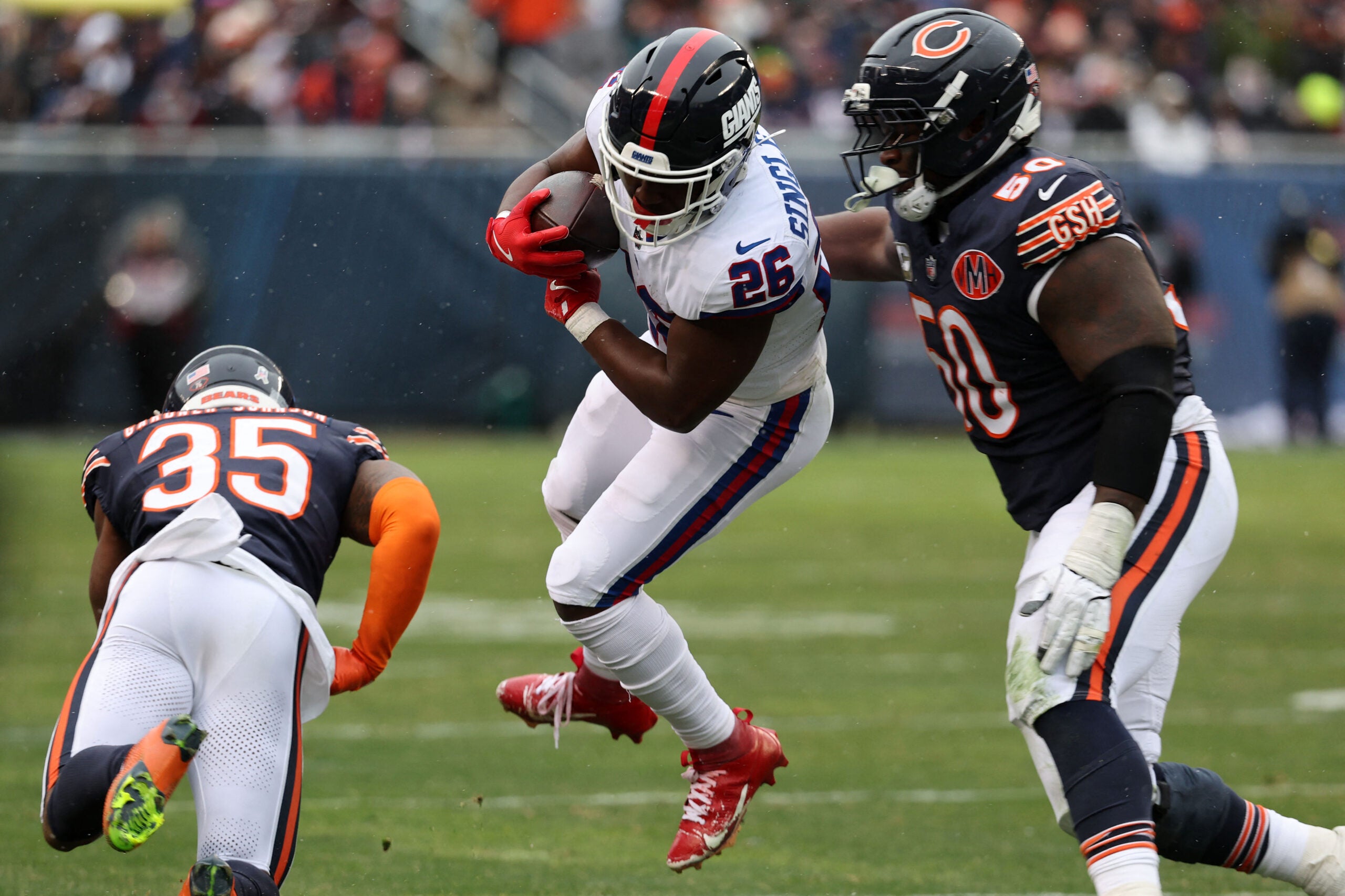
The Chicago Bears have a major question mark surrounding the team’s pass rush heading into training camp after making no real additions to a group that largely disappointed. Yet, that concern is overblown in comparison to another major issue.
While Chicago struggled to get after the quarterback at a consistent rate, the Bears were even worse when it came to defending the run and staying in manageable down and distances.
“The Bears had two different defenses last year: Their early-down defense and their third-down defense. They ranked 25th in defensive EPA per snap on first and second down, but ranked seventh on third down. The Bears ranked second on third-and-fourth down with more than seven yards to the first-down marker. The reason was simple: they struggled mightily to stop the run. They ranked 26th in defensive rushing success rate and 27th in explosive rush rate allowed.”
Ted Nguyen
The Athletic
The solution wasn’t to improve the first line of defense in the the trenches (as one would expect), instead the solution was to improve the second and third levels of the unit. A backwards approach but the Bears might be on to something despite national complaints.
Chicago Bears might have taken the right approach to address one of the biggest causes for concern on defense
Chicago’s issues against the run last season were largely masked by the team’s ability to take the ball away. Looking at it closer, the Bears allowed 134.5 rushing yards per game (sixth-most in the NFL) and 5.0 yards per carry (fourth-most in the NFL). Concerning numbers for sure and it gets worse.
Pro Football Focus had 12 players with a sub-50.0 run defense grade last season, including the two returning starters in the interior of the defensive front in Gervon Dexter Sr. (42.8) and Grady Jarrett (42.0). Six of the team’s Top-10 highest-graded run defenders are no longer on the roster heading into last season. So, how exactly were the Bears planning to get better in that area?
The additions of speedy linebacker Devin Bush and do-it-all first-round safety Dillon Thieneman should provide some relief against the run on outside carries, which was actually the unit’s biggest issue.
On runs outside or off the tackle, Chicago allowed the second-highest rushing total in the league (1,808) and the fourth-highest rushing yards after contact (1,080) and the most missed tackles (40). On runs inside the tackles, the Bears were actually pretty effective. Chicago allowed the second-fewest rushing yards (479) and fewest rushing yards after contact (302) on such carries.
As much hate as Gervon Dexter Sr. and Grady Jarrett get being the returning starters in the middle and how the Bears didn’t fix the problem running it back with those two, perhaps the Bears saw what the real problem was and the fans simply didn’t.
With Bush, Thieneman, Coby Bryant, and the return of Kyler Gordon, the Bears should be much more stout against the outside runs in 2026 by adding faster and more versatile players. That backwards approach might also alleviate some of the issues with the pass rush as well to field a much stronger defensive unit.
