
The Lions will likely have one of the slowest pass rushers in the NFL again in 2026, and that is totally ok
Detroit Lions will likely be among the NFL’s worst in one pass-rush category again this season. That sounds like bad news, but it’s totally ok.


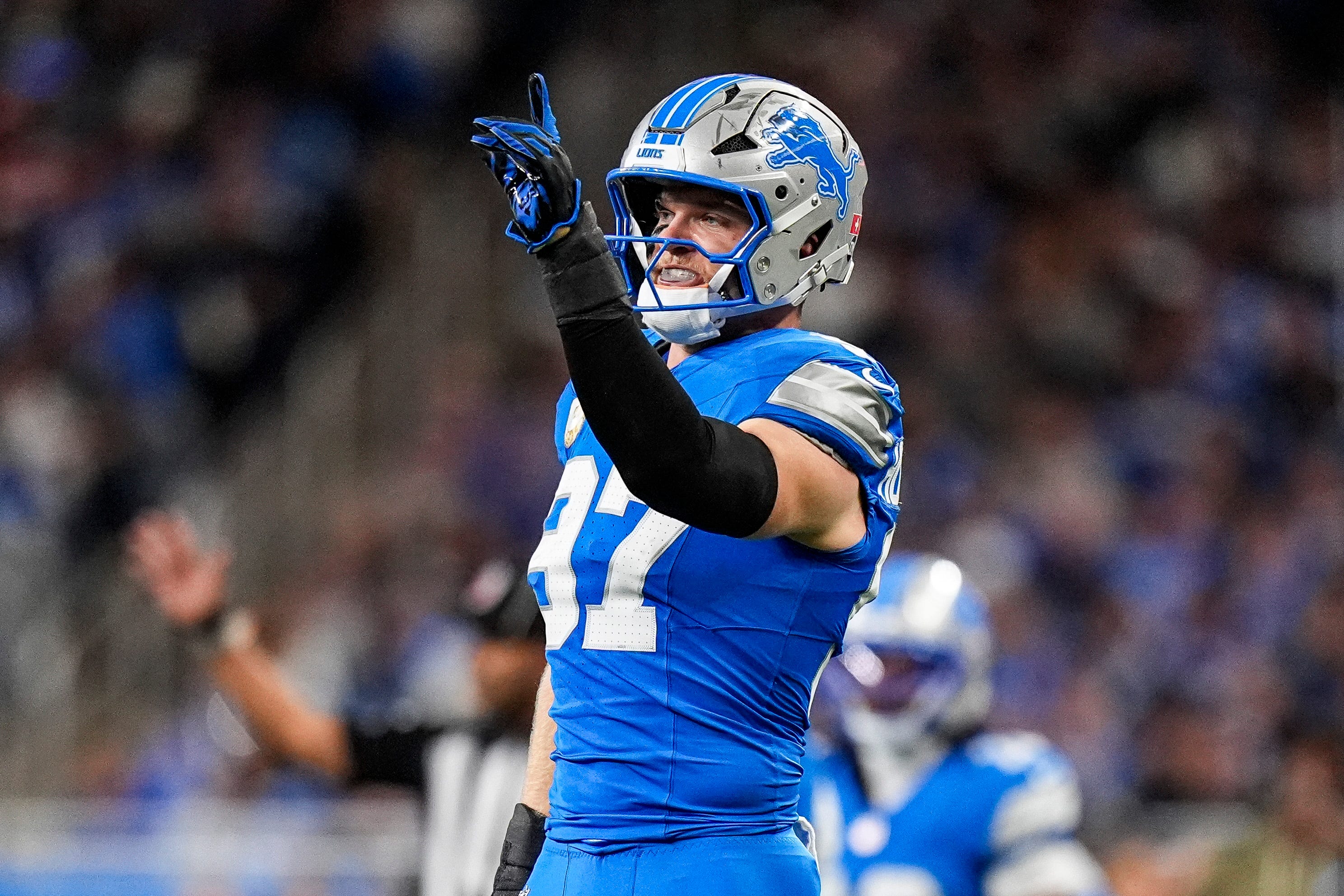
The Detroit Lions’ pass rush became one of the most debated topics among fans after the 2025 NFL season. Despite finishing 4th in the NFL in sacks and 6th in pressure rate, a large portion of the fan base fixated on one stat: time to pressure. Detroit’s 2.86-second average ranked third lowest in the league, per NextGenStats, and for a lot of people, that was all they needed to see. But that number needs far more context before anyone uses it as proof the Lions have a problem on the defensive line heading into 2026.
What time to pressure actually measures
According to NextGenStats, the clock starts at the snap and stops when a defender gets within two yards of the quarterback at the throw or within a yard and a half at any point during the play. It sounds simple, but time-to-pressure is not a pure pass-rush statistic. It’s heavily influenced by scheme, opponent tendencies, quarterback play, coverage philosophy, and offensive game plans. It tells you when pressure happens. It doesn’t necessarily tell you how good your pass rush was.
You have to understand the way Detroit plays defense. The Lions played man coverage at one of the highest rates in football, right around 32%. They blitzed just 23.7% of the time, which ranked 20th in the NFL. Think about what that means. They’re not sending extra rushers. They’re trusting their corners to hold up in coverage while four guys get home. On top of that, Detroit’s defense forced opponents into one-dimensional game plans. Dan Campbell has said it over and over again: the Lions want to stop the run. When you can’t run the ball, you can only do one thing. And when you throw the ball, three things can happen, and two of them are bad.
The results speak louder than one metric
When opposing teams had to throw, their quarterbacks averaged about three seconds to release against Detroit, one of the slowest marks in the league. If quarterbacks are holding on to the football longer, it’s naturally going to take longer for pressure to arrive. That’s not a flaw. That’s a byproduct of how the Lions want to play defense.
The Lions finished with 49 sacks (4th in the NFL), a 36.8 pressure rate (7th), and ranked 6th in sack percentage. When they were getting pressure, more often than not, they were getting sacks. One metric saying pressure arrived later than most teams doesn’t erase the rest of that production.
I would also mention that Detroit had the ball passed on them 604 times, the 9th most in the NFL. If you look at the time-to-pressure stats for other teams who got passed on that frequently, they’re right in that same ballpark. Context matters.
The top 10 in time to pressure didn’t exactly dominate
Look at the teams that ranked in the top 10 in time to pressure: the Vikings, Falcons, Giants, Browns, Buccaneers, and Chiefs all missed the playoffs. The Jaguars, Steelers, Broncos, and Eagles made it. An overwhelming number of those teams didn’t even reach the postseason. The Lions had more sacks and more pressures than the Vikings, Giants, Buccaneers, Chiefs, Jaguars, and Steelers despite being “slower” than all of them.
Don’t expect the number to change in 2026
If you were thinking this was going to change under defensive coordinator Kellen Sheppard, think again. The Lions are going to continue to rank near the bottom of time to pressure in 2026, and that’s fine. Sheppard isn’t going to turn this defense into a heavy-blitz team. They’re going to trust their corners, rush four, and make quarterbacks hold on to the football. That’s the philosophy.
Players like Tyleek Williams, Alim McNeill, and DJ Wonnum aren’t built for quick pressure. They’re built for Detroit’s system. Quick pressure doesn’t mean you’re getting sacks. The Vikings had the fastest pressures in the NFL last year and finished with 219. The Lions had 234.
The real issue was depth
The real problem with the 2025 Lions defense was simple: they had Aidan Hutchinson and Al-Quadin Muhammad for stretches, but beyond those two, the rest of the team combined for 2.5 sacks. Thirty-two of Detroit’s 49 sacks came in just six games. It was Hutchinson or bust.
That’s why you bring in Wonnum. That’s why you draft Derrick Moore. That’s why you hope Ahmed Hassanein and Tyler Lacy develop. The Lions can absolutely get back to a 50-sack season, but it has to be spread out among more players. And if they need to fix anything specific, it’s finding a cornerback who can hold coverage for the extended windows Detroit asks of its defensive backs.
The Lions aren’t going to get faster on defense. They’re going to keep playing their game. Let’s see if the depth catches up to the philosophy.

Detroit Lions News