
NFL free agency could get absurd as college football’s 5-for-5 eligibility shift thins the draft and inflates veteran contracts
NFL free agency is about to collide with a potentially thinner draft pool. Which veterans stand to cash in the most this offseason?

The next NFL free agency class is already loaded at the top, and college football’s five-for-five eligibility model could make it far more expensive than usual.
If more draft-eligible prospects stay in school, NFL teams will have fewer rookies to choose from. That supply problem won’t just inflate the price of the star free agents. It could push up what teams pay at every tier of the veteran market.
On the latest episode of 13 Personnel, Austin Stanley, JT Ruhnke, and I dug into what that means for the upcoming offseason. One idea kept coming back: an inflated market plus a supply issue adds up to something nobody has quite seen before.
A star-studded NFL free agency class
Start with the names.
Barring extensions between now and the end of the season, the list of pending free agents is impressive. Los Angeles Rams wide receiver Puka Nacua headlines it, and he has plenty of company from his own locker room. Defensive tackle Kobie Turner, edge rusher Byron Young, and offensive guard Steve Avila are all set to hit the market.
It’s almost comical how much of the Rams’ core could be available at once.
Dallas Cowboys wide receiver George Pickens is another major name. Tight end Sam LaPorta, safety Brian Branch, guard Quenton Nelson, and edge rusher Tuli Tuipulotu round out a strong group.
Cornerback Joey Porter Jr. is on the list as well. However, I would expect Dallas to get a deal done with him after acquiring him in a trade.
Here’s the thing about the top of the market: those players get overpaid every year. Supply is limited, and teams have to go above market value to land them. That part isn’t new.
Why mid-tier free agents could get paid
The bigger shift could come in the middle and lower tiers of the market. If you ask me, nearly everyone could see a bigger bump than they typically would.
Take Avila as an example. Nobody knows yet how strong the next interior offensive line draft class will be, especially if more prospects decide to go back to school.
Last year, the Tennessee Titans could afford patience. The class was so deep on the interior that they waited until the fifth round and still found a starting guard in Fernando Carmona before his injury. If the next class is below average, that patience disappears.
Suddenly, a player like Avila could become one of the highest-paid guards in the league.
That is where you’ll see veterans most fans don’t know getting two-year deals worth $8 million to $9 million, leaving everyone wondering why. Non-premium positions could feel this the most.
Running back is a prime example. Unless a college back is an elite prospect, he has a lot to learn at the next level, from pass protection to the speed of the game. Would NFL teams rather rely on a rookie, or on a four- or five-year veteran who won’t blow an assignment and get the quarterback hurt?
That reliability is about to carry a higher price.
The cap won’t fully absorb it, either. The salary cap sits at roughly $301.5 million and is expected to climb to around $320 million to $325 million. I don’t think that jump is enough to account for this kind of inflation.
Mac Jones and the fringe starters
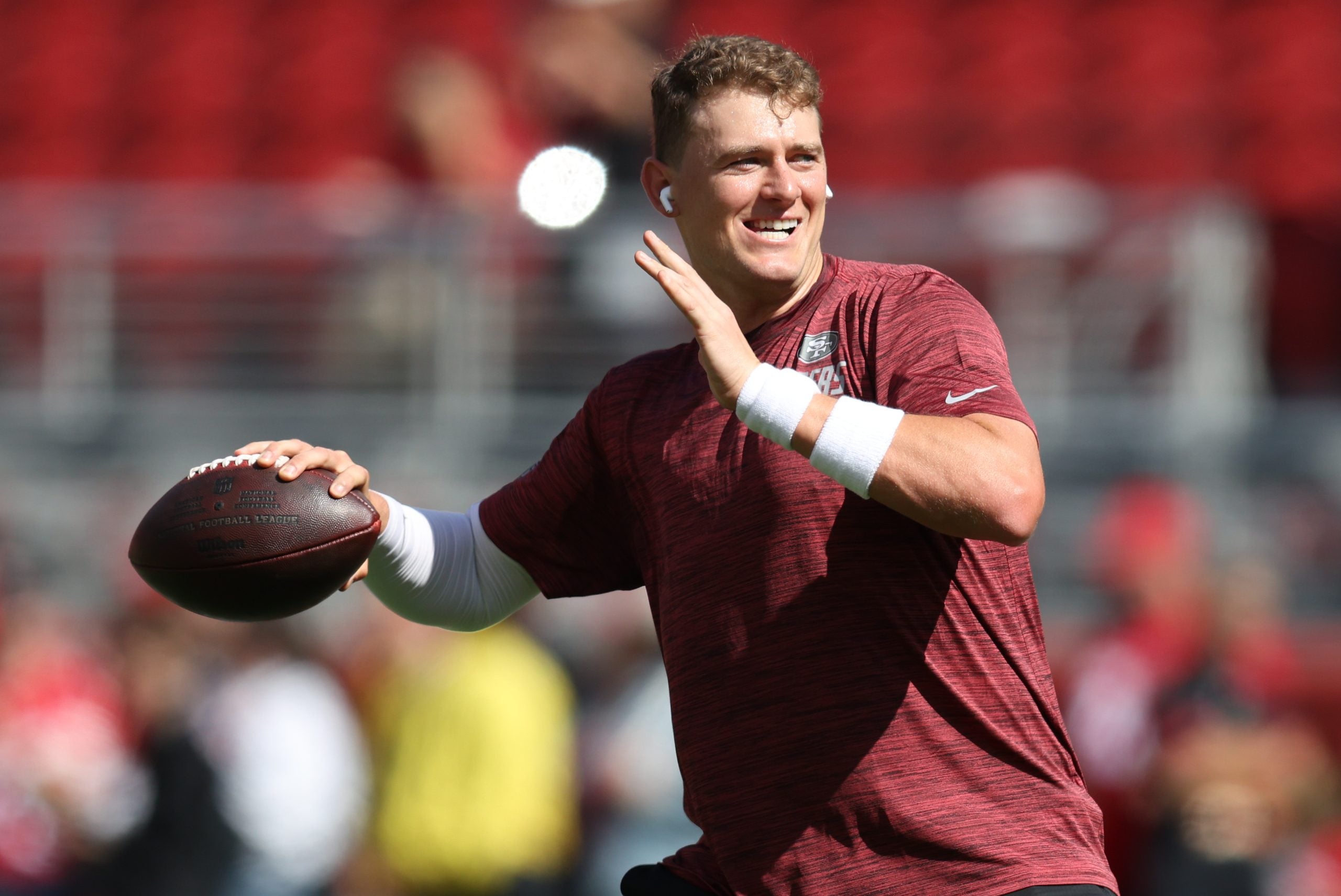
Of everyone heading toward free agency, San Francisco 49ers quarterback Mac Jones might be the happiest about the current college landscape.
Arch Manning nearly lost his job at Texas, and Dante Moore (Oregon) is still out with a concussion. Drew Mestemaker (Oklahoma State), Austin Simmons (Ole Miss), and others also face major decisions about their futures.
Jones could see that quarterback class and realize he might command $35 million to $40 million a year. In a typical year, he would probably land somewhere in the $25 million to $30 million range. A Sam Darnold-style second act isn’t out of the question for him.
The same logic applies to players like Cincinnati Bengals cornerback DJ Turner. He has taken a step over the last year, but is he worth $20 million to $25 million? Probably not in a normal market. In this one, he could get paid like a fringe top-10 player at his position.
Those are the contracts I would watch most closely. These are the players who land right around the top 10 at their position, not because they belong there, but because others had down years or got hurt. Put everyone on a level playing field, and some of them might rank closer to 22nd.
An inflated market and a shrinking supply of rookies make for a very real problem for NFL front offices. Pandemonium? Chaos? We will find out this offseason.
