
Josh Heupel clearly has a new plan for the future of Tennessee football, but he needs help from Vols fans or it won’t work
Josh Heupel has a new vision for the Tennessee Vols football program, but it’s going to require some buy-in and trust from fans or it’ll never stand a chance of actually working.

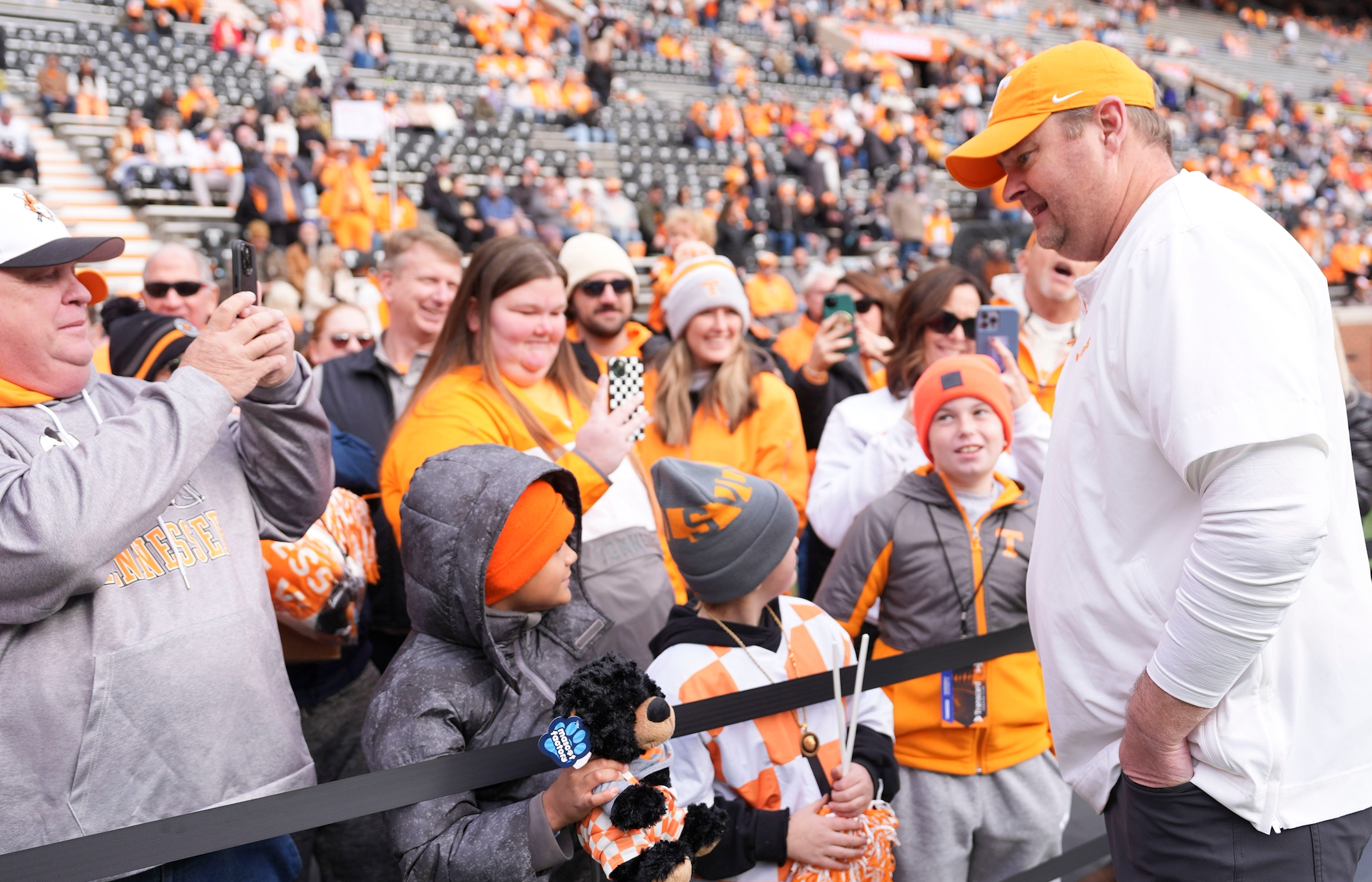
The Tennessee Vols didn’t truly go “all in” this offseason, and that might be the smartest decision Josh Heupel has made in the NIL era.
Tennessee built a strong roster this offseason, but they weren’t nearly as aggressive as some other programs (such as LSU).
The Vols flirted with several quarterback options this offseason. They pursued Sam Leavitt, who came with injury concerns and a price tag Tennessee wasn’t willing to meet. They tried to land Ty Simpson, but he opted for the NFL Draft instead of transferring (that turned out to be the right move for Simpson, who was selected in the first round by the Los Angeles Rams, where he can sit behind future Hall of Famer Matthew Stafford).
Since Tennessee decided to go into the season with two freshmen competing for the starting quarterback job, they made the decision to not pour massive money into a roster that probably wasn’t going to compete for a national championship anyway. And I think that’s the right approach.
Tennessee’s plan appears to be finding their QB this fall and going all-in on the 2027 season
The Vols’ plan appears to center on the development of their young quarterbacks – George MacIntyre and Faizon Brandon – this fall. Tennessee is still trying to win every game it can, but Heupel understands the math. Spending $40 million or $50 million on a roster with an unproven signal-caller probably isn’t going to lead to a championship. And if you burn that kind of money without results, can you spend that aggressively again the following year?
If one of those quarterbacks, let’s say Brandon, wins the job and proves he’s a championship-caliber player by season’s end, Tennessee can attack the January transfer portal more aggressively. Defense, offense, whatever holes exist on the roster, the Vols could go after the biggest names available and build something close to a super team for the 2027 season.
It might mean a 7-5 or 8-4 record this fall. But if Tennessee feels good about its quarterback situation and its returning core, supplementing through the portal with heavier spending could lead to a massive jump for the Vols in 2027.
ESPN’s Greg McElroy actually hinted at this strategy for the Vols last month on McElroy and Cubelic in the Morning.
“If [Tennessee goes] 8-4 and maybe gets a bowl win because of the continuity, and then you fast forward to next year and you’ve got a second year starting quarterback, a second year in a defensive scheme, some youth that’s coming up and progressing in the system, and some coaching continuity — assuming they don’t make a crazy decision — I would circle 2027 for a year where alright, this is when [Tennessee] can maybe make a run,” explained McElroy.
We’ve already seen how teams can make big jumps from year to year. Oklahoma, for example, went 6-7 in 2024 and head coach Brent Venables entered 2025 on the hot seat as a result. A year later, the Sooners changed their quarterback, made some coaching staff adjustments, and suddenly they were a College Football Playoff team. They didn’t win it all, but they were still a playoff team after a tough season the year before.
There’s so much parity in college football right now that I don’t think we’re going to see dominant Alabama-type runs again. Building toward a specific window makes more sense than swinging for the fences every single year (it’s also more cost efficient). This strategy, however, requires patience from a fan base that isn’t always known for it. And Heupel has to walk a thin line when asking for that patience — he can’t make it seem like he’s writing off the 2026 team entirely (who knows, maybe Faizon Brandon turns out to be the next true freshman sensation and delivers a magical season – you never know how things will play out in this era).
The reality is that going for broke in the portal every offseason isn’t sustainable. There aren’t enough elite players to go around for every program to reload annually. Development still matters. You’re not going to accelerate a player’s growth just because his paycheck is bigger. High school talent has to be developed the same way it’s always been developed, and that takes time.
Player retention, though, adds another layer of difficulty. There’s always another program willing to pay more, and tough decisions have to be made. It’s not a perfect strategy, and there’s no guarantee it works. But it feels like it’s the direction Tennessee is heading, and if it pays off, it could change how other programs approach the sport.
I think it’s a smart play. And if the Vols find their quarterback this fall, 2027 could be the year Tennessee swings for the fences.
But fans have to trust in this plan and not lose their minds if the Volunteers finish with a seven-win season this fall.
