
Why Tim Banks is a better defensive coordinator for the Tennessee Vols than people realize
Tennessee Vols defensive coordinator Tim Banks has received a decent amount of criticism over the last season and a half. The Vols' defense has appeared to be the weak point of the team. Tennessee's pass defense, specifically, hasn't been great statistically. UT ranks No. 123 in the nation in pass defense, which is not far […]


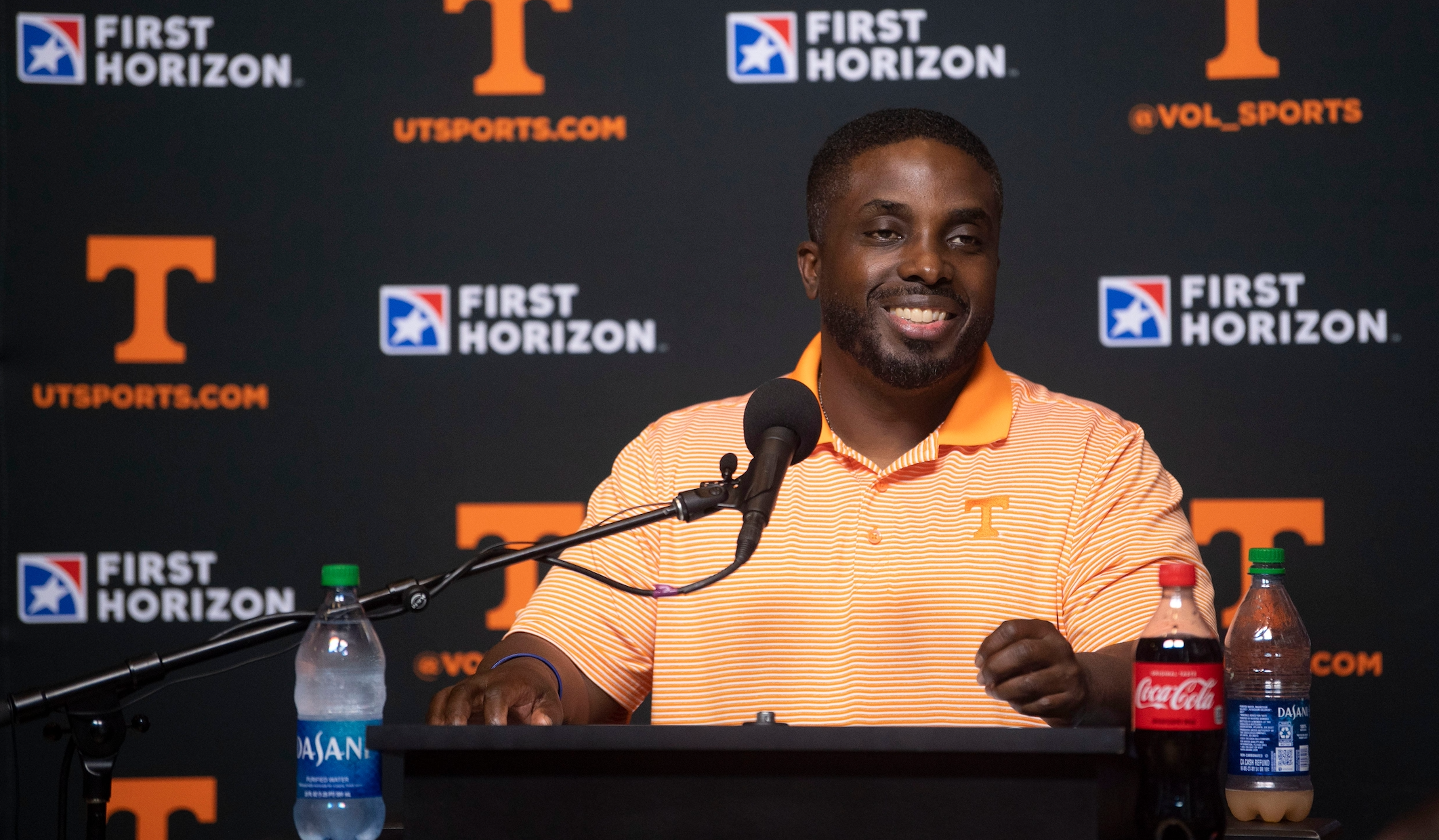
Tennessee Vols defensive coordinator Tim Banks has received a decent amount of criticism over the last season and a half.
The Vols' defense has appeared to be the weak point of the team. Tennessee's pass defense, specifically, hasn't been great statistically.
UT ranks No. 123 in the nation in pass defense, which is not far from dead last.
But that doesn't mean Banks is a bad defensive coordinator.
Numbers in sports, after all, need context.
And the only context that really matters when it comes to Tennessee's defense is that they're allowing just 17.8 points per game, which is No. 22 in the nation.
Banks has actually been brilliant as far as what he's trying to accomplish at Tennessee.
The Vols don't have the same defensive talent as Alabama or Georgia. That means Banks has had to be creative in the way he calls the defense.
Tennessee has mostly played soft coverages against opponents (with some well-timed blitzes). And those coverages, which allow a lot of short completions (like slant routes) have been confusing to fans and analysts.
But there's a reason, I believe, behind these soft coverages.
Banks wants to limit explosive plays. So instead of deep passes, teams are having to dink and dunk their way down the field against Tennessee.
Once teams get into the red zone against the Vols, they usually aren't settling for field goals. They know that to beat Tennessee they need to find the end zone. Once the field gets shorter in the red zone, Banks believes in his team's ability to get the stop on fourth down (that didn't work as planned against Florida, but LSU this past weekend was 0-for-3 on fourth down).
This strategy can be maddening at times because it looks like Tennessee is fine with just giving up seven to eight yards a play without getting a stop. But there's a method to the madness. Banks knows that his strategy means teams will run more offensive plays (which gives UT more chances to get a turnover). And he knows that the odds of a team converting on fourth down every time are low (Florida converting five-of-six fourth downs was the only reason the Gators weren't blown out by the Vols last month).
There's no doubt it can be frustrating watching the Vols give up short passes. But it's not because Banks isn't doing a good job. This is the strategy that Tennessee has to go with until they have talent on the same level as Alabama and Georgia (I believe Banks would prefer to be more aggressive than he's been).
It's hard to argue with the strategy. Tennessee has one of the best scoring defenses in the nation, they're undefeated despite playing three ranked teams in five games (two of them on the road), and they're the No. 6 team in college football.
Results don't lie.
Featured image via Saul Young/News Sentinel
