
If Bengals want to compete for Super Bowls after 2023, they need to take some advice from the Chiefs
The Cincinnati Bengals can set themselves up to compete for Super Bowls for the next decade if they make the proper decisions over the next couple of months. We already know that Bengals quarterback Joe Burrow is going to receive a contract extension at some point this offseason. And we also know that wide receiver […]


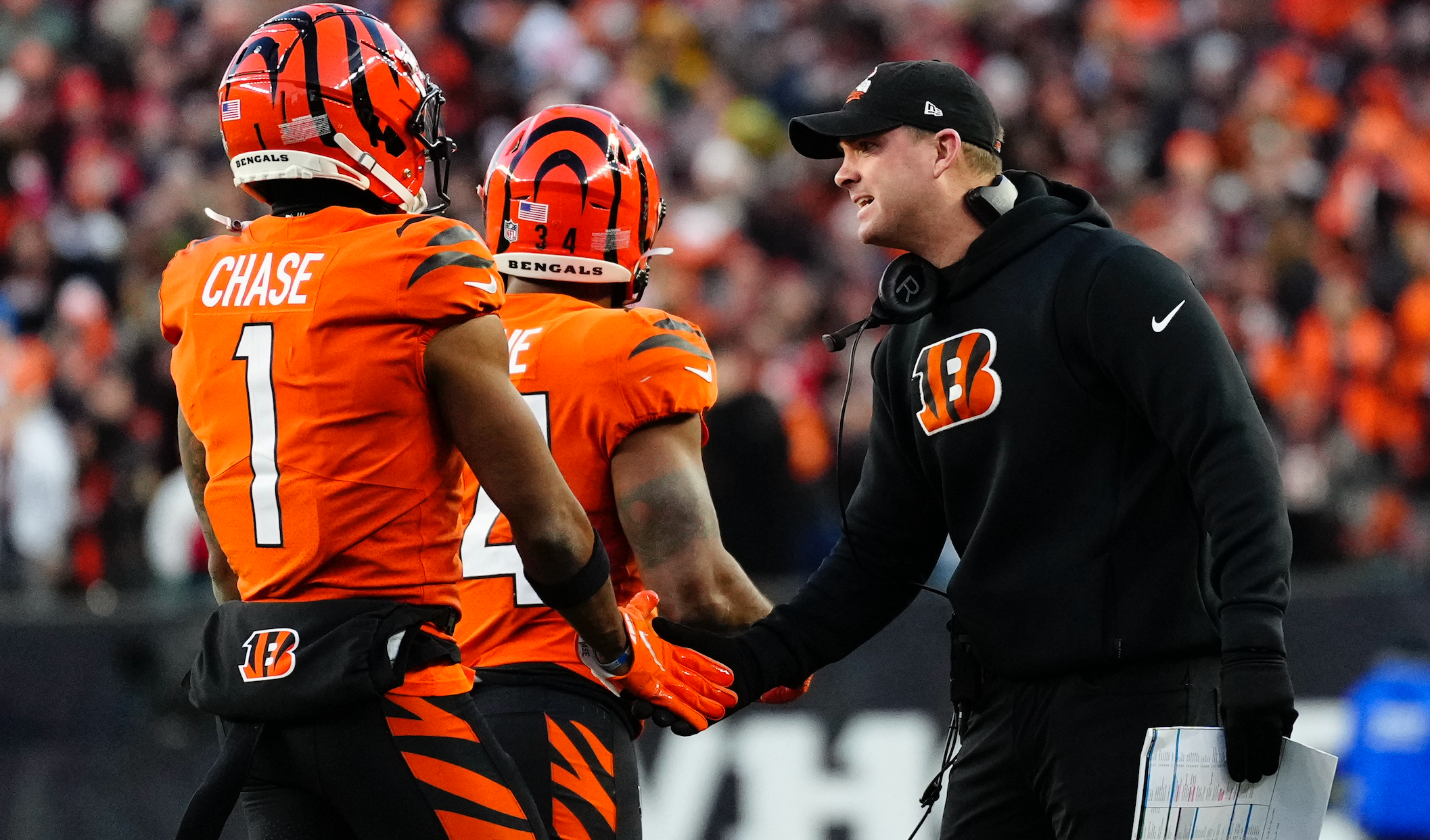
The Cincinnati Bengals can set themselves up to compete for Super Bowls for the next decade if they make the proper decisions over the next couple of months.
We already know that Bengals quarterback Joe Burrow is going to receive a contract extension at some point this offseason. And we also know that wide receiver Ja'Marr Chase will receive an extension next offseason.
There's also the possibility that wide receiver Tee Higgins could receive a contract extension this offseason.
Giving Burrow and Chase an extension is a no-brainer. Those are two franchise cornerstone players. There's absolutely no way that Cincinnati can let either of them walk (and they won't).
When it comes to Higgins, that's a bit more debatable.
The former Clemson standout has developed into one of the best wide receivers in the NFL. But that means his next contract will be quite expensive.
Cincinnati.com's Kelsey Conway recently suggested that Higgins' new deal, whoever it's with, will be worth $25 million per year at a minimum.
Chase will almost certainly get more per year than Higgins next offseason.
So if Burrow signs a record-breaking deal (let's just say he signs a deal that's worth around $50 million a year), Higgins signs for $25 million and Chase signs for $30 million, it would mean that Cincinnati would have $105 million in cap space wrapped up in three players. Now, obviously, the Bengals will structure the contracts so that the cap hits are spread out. But that's still a significant amount of money to pay three players (that money will come due against the cap at some point).
And it's something that the Kansas City Chiefs refused to do last offseason with Tyreek Hill.
The Chiefs traded Hill to the Miami Dolphins in part because they weren't willing to pay him $30 million a year. With Patrick Mahomes under contract through the 2031 season and Travis Kelce earning a little over $14 million annually, the Chiefs weren't willing to commit another large chunk of cash to a pass catcher. They have enough faith in Mahomes that they believe that Kelce is the only elite pass catcher they need to win a Super Bowl (and they were correct last season).
Mahomes is on a team-friendly deal and Kelce is earning $10 million less than Higgins is expected to receive and $15 million less than Chase is expected to receive. And yet the Chiefs still decided that committing a combined $45 million to Kelce and Hill wasn't a good idea.
Even if the Bengals sign Burrow to a team-friendly deal, it's still likely going to be worth more than Mahomes' deal. And then Cincinnati is going to try to fit another $55 million annually into their budget?
That seems unwise — especially since the Bengals have an elite quarterback in Burrow and, in theory, they should be able to have success without having two elite wide receivers on the roster.
Speaking of Burrow, if the Bengals truly believe in Burrow the way the Chiefs believe in Mahomes, then this should be a no-brainer. If Burrow is on the same level as Mahomes, then he doesn't need Higgins to deliver a Super Bowl trophy.
Higgins is a great player. And in a perfect world, he'd be a Bengal for life. But Cincinnati would be wise to save that cash and use it on other positions such as the offensive line, defensive backs, and pass rushers.
One elite pass catcher with a solid supporting cast is more than enough to win a Super Bowl. The Bengals should follow the lead of the team that's laid the blueprint for success out there for everyone. If they don't, they could put themselves in salary cap hell and that's a place where no NFL team wants to be.
