
Giannis trade outcome contrasts sharply with Packers ownership model and ability to retain stars through their primes
NBA star Giannis Antetokounmpo got traded from the Milwaukee Bucks to the Miami Heat, and it’s a move an NFL team like the Packers would likely be able to avoid.


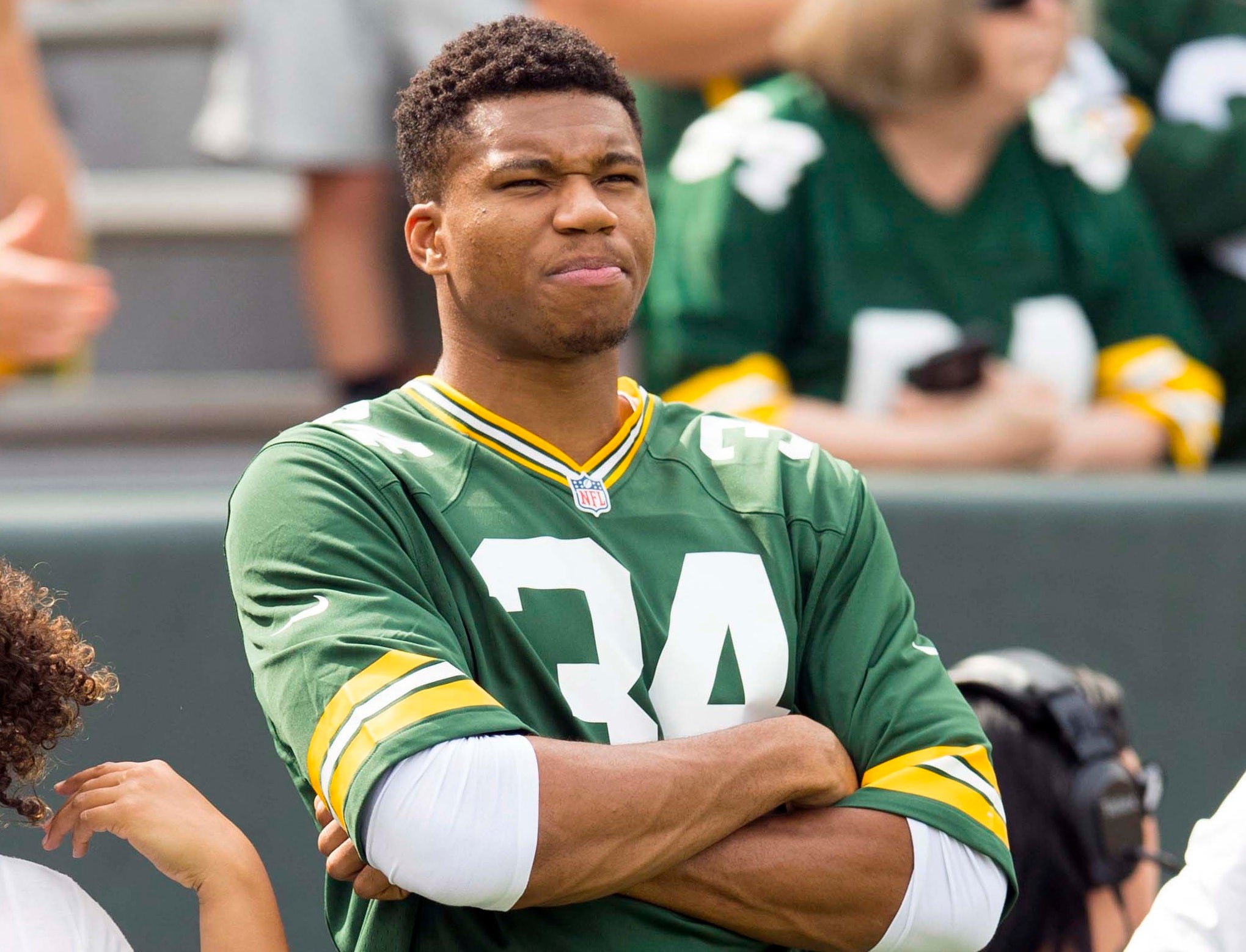
The Giannis Antetokounmpo trade sent shockwaves through Wisconsin sports. The Milwaukee Bucks dealt their NBA MVP and champion to the Miami Heat for a massive package. According to ESPN’ Shams Charania, the Bucks are receiving Tyler Herro, Kel’el Ware, Jaime Jaquez Jr., Kasparas Jakucionis, three first-round picks, a pick swap, and a second-rounder.
The move brings up interesting questions about star retention in professional sports. For Green Bay Packers fans watching from across the state, though, the trade served as a reminder of why the NFL and its salary cap structure make it far more difficult for something like that to happen in football. And for the Packers in particular.
The Packers are a small-market franchise, and yet their ability to retain star players throughout history has been remarkably consistent. Green Bay kept quarterbacks Brett Favre and Aaron Rodgers until the organization decided to move on from them, and that’s usually the case with players from other positions as well.
The team held on to most of its core players through the primes of their careers. The notable exception is wide receiver Davante Adams, who wanted out, but that was a highly specific situation as he wanted to get closer to his family on the West Coast. The broader pattern is that the Packers don’t lose their best players because of market size or financial restraints.
NBA vs. NFL salary cap differences
The NBA’s salary cap structure operates in a fundamentally different way than the NFL‘s. Players in the NBA face individual salary limitations tied to the league’s cap. Outside of supermax deals, no NBA player can make more than 35% of the team’s cap.
And for the Bucks, it became progressively harder to build a competitive roster around Giannis. At some point, he wanted to play in a bigger market, and the Heat and Boston Celtics emerged as the two interested teams. Miami ultimately landed him.
In the NFL, the salary cap is more forgiving when it comes to retaining individual players, despite the lack of some weird NBA exceptions. Teams can restructure contracts and spread money across a 53-man roster rather than a 17-man one. The Packers have used these tools effectively for decades to keep their cornerstone players in place.
Ownership structure matters
The Packers’ publicly owned model plays a significant role here. There is no single owner making financial decisions based on personal wealth or profit motives, the organization doesn’t have the appetite to trade away players for financial reasons.
“We let a lot of really good players walk out of here this past offseason,” Packers general manager Brian Gutekunst recently said, “but with the thought process that there are some guys that we really want to lock up.”
Green Bay can pay its players within the NFL’s salary cap framework without the kind of financial pressures that sometimes drive decisions in other leagues. The team’s structure removes an entire category of motivation that can lead to star players being moved.
Player power is diluted in the NFL
The third factor, and probably the most impactful, is the balance of power between players and teams. In the NBA, stars carry enormous leverage. Giannis wanted out of Milwaukee, and it became very difficult for the Bucks to retain him against his wishes. The NBA’s smaller rosters and the nature of basketball mean individual players hold a larger share of a team’s overall talent, which gives them more influence over their futures.
In the NFL, rosters are significantly larger, and the concentration of talent is more spread out. No single player, regardless of how good they are, holds the same kind of leverage that an NBA superstar does. The Packers and NFL teams in general are more likely to retain players and impose organizational control over roster decisions.
A reminder of what makes Green Bay different
The Giannis trade was an impactful moment for Wisconsin sports. One that many fans will remember exactly where they were when they heard the news. For Packers fans, it reinforces how much harder it would be for something similar to happen in Green Bay. Trading a star in his prime is a far less likely outcome in Green Bay than it ever was in Milwaukee.
