
Packers quietly maintain cap flexibility that could become key to strengthening current roster when it matters most
Green Bay had a cautious approach this offseason, but that doesn’t mean Brian Gutekunst and Russ Ball don’t have financial flexibility if big opportunities arise again.


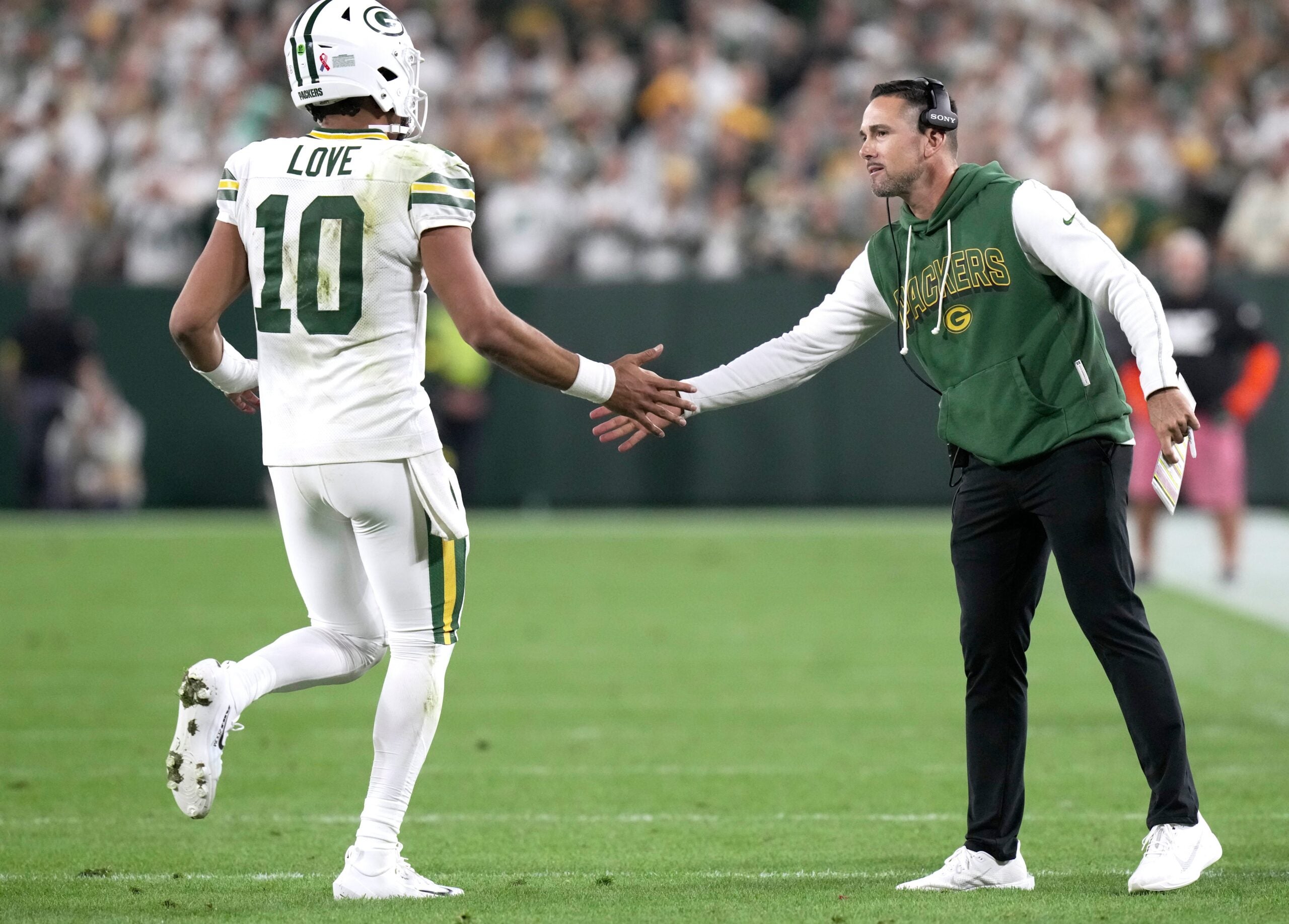
The Green Bay Packers didn’t make big moves in free agency. They went with some mid-level additions, and the most expensive signing was defensive tackle Javon Hargrave, who signed a two-year, $23 million contract. While the salary cap situation isn’t exactly comfortable for Green Bay, there’s plenty of room to create extra cap if an opportunity arises for general manager Brian Gutekunst to make a bigger decision.
“I feel really good,” Gutekunst said ahead of this offseason when asked about the salary cap situation. “A lot of that will be dependent on the decisions we make with the roster right now and what we do. But I believe we have all the flexibility to do what we need to do.”
Cap moves
So far this offseason, the Packers made long-term moves to achieve a healthier cap situation over the next few years — trading Rashan Gary, cutting Elgton Jenkins and Nate Hobbs. The only short-term moves were the restructures of left guard Aaron Banks and safety Xavier McKinney, adding void years to their deals.
Now, plus these moves, minus additions and re-signings, the Packers have $22 million in cap space — a little bit more than $20 million in effective cap space, which excludes the pool necessary to sign their draft picks.
At this point, the free agent options are limited, and Gutekunst himself recently said the team shouldn’t add veterans before the draft. But if the right opportunity presents itself later in the offseason like it did last year — the Micah Parsons trade happened in late August — the Packers will comfortably have the financial flexibility to pull the trigger.
The front office can open up (or utilize) some cap space with extensions, but this exercise is just about restructures — and for players whose restructures would create at least $1 million in cap room.
How much cap room the Packers can create
- Devonte Wyatt, $9.378 million
- Jordan Love, $7.748 million
- Josh Jacobs, $4.75 million
- Zach Tom, $3.101 million
- Keisean Nixon, $2.56 million
- Christian Watson, $2.032 million
- Tucker Kraft, $2.023 million
- Dontayvion Wicks, $2.023 million
- Karl Brooks, $2.023 million
- Carrington Valentine, $2.023 million
- Isaiah McDuffie, $1.628 million
- Zaire Franklin, $1.595 million
- Lukas Van Ness, $1.58 million
- Micah Parsons, $1.137 million
All these moves would double the Packers’ 2026 cap space, going from $22 million to more than $44 million. Obviously, that has a price — the additional $22 million would eventually hit the cap down the road. And that’s exactly why Green Bay didn’t pull all the levers at once. It’s something to keep in their back pocket, and effectively do it only if/when needed.
Most likely, the Packers will just keep things as they are, utilizing the current cap space to extend some players, make some in-season roster moves, and rollover the remaining space to 2027.